

Melt Away Sticky Grease From Kitchen Cabinets With A Citrusy Hack
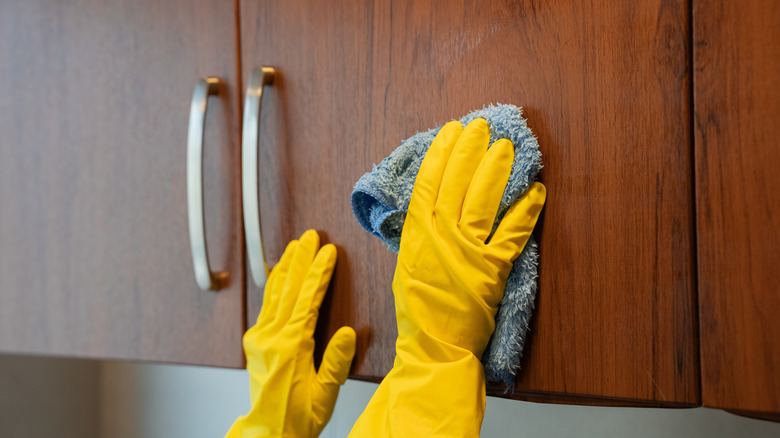
Sticky grease can be tough to remove from any surface, but kitchen cabinets can be especially tricky. While you usually know when grease spills onto the countertop or stovetop, you might not catch it when it splashes against cabinetry. If you aren't able to clean it immediately, grease hardens and becomes more difficult to remove. Plus, depending on your cabinet material, you might be more worried about causing damage by scrubbing or using the wrong products. There are cleaners that are safe to use on wood cabinets, of course, but if you prefer natural cleaning methods, then a trusty lemon and some salt might do the trick. It is a common recommendation for cleaning grease, but you'll want to do it properly to avoid damaging your cabinetry.
Lemon and salt are two common natural cleaning ingredients. There are many things you should be cleaning with a salt and lemon mixture, but if you haven't tried it yet, you probably want to know more about how it can work. Lemons are mildly acidic, which makes them effective at breaking down stains. They also have some anti-bacterial properties and are deodorizers, making them all-around enticing for cleaning. Salt is often praised for being absorbent and abrasive, both of which can help remove grease from various surfaces.
Together, they are often recommended as a solution for cleaning cutting boards, pans, and fabric stains, but you might also find success removing grease from a cabinet thanks to the properties of each. Just be sure to take the proper precautions, as the acidity and abrasiveness can be harmful to some materials.
How to use salt and lemon to remove cabinet grease
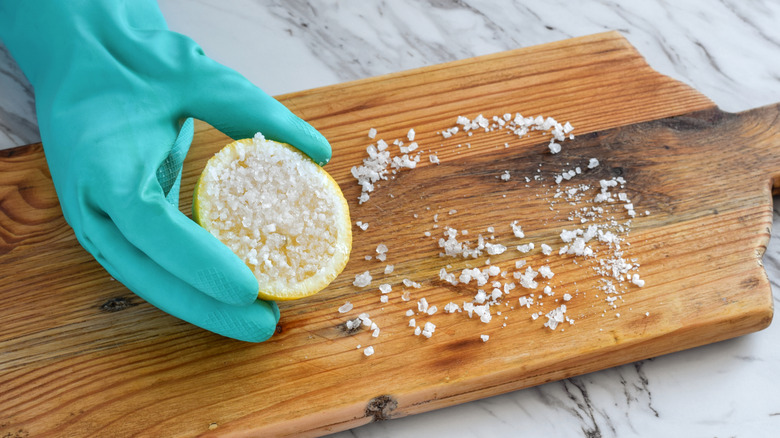
To try this hack on a cabinet with stuck-on grease, you have a few options. You can try to apply lemon juice and salt to the area by scrubbing it with a salt-covered lemon half before rinsing with warm water, but this quickly gets messy on a vertical surface. Alternatively, you can combine lemon juice and some warm water. Spray it onto the grease stain, and use a cloth with a bit of salt on it to scrub. Again, remember to rinse thoroughly after scrubbing to avoid damage from the acidity of the lemon. You should also dry the cabinet, and if your cabinet is made of wood, polish it using oil, such as linseed or jojoba oil. The cleaning process will likely remove some of the previous polish, and it is important to reapply it in order to keep your cabinets protected.
While polishing can help restore the cabinet a bit after scrubbing, it is important to do a spot test before trying this hack on a prominent part of your cabinetry. Abrasive and acidic cleaners can damage cabinet finishes, which is why people are often told to avoid them. A grease spot looks bad, but a cabinet with a large area of stripped finish may look even worse. So, test in an inconspicuous location, such as the inside of a cabinet door, to see how your particular cabinets react to this hack. If any damage is minimal, you can give it a try. Otherwise, easily remove grease stains with these unexpected household staples.