

Easily Transplant Your Hydrangeas With The Help Of An Affordable Fabric
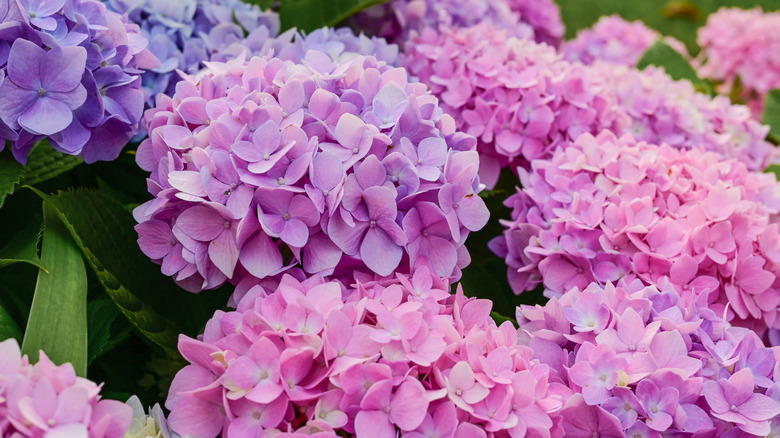
Transplanting hydrangeas can spark a bit of fear and trepidation, especially if you are worried about transplant shock and damage that will keep your hydrangeas from blooming. But there is an affordable fabric that will help you easily transplant your hydrangeas in a way that reduces stress on both you and your shrub! Surprisingly, it's burlap. Balling and burlapping is a common technique that involves wrapping a shrub's roots in burlap for transplanting. Burlap is a natural fabric that can be used to protect the plant's root system and improve the outcome for transplanting, leading to more successful hydrangea blooms.
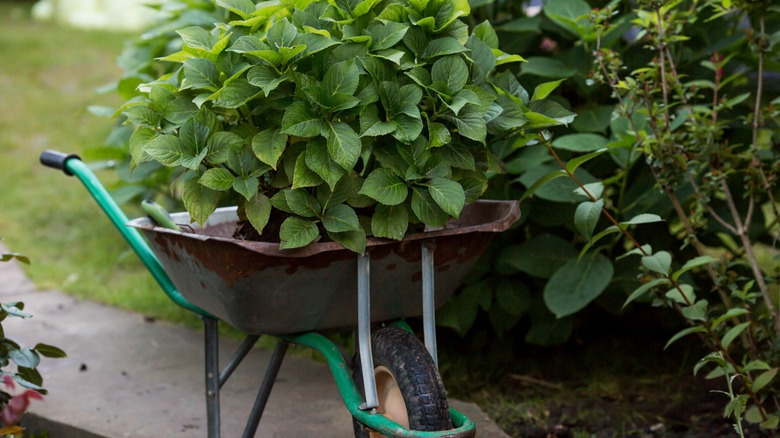
When it's time to transplant your hydrangea (ahem, ideally while they are dormant in the early spring or late fall), the first step is to dig out the rootball. Find the plant's dripline, or the perimeter where the outermost branches reach. Dig along the dripline and down into the soil, keeping the rootball as intact as possible. Hydrangeas have quite a lot of delicate, hair-like roots, so be gentle. Work the rootball out of the ground and slide it onto a piece of burlap large enough to fit all the way around the ball. If you are moving the shrub a long distance from its original spot, you can pull the edges up around the roots and tie them together. Then, you can use the tied corners as handles to safely carry the shrub to its new home, or lift it into a wheelbarrow for easier transportation.
What makes burlap a good choice for transplanting hydrangeas?
Burlap is a good choice for transplanting hydrangeas for several reasons. First of all, burlap is affordable and easy to find. This tried-and-true fabric can be found at nurseries all over the place. More importantly, it's a natural fabric that breathes, allowing air, water, and nutrients to flow through it. It's safe to plant the hydrangeas right in the burlap, which protects those delicate roots and reduces damage that can hamper the shrub's growth. The natural fabric will biodegrade over time, so you can plant it right along with your hydrangea, but it is good practice to pull the burlap away from the top of the rootball and the shrub's trunk to give it extra breathing room.
The ideal burlap for this is all-natural jute or hemp with a weave just large enough to see light through it. This makes it strong enough to hold the dirt and roots in during transport, but coarse enough for the roots to grow through. Use the lighter weights for smaller root balls, and the heavier weights for larger, heavier root balls. Avoid using treated or synthetic burlap, as it takes a while to break down and can damage roots as they grow through it. If natural burlap is not available and you need to use a synthetic or treated burlap, remove it before placing the hydrangea in its new home. Don't forget that hydrangeas will need some extra watering to keep them from going into shock after they've been transplanted.