

Fill Large Planters With A Scrap You Can Get For Free From Your Yard
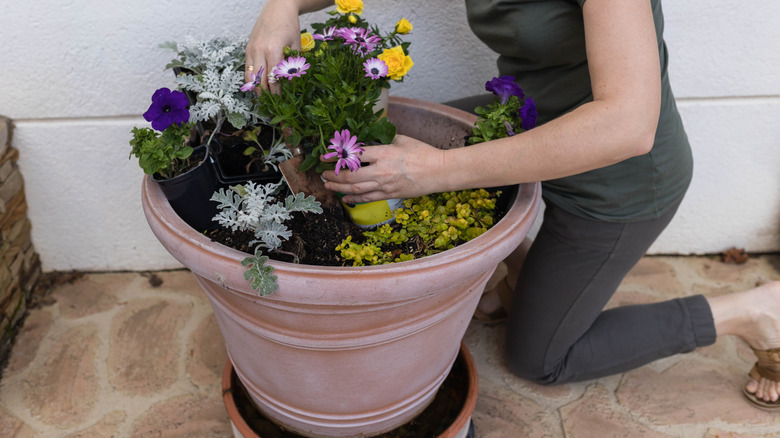
You love the look of oversized planters and snagged a few at your local nursery's recent garden sale. They're going to look great on your backyard patio. But once you got them home, you realized just how much soil it would take to fill them. The thought of how much that will cost is making your wallet cringe. Fortunately, there are inexpensive ways to reduce the amount of soil needed. There are plenty of materials you can use to fill the bottom of large planters that will save you money, like shrub and tree trimmings that you can gather from your yard for free.
Using yard scraps as planter filler comes with several practical benefits. For starters, the filler helps reduce the overall weight of oversized planters, making them easier to move. So when you decide they look better on the front porch instead of the backyard, you won't break your back trying to move them. It's also a whole lot cheaper, which means you'll have more money to buy all the flowers you're going to put in the giant planters. As a bonus, the yard scrap materials will break down over time and add nutrients to your potting soil. So all those flowers will grow and thrive, making a gorgeous oversized planter display.
How to use free yard scraps as filler for large planters
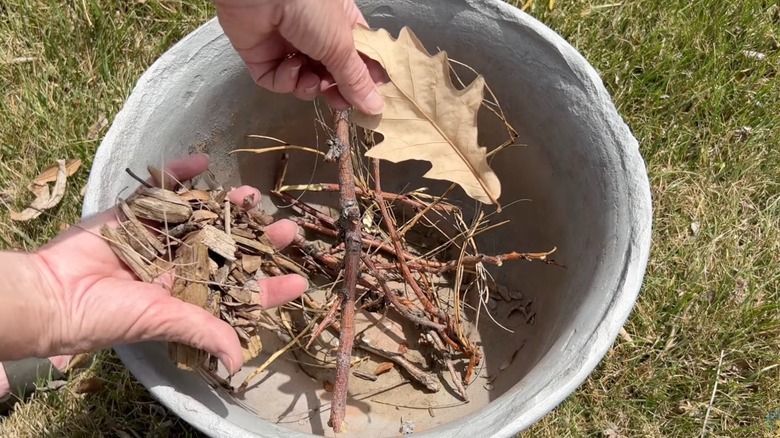
Start by gathering yard debris like branches, trimmings, bark, and dry leaves. This includes any small branches that have fallen off the tree or parts that have recently been pruned back, either from a tree or surrounding shrubs and bushes. Don't forget leaves or even excess bark pieces you find on the ground. Any fallen pine cones from the trees can be used as well.
Before filling the planter, make sure it has proper drainage holes. If needed, you can drill a few holes across the bottom to provide a way for excess moisture to escape. Before you begin filling the planter, consider how much soil you need based on the plants or flowers you'll be using. Various plants and flowers have different root depth requirements. This determines how much space should remain for potting soil above the filler layer. As a general rule, filling the bottom quarter to one-third of the planter with organic filler works well for many container plants.
Arrange the planter where you want to display it and fill it to the appropriate level with yard clippings. Optionally, you can lay a piece of landscaping fabric over the yard scraps to keep the potting soil from falling through the filler. Then layer on the potting soil to fill up the remaining space in the planter. Add your selection of flower and plant combinations to create a dynamic container garden and enjoy your new large planter display.