

The Weed-Resistant Ground Cover That Adds Interest To Driveway Borders & In Between Pavers
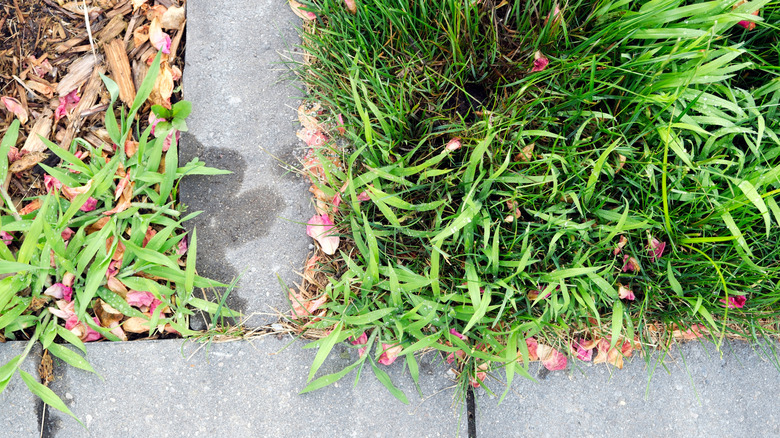
It can be a lot of work to maintain a quality driveway border. Decorative rocks, shrubs, pavers, and flowers are all driveway border ideas that can boost curb appeal, but you still may face issues with weeds or messes from scattered rocks and mulch. No matter what style of border you have, there's one interesting ground cover that you can use to solve all these problems. Black scallop bugleweed (Ajuga reptans 'Black Scallop') is not only a weed-resistant ground cover, but it also displays a stunningly beautiful display of dark, nearly black foliage with purple flowers.
Black scallop bugleweed offers two distinctive benefits to your driveway border: aesthetics and weed suppression. The dense foliage prevents weeds from creeping up on your driveway or between pavers. If you're looking for a natural low-maintenance landscaping option that makes a statement, black scallop bugleweed should definitely make your list of contenders, but there is one significant aspect you shouldn't overlook. Black scallop bugleweed grows best in partial shade or full shade in USDA hardiness zones 4 to 9. So, if you've got a driveway that is drenched in all-day sunlight, you may want to think twice. It can tolerate full sun, but if you go that route, you will need to water more frequently to maintain consistent moisture. In hotter climates, you may even need to add shade to prevent damage. Most gardeners report the best foliage color is apparent in partial shade conditions (about 3 to 4 hours of sunlight per day).
Creating a driveway border with black scallop bugleweed
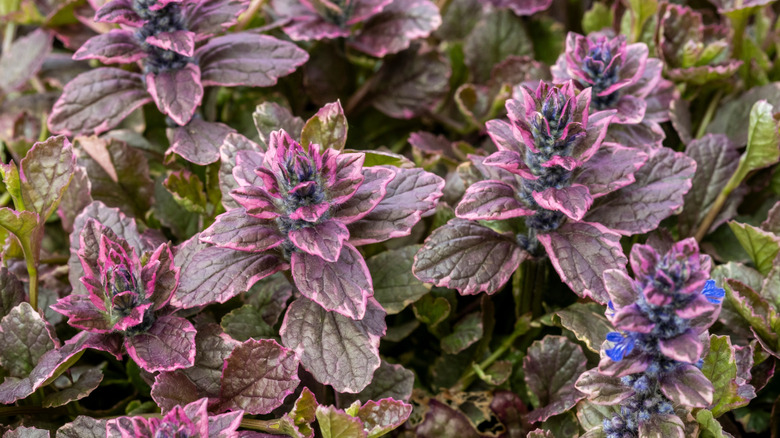
First and foremost, consider different varieties to find one that meets your yard's growing conditions. Some varieties will tolerate sun more than others, and some grow larger than others. When you choose the right variety, you can use black scallop bugleweed to create a bloom-filled welcome with a stunning flower carpet to line your driveway. In fact, sometimes black scallop bugleweed is sometimes called carpet bugle or carpet weed. Unfortunately, the aggressive spreading habits of bugleweed make some varieties invasive in some regions like Oregon and West Virginia, though the 'Black Scallop' cultivar is less aggressive.
Once you select the ideal variety, you will want to plant your black scallop bugleweed from seeds or transplants in the spring or fall. Place them in acidic, loamy soil with good drainage. Soil preparation is just one of the many tips and tricks for growing thriving ground cover plants in your yard. Space plants about 12 inches apart; they will quickly fill in the empty space. You may want to add a barrier between the black scallop bugleweed and your lawn. The bugleweed spreads through underground stems and can expand rapidly if not monitored. When they are fully grown, black scallop bugleweed can reach 3 to 6 inches tall, spreading between 1 and 3 feet wide.
Mistakes to avoid when planting black scallop bugleweed near a driveway
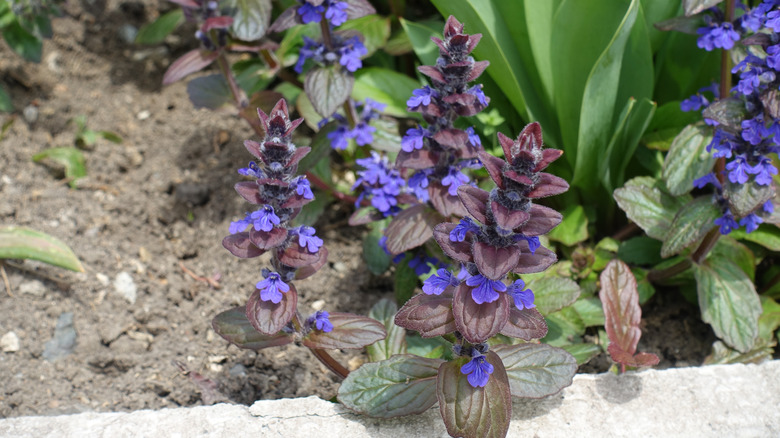
Black scallop bugleweed is generally considered low-maintenance and resistant to many issues, including weeds, powdery mildew, and even deer. However, there are two common mistakes that gardeners make when growing this perennial that can quickly ruin the clean, colorful aesthetic that it is generally grown for. Providing the right moisture level is essential for quality growth and preventing crown rot. To resolve this issue, avoid planting in heavy, wet soil and ensure your flower bed has adequate drainage.
The other issue that gardeners face is how quickly black scallop bugleweed can spread, especially when placed near flowerbeds or open lawns. Placing barriers like pavers, boulders, or other garden bed borders, can help prevent unwanted spread. In addition, you can prune black scallop bugleweed to control growth at virtually any time in the season without causing significant damage. In fact, when the plants are looking particularly grungy with dead flowers and foliage, you can use a lawn mower to make quick work of the cutting process, just make sure to set it high.