

Not Brick, Not Cement: The Sustainable Material Being Used To Make Pavers
We may receive a commission on purchases made from links.
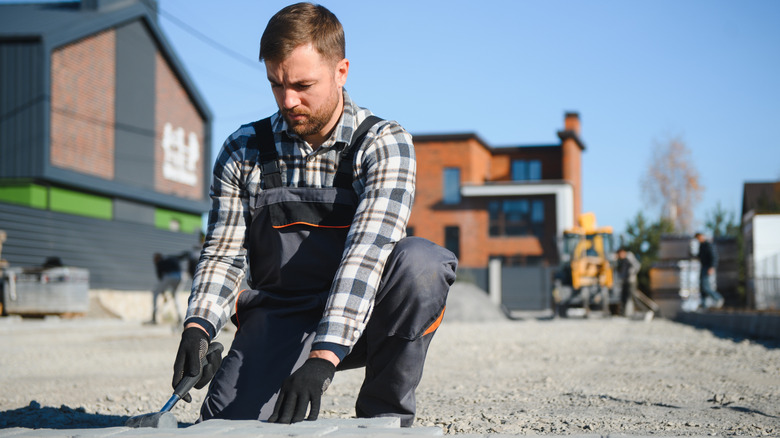
Sustainability is something you see everywhere these days, though often it's more of a marketing buzzword or a sign of greenwashing than something substantial. In fact, sustainability is far from a new concept — its etymological origins lie in a 1713 treatise written by a German mining official who recognized the importance of sustained yields in forestry. Over three centuries later, people continue to redefine sustainability, and there's one material that exemplifies the debate: recycled rubber from tires. It's been turned into everything from playground surfacing to filler in asphalt, often with mixed success. Now, it's being used in place of brick or cement to make pavers for landscaping, and the products might actually live up to their sustainable labeling.
Many millions of tires reach the end of their usefulness each year, and about 79% of them are recycled. The journey starts at the recycling facility, where the steel is pulled from the tires using strong magnets — it gets recycled, too — and the rubber is shredded and cleaned. It's then ground into crumbs using ambient grinding at room temperature or cryogenic grinding in liquid nitrogen. The rubber crumbs are blended with polyurethane and molded into patio pavers and paver landscape edging that adds curb appeal to your yard. As mentioned, there are some significant downsides to using recycled tire landscaping products that have caused people to think twice before using, say, rubber mulch in their gardens. They leach toxic chemicals into the surrounding soil, it gets hot under the sun, and it's flammable. Their sustainability lies in a few other factors: a lower production carbon footprint, keeping a significant source of waste out of landfills, and increased durability and versatility in landscaping.
How does recycled rubber stack up against brick and concrete for pavers?
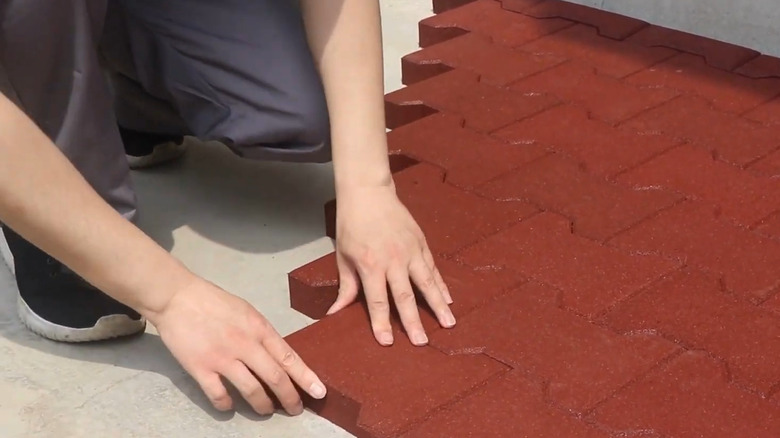
Sustainability isn't just defined by a single factor. Recycled tire pavers meet some of the key criteria for a sustainable product, even if they fail in other areas, like leaching. For one, the simple fact that rubber tires are being reused helps remove enormous volumes of waste from refuse systems. Brick and concrete, on the other hand, are manufactured from raw, mined materials. Rubber pavers may also have a lower carbon footprint than traditional materials. Brick pavers, for example, are kiln-fired at high temperatures, and contribute an estimated 1% of global greenhouse gas emissions in 2025. The manufacturing of cement, the primary binder used in concrete, accounts for about 8% of worldwide CO2 emissions.
Recycled rubber pavers offer many practical benefits, too. For one, they're durable. You can expect a rubber paver patio or driveway to last 20 to 30 years, which is comparable to other common paver materials, like concrete and porcelain. They are light — recycled rubber is even being mixed into concrete to reduce the weight of the material — and easy to install. While rubber mulch may not be ideal in gardens, rubber paver tiles installed outside of your home can create a safe play area for your kids. It cushions falls better than surfaces made from other materials and is far lower maintenance than a lawn. Plus, with solid recycled rubber products like pavers, concerns around toxicity may be mitigated by a polyurethane (PU) coating. A 2009 technical report in Liberty Tire Recycling's research resources found reduced levels of zinc leaching, in particular, into water tanks from PU-coated rubber mulch.
Consider whether the benefits of rubber pavers outweigh the downsides
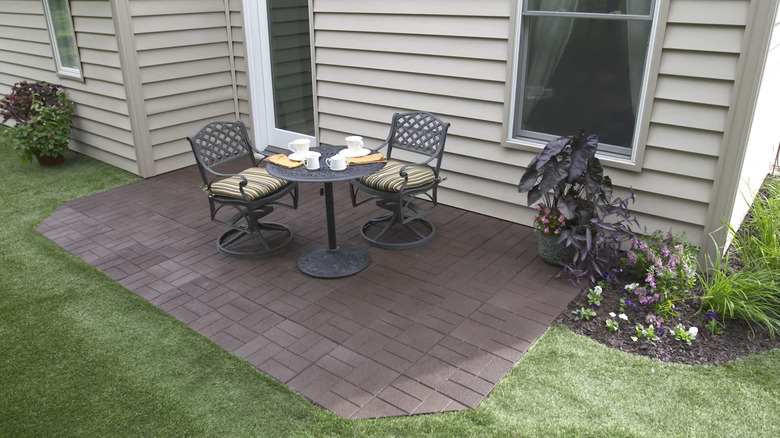
Of course, recycled tire pavers aren't without issues. Although coating or binding the rubber with polyurethane may reduce leachates, it's still a problem that shouldn't be ignored. You don't want, for example, water draining from the pavers to flow into a nearby vegetable garden or pond. Instead, recycled tire pavers are best used for walkways or patios that are edged by a drain (that takes water away from your property), gravel, or a lawn. Avoid using them for driveways, too.
Even rubber pavers will lose their color with prolonged UV exposure. What's more, dark-hued rubber pavers can get surprisingly hot underfoot in direct sun, making the surface unsafe for pets and anyone not wearing shoes outdoors. If you live in a hot climate, install recycled rubber pavers only in shady areas. Rubber tires can also spontaneously combust, particularly when shredded, and tire fires are notoriously hard to extinguish. However, fires usually occur in piles more than 3 feet deep. On the flip side, these flexible pavers are a good choice for cold climates because they handle freeze-and-thaw cycles much better than concrete pavers.
Rubber pavers and tiles are widely available at hardware stores in 12-inch by 12-inch, 16-inch by 16-inch, and 12-inch by 24-inch sizes. A 75-pack of 16-inch by 16-inch by 5⅘-inch Vigoro Brown Herringbone SmartLoc Rubber Pavers from Home Depot works out to over $4 a square foot, which is a slightly higher price than comparatively sized brick pavers or concrete stepping stones from the same store. If you're considering installing recycled rubber pavers in your yard, take a holistic approach. Compare the cost against the environmental and practical factors, both positive and negative, to help you make your decision.