

The Simple June Care Task That Boosts Spider Plant Health & Creates A Lush Look
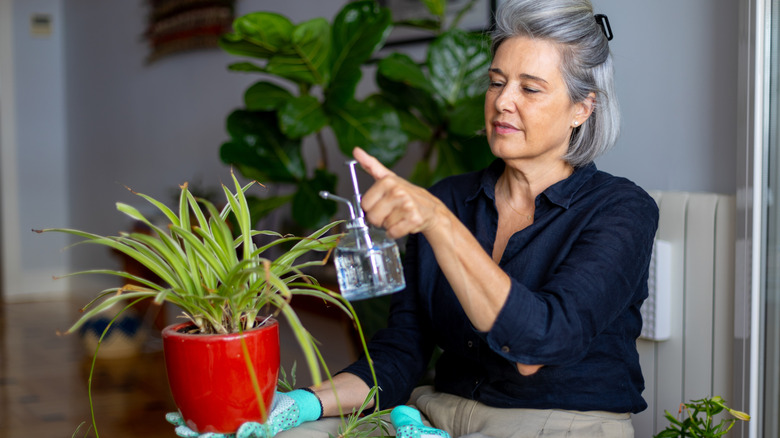
Spider plants (Chlorophytum comosum) aren't fussy — in fact, they're one of the easiest houseplants anyone can keep alive — but surviving doesn't necessarily mean thriving. When they're neglected, these plants might not die right away, but you could start to notice browning, wilting, and fading that act as signals their needs aren't being met. If you want your plants to be lush and full, it's important to take proper care of them, and in the summer months, sunlight becomes the top priority.
One of the simplest budget-friendly tips to make a spider plant bushier and healthier is to make sure it's getting enough exposure to light throughout the day. Generally speaking, spider plants require medium to bright light conditions to thrive, which translates to around 4 to 6 hours each day. Thanks to the fact that we enjoy longer days in June, it's the perfect time to transition your spider plant from its display on a tucked-away shelf to somewhere it can soak up those summer rays.
During the colder months of the year, spider plants go semi-dormant, meaning they don't grow all that much. Keeping spider plants happy all winter long generally only requires temperature control and some changes to their watering schedule, but if you want to your plant to become more lush and leafy, summer is the time you'll see the real changes. With that being said, however, it's not very wise to simply plop your plant on the brightest windowsill in the home and call it a day. For the best results, it's necessary to strike a balance between sunshine and shade.
Where to place your spider plant for the best growth
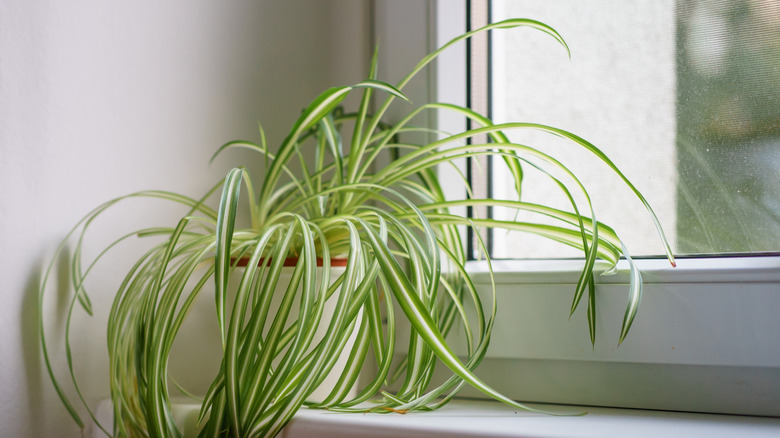
Sometimes, you can have too much of a good thing. Such is the case with sunlight for spider plants. Bright, harsh light throughout the day can cause the leaves to brown and scorch, and this is an especially important consideration in the summer months. Instead, indirect or filtered light is ideal. Because of this, the best spot for your spider plant is likely in an east-facing window — it can get a boost of light in the morning, but as the sun continues to move through the sky, your plant won't be blasted with rays throughout the day. If you're only working with south-facing windows, move the plant off the sill, keeping it nearby to strike a balance. If you notice scorching, pull it away from the light. If it's still looking thin or wiry and you're not seeing much growth, try placing it closer.
During this active growing season, also make sure you're watering your plant only when the soil dries out, that your space stays between 60 and 80 degrees Fahrenheit, and you're fertilizing the soil as needed — underfeeding is better than overfeeding here, so go light with the nutrients. With the proper care, your spider plant should thrive throughout the summer and see a lovely boost of growth. Who knows, you might even be blessed with some baby spiderettes, perfect for replanting in their own containers.