

Mistakes Everyone Makes While Washing Their Towels
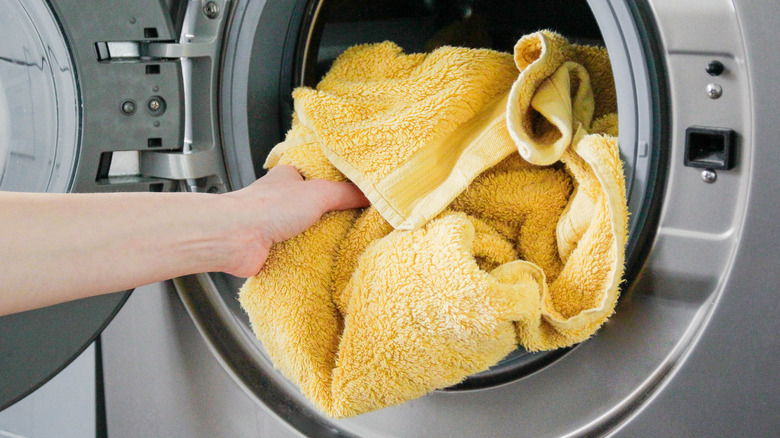
How often should you wash your towels? Ask this question in any crowd, and you're guaranteed to spark a lively debate. Doctors say you can safely use the same towel for a week at most, with one to three days being ideal, but some people go multiple months. When it comes to the actual washing, many people are also getting key steps wrong, like not checking the care instructions, using too much detergent and fabric softener, and drying for too long.
Properly cleaning your bath towels is important, beyond just keeping them bright and fluffy. The first reason is hygiene: towels quickly accumulate dead skin cells, sweat, and a mind-boggling number of germs, including ones like E. coli, MRSA, athlete's foot, and ringworm. Improper washing can leave more germs and debris behind on the towels, heightening your risk of infections and skin problems. Also, washing your towels incorrectly can affect the material, making them less comfortable, less effective at drying you off, and potentially stinky or discolored. If you want to keep your towels like new for longer, here's what not to do.
Skipping the care label
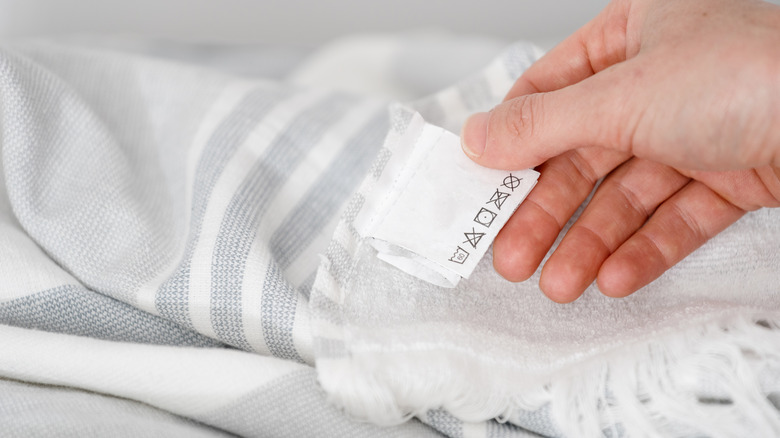
Towels are towels, right? Just throw them in the washer on hot, add some bleach, and call it a day — but not quite. Not all towels are the same. Most are made of cotton, but the type may vary and they may also contain silk or synthetic fibers. Others are made of 100% bamboo, rayon, or microfiber. Reading the care label is important so you know whether bleach is safe and what temperatures to use in the washer and dryer.
Chlorine bleach (the liquid household kind) is only safe for some fabrics. Don't assume that you can bleach your towels because they're white cotton; bleach can discolor even white fabrics, depending on the shade. It can also cause yellowing or fiber damage. For non-bleach-safe fabrics, use oxygen bleach to whiten and sanitize your towels instead.
Washing towels in hot water is often recommended because it kills bacteria and keeps them white. But water that's too hot can wear down the towels or cause fading. The care label will tell you if warm or cold water is best to use instead. The same is true for drying; usually a low to medium setting is ideal, but the label will specify. Even if the towels can take high heat, take them out as soon as they're dry. Too much heat can cause thinning, fraying, or rips as well as lowering absorbency.
Using too much of the wrong thing
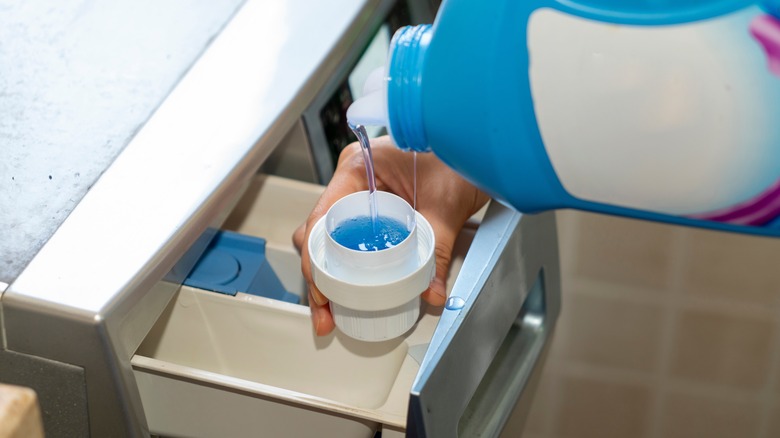
Fabric softeners and towels go together like oil and water, literally. Fabric softeners contain a silicone oil called polydimethylsiloxane (PDMS), which coats the fibers of the towels and prevents them from absorbing water. You can sometimes even feel the waxy, oily film on top of the towels, and they may become stinky as the residue holds onto smells. The same is true for dryer sheets, which also contain PDMS and leave the same residue.
Musty odors in your towels may also be caused by your detergent. Many people use too much detergent in general; two tablespoons is the perfect amount per load despite what the label says. Excessive detergent leaves a soapy residue behind, trapping bacteria and dirt, blocking absorbency, and making the towels stiff and rough. If you've already made this mistake, vinegar is helpful for cleansing buildup and neutralizing weird smells. It also doubles as a natural fabric softener that leaves no residue behind. You can also add an extra rinse cycle at the end of each towel load as an extra safeguard against residues.