

Start Your Fall Rhododendron Tasks Now For Beautiful Spring Blooms
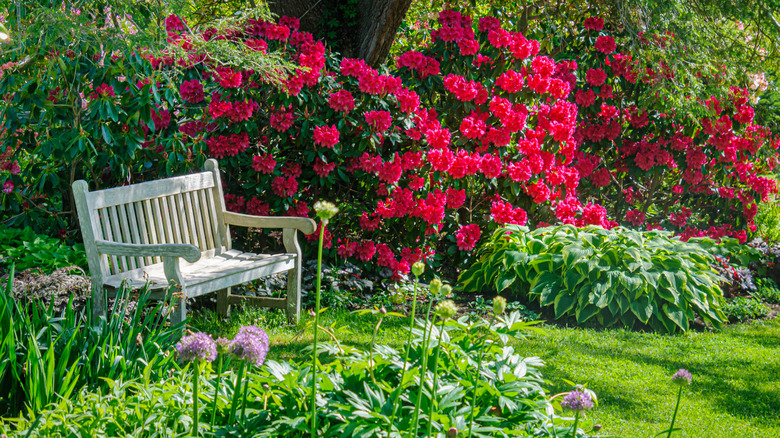
Rhododendrons are easy-to-care for flowering shrubs that fill the yard with beautiful blooms each spring. Not only do they provide stunning color, they are very popular with pollinators, providing food and shelter for butterflies, bees, and birds. Rhododendrons feature bell-shaped flowers that can be pink, purple, white, red, and in rare cases, yellow. The leaves are thick and leather-like and a dark green and glossy looking. Even though they don't require a lot of upkeep, they still need some attention each fall to get ready for winter. Taking the time to do these fall care tasks helps protect them from cold weather and ensures they'll re-emerge healthy in the spring, ready to bring color to your garden edges and borders and anywhere else you have them planted.
Rhododendrons are hardy in USDA Hardiness zones 4 through 8 but have been grown successfully in zones 3 and 9 with the proper care. One of the biggest problems rhododendrons encounter over the winter is a lack of moisture. Winter wind can be harsh and dries out the shrubs pretty fast. Once the ground freezes over, it's very difficult for water to reach the roots. The best way to deal with this potential problem is to make sure your rhododendron bushes get plenty of water during the fall. Deeply water your shrubs once a week keeping the hose at the base of the plant to avoid spraying the leaves. That should be sufficient to make sure the roots have plenty of hydration and reduce the chances of mildew and mold developing.
Ready your rhododendrons for winter
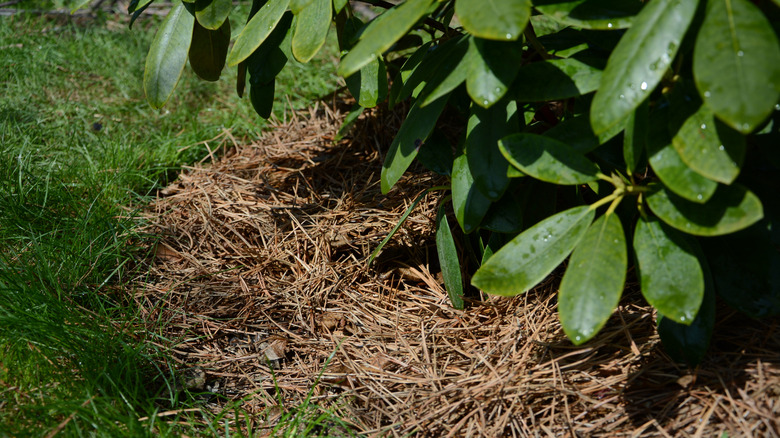
Mulching is another important fall task that will help protect your rhododendron plants throughout winter. Benefits to mulching in fall include retaining moisture, controlling weeds, and protecting the roots from cold temperatures. Good choices for mulch include shredded leaves, wood chips, and pine needles, one of the best ingredients to use in your DIY mulch. Add mulch to the whole root zone of the rhododendron plants. The best way to gauge this is to mulch out to the edge of the canopy of leaves. You should plan to add 3 to 5 inches of mulch, but don't pile up the mulch around the stem or main trunk of the bush. Your mulch should be a few inches away from the stem to avoid root rot and allow air to reach the trunk.
Protecting your rhododendron from the wind can prevent your bushes from drying out and the foliage from getting damaged. This is especially important for bushes that don't have any natural wind blocks. Burlap works the best for this task. Burlap is an eco-friendly material you can use to protect plants from cold temps and freezing weather. You can wrap the entire bush in burlap or you can make a burlap tent by placing three stakes in the ground and attaching burlap to the three sides so it resembles a tepee. Leave the top of the tepee open for air flow. This will keep the harsh winds off the bush and prevent any damage from occurring.
Fall pruning tips for your rhododendrons
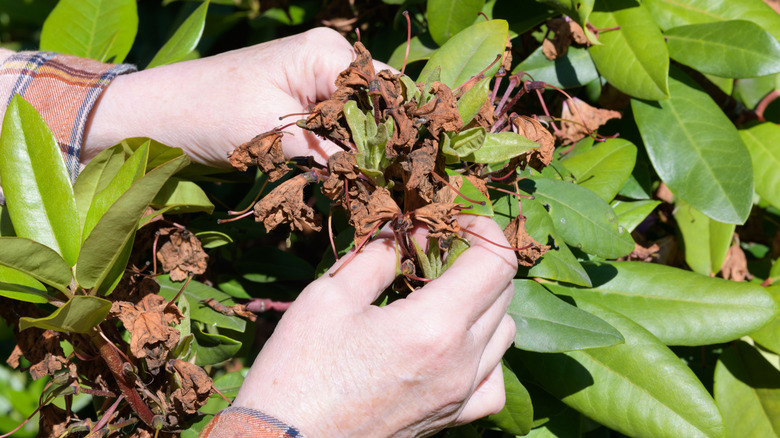
There are some light pruning tasks you can do in the fall that will improve the look and health of your shrubs. Deadheading is the main pruning job to focus on in during the fall season. Removing all the spent, brown flowers and seed pods from the rhododendron bushes allow it to focus its energy on making the roots stronger and strengthening its foliage in preparation for winter. Deadheading also gets the shrub ready for blooming in the spring.
Fall is also a good time to remove any diseased or dead branches, which you can do any time throughout the year without issue. Removing diseased branches prevents it from spreading further and causing more damage. This is often called maintenance pruning by landscaping professionals. Use a sharpened pair of pruners and cut the dead or diseased branch back to where there is a healthy branch. Save heavy pruning for late winter or early spring before the shrub starts to grow leaves again. Keep in mind that heavy pruning could delay blooms for up to a year.