

How Often You Should Be Watering A Peace Lily For A Healthier Houseplant
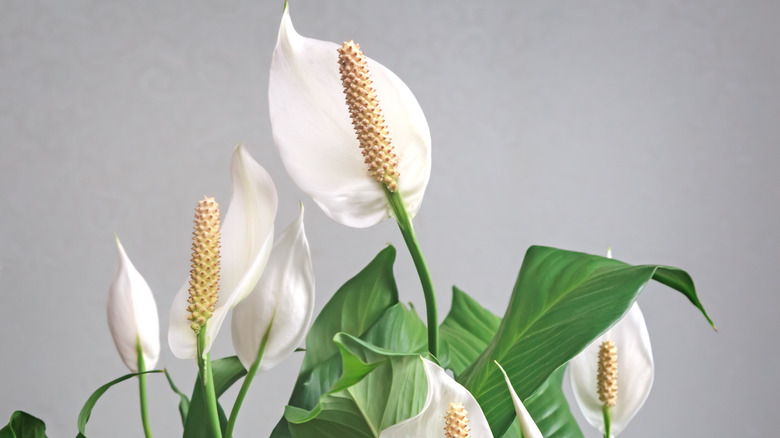
The bright white flowers of the peace lily (Spathiphyllum spp.) aren't true lilies. Caladiums and elephant ears are closer relatives of the easy-to-grow plants. They're a favored houseplant because they're one of the few that flowers in low light. Sometimes called white sails because of the color and shape of the blooms, peace lilies suffer in direct sun or cold, drafty conditions. Their average height is 3 feet tall, and they flower year round. Many gardeners prefer to set a schedule for repetitive chores like weeding and fertilizing, but peace lilies do better without a regimented approach to watering.
Peace lilies thrive in moist, but not soggy, soil. The soil should drain easily after watering so that the plant won't develop root rot in wet earth. Choose a soilless mix that's a combination of peat moss, coconut coir, and either perlite or vermiculite, the little white specks you see in potting soil. This nutrient-rich mix allows water to pass through while remaining moist. Avoid using soil from your garden — it may contain weeds and pathogens, and might compact too readily, making it hard to keep the moisture level in the pot right. The plants do well in large pots and don't mind being slightly root-bound, but one sign it's time to repot is if roots are growing out of the drainage holes.
How to water your peace lily
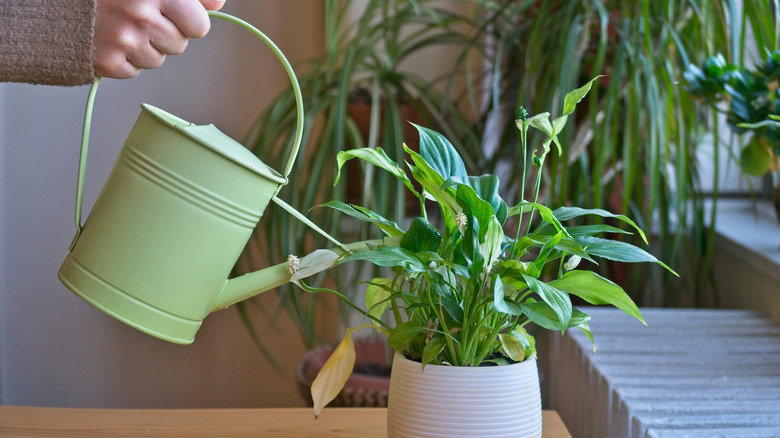
Wilting is an indicator of both over- and underwatering peace lilies. Instead of watering a peace lily on a regular schedule, a process that may cause extreme fluctuations in the soil's moisture, take its figurative temperature by sticking your finger in the soil. If the soil is excessively dry, the plant will wilt and the leaves will begin to yellow. If the soil is excessively wet, the roots will rot and the plant will die.
Let your peace lily dry out slightly to the touch before you water it, and don't make the common saucer mistake that might kill the houseplant – letting the pot sit in a saucer of water, another practice that can lead to wilting and root rot. Water the plant until the liquid drains out of the bottom and discard any that's left in the saucer. If you're using tap water, let it sit out at room temperature overnight to allow the chlorine in the water to evaporate.
If you're a believer in the ability of houseplants to improve the air quality in your home, a 1989 NASA study found that peace lilies can remove some chemicals from the air. However, later research found that these benefits typically only exist in a tightly controlled environment. Peace lily lovers with pets or children should know that its leaves contain toxic calcium oxalate crystals that cause symptoms ranging from mouth pain to difficulty swallowing and vomiting. Keep the plant out of the reach of little creatures who might want to chew on them.