

The Cold Weather Trick That Triggers More Blooms From Your Container Orchid Plant
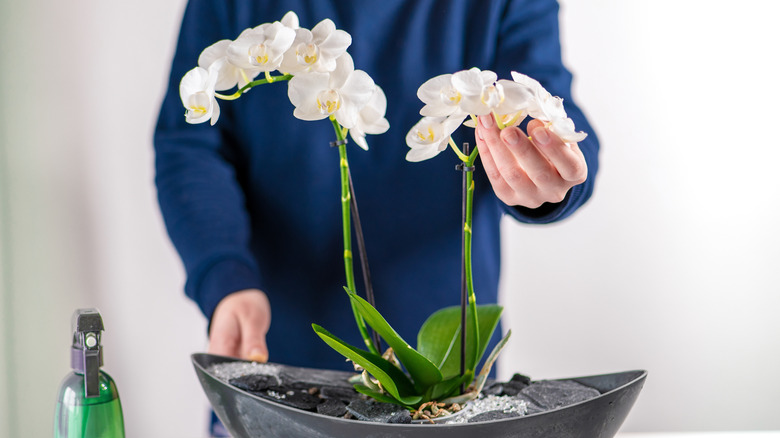
Certain types of orchids (such as Cymbidium orchids, hardiness zones 10-12) are among the best houseplants to have if you live in a cold climate because, with proper care, they can thrive as an indoor container plant. When orchids begin to wilt and lose their blooms, your natural reaction may be to mourn the loss of your plant, but that's actually a common mistake you should avoid making with your orchid. An orchid that's no longer producing flowers is most likely not dying; it may be just entering its resting period or dormancy phase. This is a natural part of many container plants' life cycle that enables them to conserve energy and prepare for winter.
In fact, if your orchid is looking a little bare, inducing that dormancy phase is an excellent way to trigger more beautiful blooms. To do so, you'll need to essentially trick your orchid into entering a resting period by mimicking the cold spell it would experience out in the wild. Orchids generally thrive in temperatures ranging from 50 to 80 degrees Fahrenheit, but a temporary dip in temperature is healthy — as long as it doesn't get cold enough for frost to form on the leaves. Fortunately, simulating a cold front for your orchid to help it blossom is relatively easy to do.
Before getting started, you'll just want to make sure your orchid is otherwise healthy and that you're following successful care tips for indoor orchids. Are you watering it every seven to 10 days, or when the soil feels dry? Is your orchid receiving indirect sunlight every day? Are you using fertilizer sparingly? If the answer to all the questions is "yes," and your orchid still isn't producing flowers, then a cold spell may be just what it needs to jumpstart some blossoms.
The best way to give your orchid exposure to cold
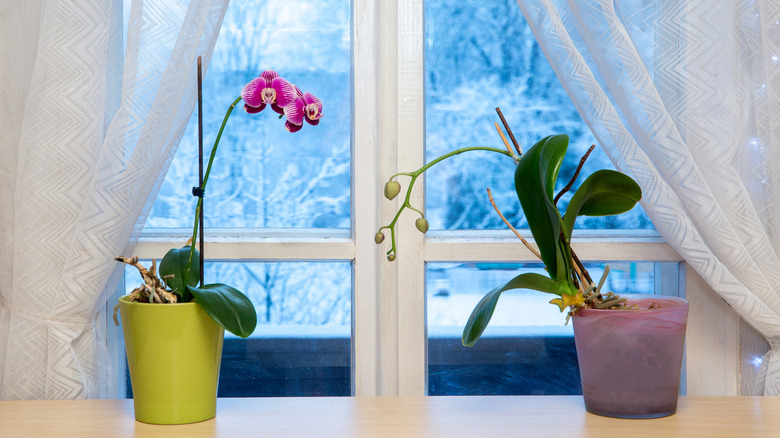
To trigger new blooms with a cold snap, put your orchid in a cool spot, such as near a window, for about three to four weeks. A good time to do this is in the fall, when there's a chill in the air but temperatures haven't dipped below freezing yet. Some orchids can also be kept outside while temperatures are still mild before bringing them indoors for the winter — just protect their leaves by gradually increasing exposure, so they don't burn. If you live in a climate where chilly fall air is hard to come by, try to mimic these conditions by lowering the air conditioning in your home by a few degrees every night for a few weeks.
While this cold-weather trick can work wonders at triggering new blooms, you'll just want to keep a few things in mind before putting it into practice. Seedlings and very young orchids, as well as some orchid varieties (such as white or yellow Vandas), are more sensitive to dips in temperatures below 60 degrees Fahrenheit. So don't go overboard with the chill, and also make sure you choose the right type of orchid that can tolerate a cold snap. Cymbidiums, for example, can even tolerate dips into the 30s degrees Fahrenheit! And while your orchid may love a little cold jolt to trigger new blooms, that does not mean you should deliver that cold with ice cubes! As Hilton Carter, a plant stylist and the founder of Things by HC, previously told us here at House Digest, "The freezing temperature can shock the roots."