

How To Naturally Stop Centipedes In Their Tracks Before Ever Entering Your Home
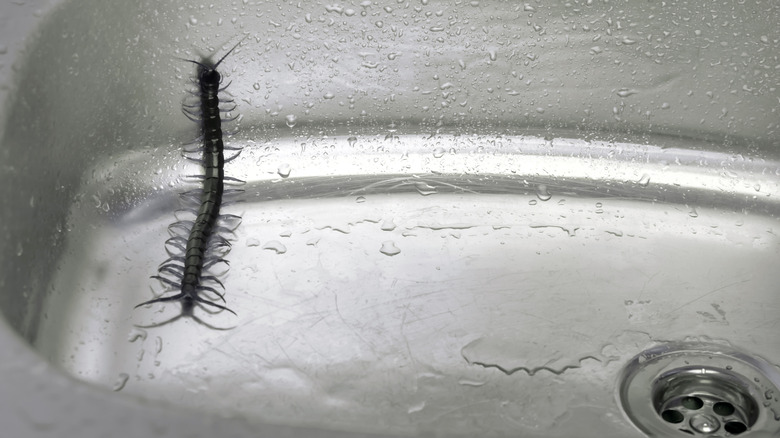
Whether it's spiders, ants, or silverfish, no one likes finding creepy crawlies in their home. However, while nearly all insects are unwelcome visitors, there is something especially disconcerting about seeing a centipede scurrying around your house. So even though they often earn their keep by eating other pests, most of us want to keep centipedes as far from our homes as possible. Fortunately, that doesn't mean you have to rely on chemicals to repel these bugs. You can naturally prevent centipedes from entering your home by keeping your yard neat, sealing potential entry points, and preventing puddles and other sources of moisture from accumulating around the exterior.
Centipedes are usually easy to identify because of their unique appearance. They have long, flat, segmented bodies that resemble worms. However, unlike worms, centipedes have multiple pairs of legs. While their name would suggest that they have 100 legs, they can actually have anywhere between 15 and 177 pairs of legs. Centipedes are sometimes confused with millipedes, another insect with multiple pairs of legs, but millipedes don't eat other insects or bite. Centipedes, on the other hand, have special legs that contain venom for attacking prey. They usually don't bite humans, though, and their venom isn't likely to cause serious health issues unless you have an allergy. They are drawn to damp, moist areas, as well as nooks and crannies where they can hide.
Seal entryways to keep out centipedes

It may be obvious, but one of the most effective ways to keep centipedes out of your home is to physically block their access. These pests can enter your home through the smallest holes, cracks, and gaps in its exterior. They can also make their way inside through holes in screens, gaps in doorways, openings around pipes, and even vents. It's especially important to look for signs of a problem with your home's foundation since it can shift and wear down over time.
Seal any gaps, holes, or cracks you see around your foundation, windows, doors, baseboards, and pipes with caulk. In areas where applying caulk is difficult, steel wool or expanding foam often works well to fill in gaps. If the weatherstripping around your doors and windows appears damaged, replace it. Repair or replace torn window screens, too. You can also add door sweeps to doors that have gaps at the bottom and cover the vents in your attic or foundation with fine mesh for added protection.
Reduce yard clutter and high-moisture areas around your home
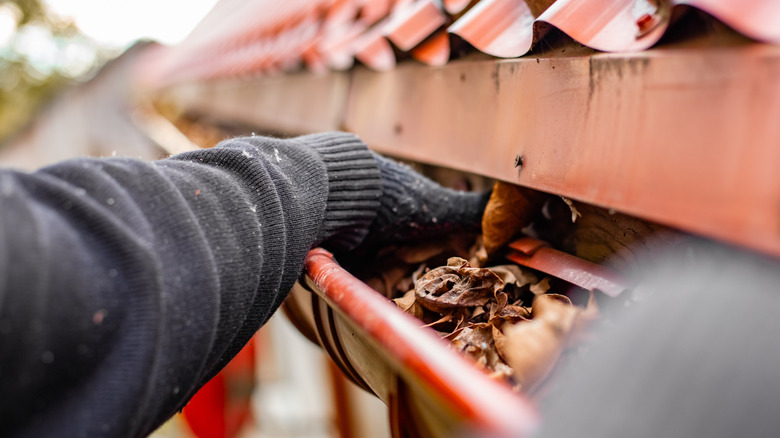
Because centipedes are drawn to moist areas where they can hide, it helps to keep your yard as neat and dry as possible. In particular, keep the perimeter of your home free of debris, such as leaf piles, firewood, mulch, and grass clippings. Not only does it provide a place for centipedes to hide, but it can also trap moisture easily. Mow your lawn weekly and bi-weekly if there is heavy rain. Keep an eye on bushes, shrubs, and trees around your home, and trim them back if the foliage becomes too dense.
However, perhaps even more important than keeping your yard free of debris is ensuring that the area around your home has proper drainage. Puddles around your exterior can attract centipedes, making them more likely to try to enter your house. Your yard's soil should be sloped away from the foundation to encourage water to flow away from it. It's also essential to clean hard-to-reach gutters and keep them free of debris, allowing water to drain away from your home.