

10 Annual Flowers To Plant In Gravel Gardens
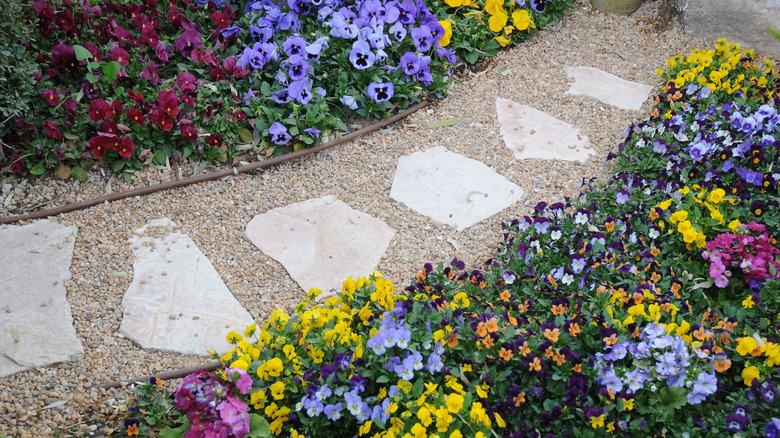
Got a pile of leftover gravel sitting in your yard? Well, you can use it to bring one of those stunning gravel garden ideas to life and transform your outdoor space. A gravel garden is a perfect choice if you are one of the lazy ones and want to add outdoor features that make a gardener's life easier. However, the success of your gravel garden depends on choosing the right plants. For instance, gravel gardens are often added to places with sunny conditions and are designed with the intention of using less water.
So, you might want to add drought- and heat-tolerant plants. This is important because gravel can absorb heat, making the soil warmer than it would be otherwise. Annual flowers like petunias, marigolds, sunflowers, and cosmos are some of the really good choices you can add to a gravel garden. Not only do these flowers survive heat and water scarcity, but they also grow well in nutrient-poor soils.
This, again, is something worth considering, as gravel gardens naturally fit with sandy or gravely soils, which aren't very fertile. However, this shouldn't limit your choices. If you are ready to work on watering and fertilizing when needed, there are a number of other annual flowers you can also plant in your gravel garden.
Aztec marigold
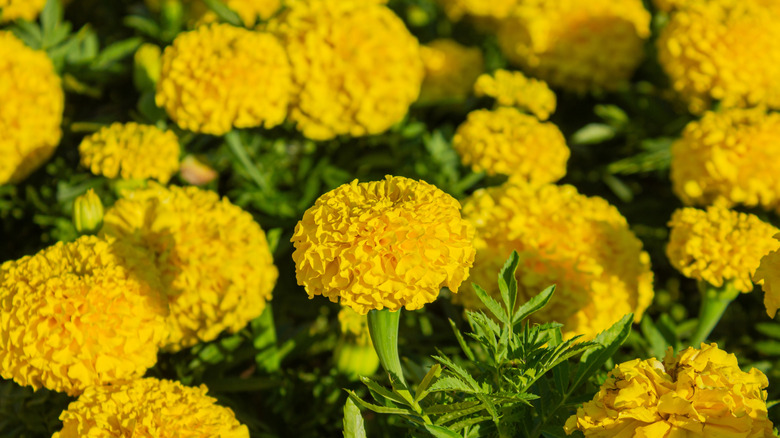
A cheerful annual herb in the daisy family, the Aztec marigold (Tagetes erecta) grows in a range of different soil types with good drainage and blooms for a long time. If the conditions are right, its flowers are abundant, appearing on the plants in summer, and, if given proper care, can last through the fall. While often grown for its beauty and use as an ornamental plant, it is also known for its edible leaves and flowers, as well as its use in herbal medicine. It's even thought to help deter pests in your backyard.
Venus's navelwort
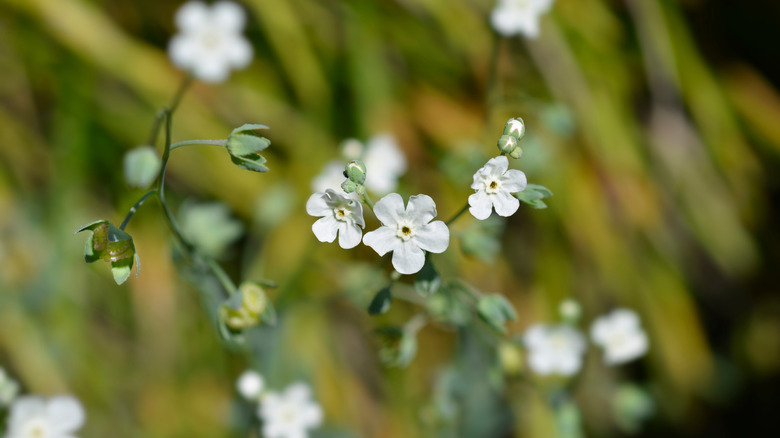
A graceful annual, Venus's navelwort (Iberodes linifolia) has thin, branching stems covered with narrow, grey-green leaves. Its flowers bloom in late spring and linger into summer. It is a perfect choice for small gravel gardens because of its compact size. At maturity, Venus's navelwort measures only about 16 inches tall and 6 inches wide. Just keep in mind that it does not respond well to transplanting. Other than that, it is quite easy to care for as it has no known diseases, but keep an eye out for snails and slugs, which can be an issue.
Treasure flower
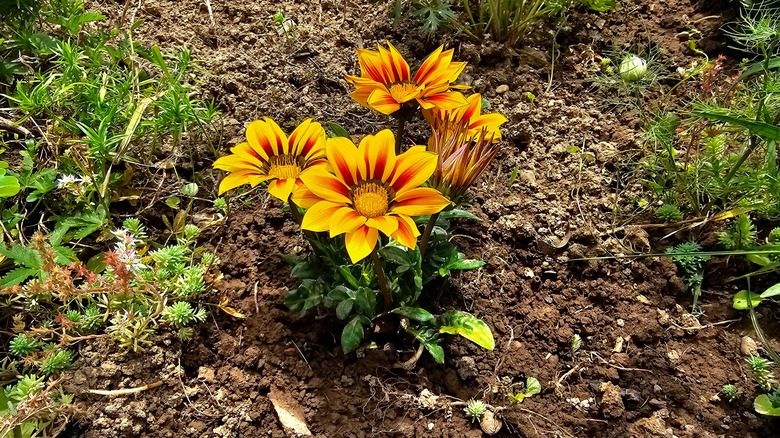
Technically a perennial, the treasure flower (Gazania rigens) is often treated and grown as an annual. It makes the perfect choice for the heat of a gravel garden or any dry, sunbaked patch. When it comes to colors, most treasure flowers are yellow to orange. But with some digging, you might find varieties with cream, pink, brown, and purple petals to match your home's exterior. Also, it is one of those flowers that even the worst gardeners can handle. Why? Because you don't need to prune it, and it has very few pests and disease problems.
Garden cosmos
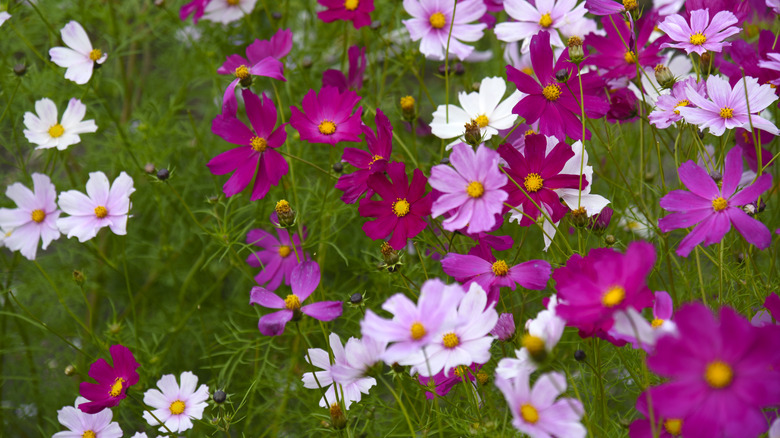
The plant gets its name from the Greek word "cosmos," meaning "harmony," inspired by its beautifully balanced, evenly spaced petals. If you are looking for a flowering annual that fills up the space quickly, go with garden cosmos (Cosmos bipinnatus), available in a range of selections and cultivars that are perfect for adding broad sweeps of soft, pastel color to your space. For the best results, plant them in a place that gets at least half a day of direct sunlight and sow seeds only after the danger of frost has passed.
Moss rose
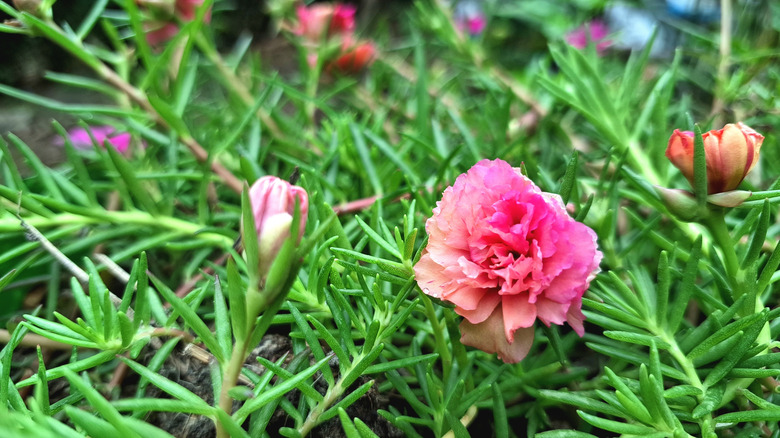
Few plants handle heat and drought quite like the moss rose (Portulaca grandiflora). It is grown widely all over the world for its showy blooms, which flower all summer long. The best part? It does all of that with very little care. You can use moss roses in your rock gardens to brighten the edge of a sunny bed or to line a gravel pathway. Just make sure that your soil is well-drained and avoid oversaturating it. These plants are very prone to damage from overwatering, which can lead to root rot.
Common sunflower
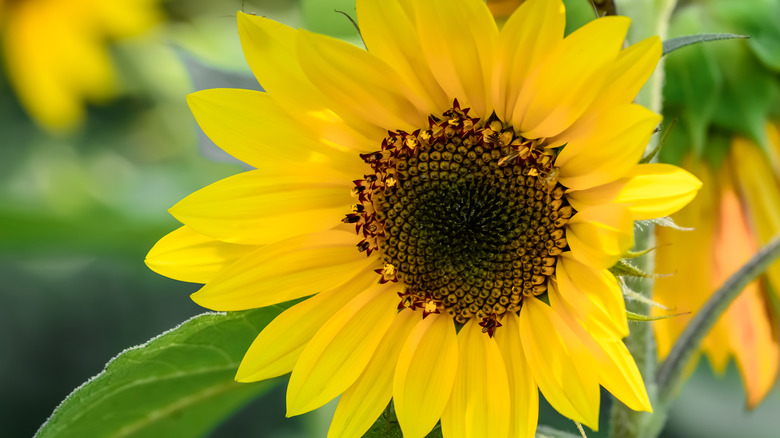
If you are looking for an annual flower that attracts both birds and butterflies to your garden, the common sunflower (Helianthus annuus) is a superb choice for planting in gravel, as it tolerates poor soil that is somewhat dry, provided it gets at least 6 to 8 hours of sunlight a day. Depending on the variety you plant in your garden, it can take anywhere from 11 to 18 weeks to bloom after seeding. But when it does bloom, it does so abundantly, and the flowers last from late summer well into autumn.
Petunia
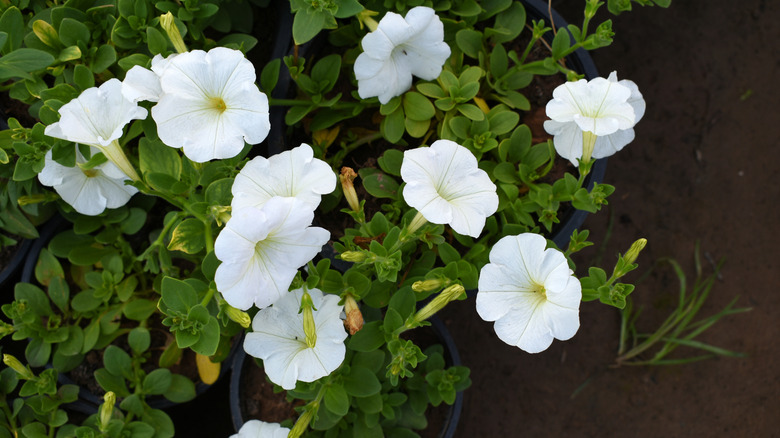
Few garden flowers are as loved as petunias (Petunia x hybrida). They are easy to grow, come in a dazzling range of colors and forms, and ask for very little when it comes to care. Interestingly, they are a relative of tobacco, getting their name from a South American aboriginal word that roughly translates to "a sort of tobacco that isn't any good for smoking." Nevertheless, petunias go wonderfully in gravel gardens, being extremely resilient and adaptable. They are not fussy at all, and as long as they get sunlight, they will grow and bloom.
Love-in-a-mist
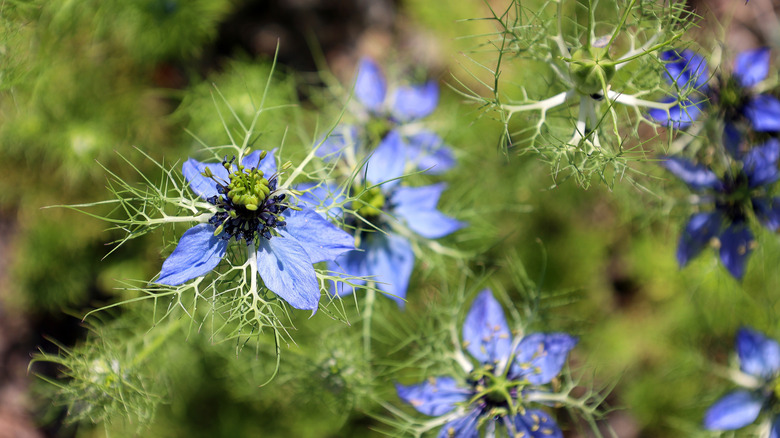
There is a touch of old-world magic in love-in-a-mist (Nigella damascene) with its ethereal blue and white flowers and a soft haze of feathery foliage. It blooms in spring and early summer and is sometimes even called a 'sow and forget' annual because of the reliability with which its seeds germinate. Given how uncommon the color blue is in flowers, love-in-a-mist is an ideal choice for people who want blue in their gravel gardens. Just make sure the soil is well-drained and fertile, and oh, keep an eye out for beetles and aphids that love sucking on its flowers.
California poppy
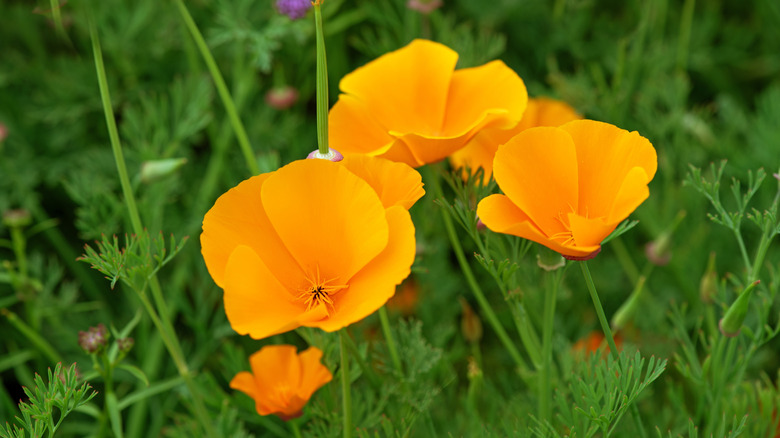
California poppy (Eschscholzia californica) is the state flower of California, hence the name. And, with its silvery, fern-like leaves and satiny blooms of orange, red, yellow, or white, it adds effortless charm no matter where you plant it. It is a fantastic choice for exposed areas like grave gardens and has no problem growing in poor soils. Also, it is a pollinator-friendly option for gravel gardens and attracts bees and butterflies. The flowers bloom in spring and summer, but if you are seeing fewer flowers than the plant is supposed to produce, deadhead the plants to encourage blooming.
Sweet alyssum
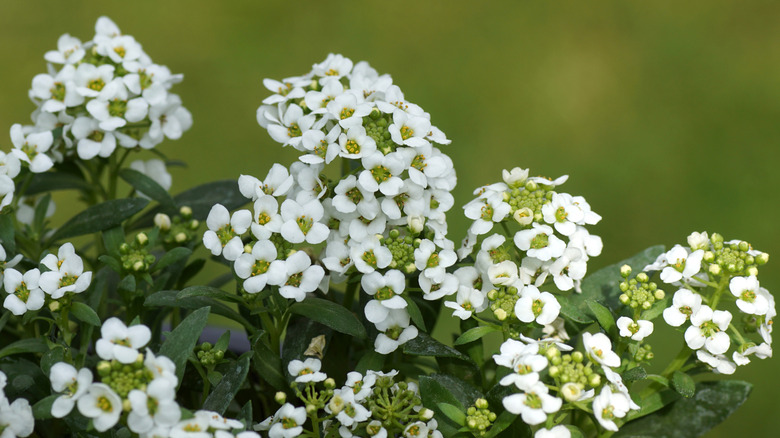
Sweet alyssum (Lobularia maritima) is a real garden charmer with its scent and abundant clusters of fragrant white flowers that look like a soft carpet of snow. It is easy to grow and tolerates drought; however, to help it thrive, make sure that your soil is well-aerated and well-drained. The best part is that if you live in a mild climate, it can produce flowers for a long time, sometimes even year-round. Also, it is one of those insectary plants and will attract beneficial bugs like lady beetles, lacewings, and parasitic wasps to your garden.