

Leave Your Garden Perennials All Winter. Here's Why
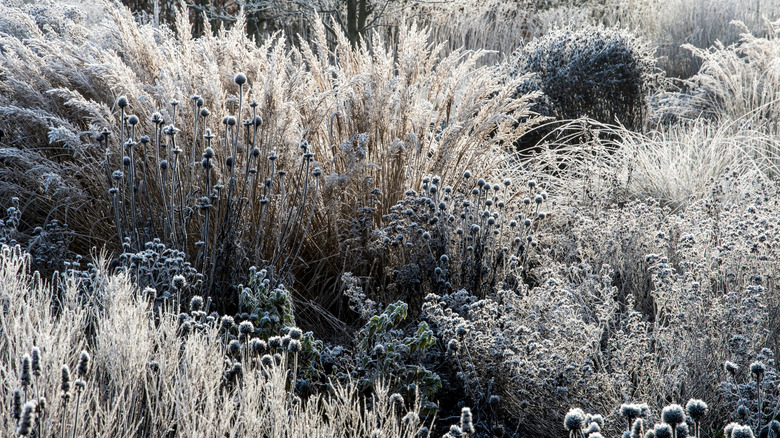
As you prepare your garden for winter, you may look around and see perennial beds full of dead flowers and wilted stems. Rather than pulling out your trusty pair of garden pruners, you may want to take a moment to decide if this garden task isn't better left off your autumn to-do list. Having a clean garden in spring may sound nice. But leaving perennials bushy for the winter instead of pruning them back in the fall is one of the most important things you can do to create a welcoming wildlife habitat.
That's because these plants are an important source of winter food for birds and small mammals. They also provide shelter from the harsh elements for all manner of critters. There are a few perennials you should be pruning in the fall — hostas and peonies number among these must-trim plants due to low frost tolerance and disease risk. However, if you're hoping to draw all manner of wildlife to your garden, you'll want to wait until spring to trim back the fading flowers, leaves, and branches on most of your perennials, especially if they're native to your area. And if you're worried about aesthetics, don't be. New perennial growth will pop out to cover the decaying vegetation come spring.
How perennials help birds and other wildlife over the winter
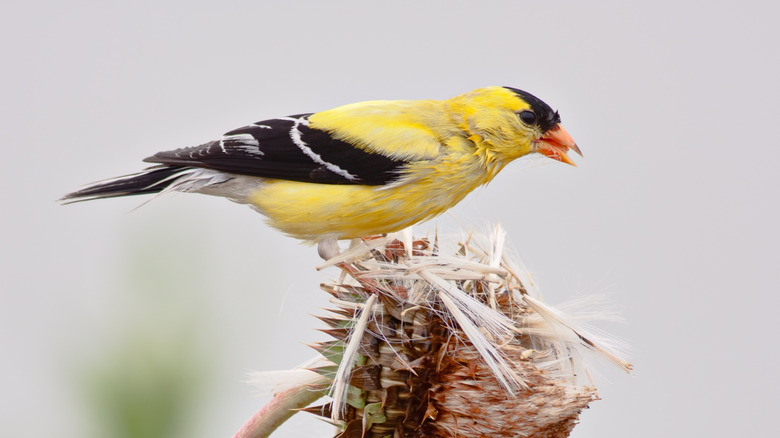
The seedheads that remain on a perennial plant after the spent flowers have dried are a precious source of food for birds. For instance, asters (Aster spp.) and coneflowers (Echinacea purpurea) are two perennial plants to avoid pruning in the fall at all costs. Their seedheads provide a rich source of food to songbirds like goldfinches. Perennial native sunflowers, like the willowleaf sunflower (Helianthus salicifolius), will attract birds like chickadees, cardinals, and grosbeaks with their winter seeds. And when you leave goldenrod (Solidago spp.) in your garden over winter, you'll have a ready stock of seeds for goldfinches, grosbeaks, and nuthatches.
In addition to providing a direct source of nutrients for birds, garden perennials left standing for the winter help to provide cover and protection from predators for birds that like to forage on the ground. Gardens where perennials are left standing over winter also provide winter shelter for bees, butterflies, moths, and other beneficial insects. Native bees, for example, burrow into hollow, dry plant stems, where they lay their eggs ready to hatch in the spring. These bugs are, in turn, food for insectivorous and omnivorous birds and mammals.