

Why You Need To Prepare Your Garage Door For Winter
We may receive a commission on purchases made from links.
Ever stepped into your garage on a chilly morning only to feel the cold bite through your jacket? More often than not, the reason behind it is basically your garage door that's letting the winter in. We rarely think about it. After all, it's just a door, right? But at the end of the day, it's what stands between your warm home and the cold outdoors. And if it's not prepared for the winter, it can make your life a lot more uncomfortable than you realize. You may, for instance, notice the moving parts of garage doors stiffening. Likewise, an unprepared door also makes your heating system work harder and puts your stored belongings at risk.
As temperatures drop, lubricants that keep your garage door springs moving smoothly start to harden. As such, every lift becomes a battle for your motor, which now has to work overtime. Further, when you do not insulate your garage door, you'll notice your heating system constantly chasing the cold, which eventually eats into your home's energy efficiency. The harder your garage door and heating system work, the higher your bills will climb. On top of that, vehicles and other sensitive items inside the garage take a hit due to the freezing cold. The rooms connected to the garage may also end up colder than you'd like.
Winter-proof your garage door with these tips
To get started, grab a lubricant like the Wayne Dalton garage door lubricant spray. Shake the can and spray the hinges, rollers, and springs of your garage door. Make sure every moving part gets a little love. A well-lubricated door means less strain on the motor and a lot less grunting on your part every time you head out in the cold. Next, consider sealing the bottom of your garage door because air tends to seep in through the gap underneath. Though the rubber ones make a good bottom door seal, if you're looking for something more durable that withstands harsh weather conditions, consider vinyl. It'll stop rain and snow from making their way in and will protect your stored items from frost damage.
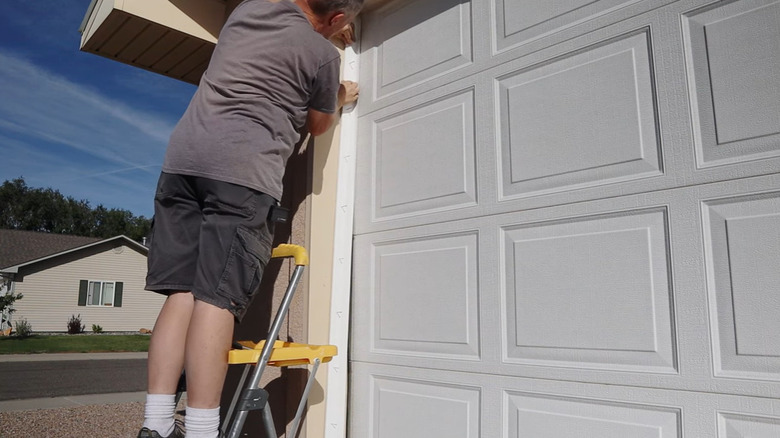
Weatherstripping is another thing your garage door needs. It's a rubber strip that's typically installed along the sides and sometimes the top of the garage door. The US Department of Energy recommends applying it when the temperatures are more than 20 degrees Fahrenheit, so you want to take care of this task before a heavy freeze hits. Make sure you also measure it properly because once the cut is made, you cannot go back.
Lastly, there's garage door insulation. You can choose between the lightweight polystyrene panels that are a breeze to install or fiberglass panels, which offer solid thermal protection. Spray foam insulation is another popular option to fill every nook and cranny for optimal efficiency. This will keep the heat where it belongs (inside your home and garage) and help you save energy this winter.