

7 Ways To Use Leaves As Fertilizer In Your Lawn Or Garden
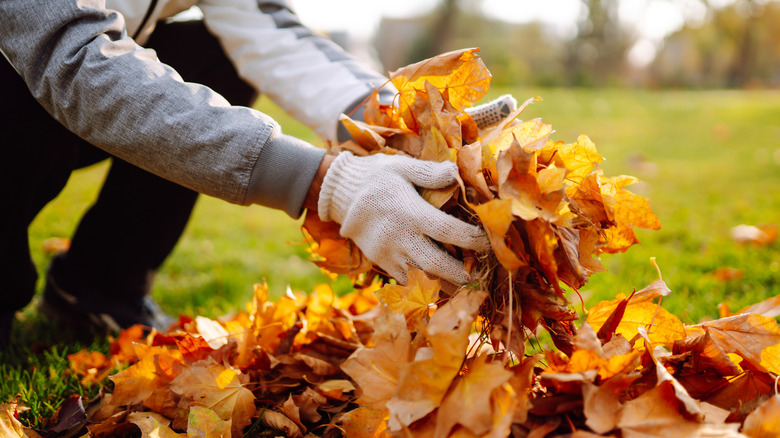
Fall might be the perfect season for many — the crisp, cool air, the beautiful colors, and the seasonal flavors are enough to put a spring in anyone's autumnal step. But homeowners have one big gripe with the otherwise perfect season — leaves. While autumn's falling leaves might perturb some by turning their otherwise immaculate lawns into unkempt eyesores, what some see as an annual annoyance is actually like money growing on (then falling from) trees thanks to all the benefits they provide your garden, landscaping, and yard.
Fallen leaves aren't a problem to be solved, they're a resource to be utilized. They are a free and renewable source of nutrient-dense organic material that can be turned into rich fertilizer for those parts of your garden and lawn you want to thrive season after season. Not only that, but bagging leaves every year is costly beyond being a dreaded chore. Removing leaves from your yard robs the soil and grass from the beneficial nutrients fallen leaves provide as they decompose. Leaves also serve as an important habitat for insects and other small animals, and research published in Science of The Total Environment shows residential leaf removal threatens some insect species populations. Bagged leaves also needlessly clog landfills, with the Environmental Protection Agency (EPA) estimating that yard trimmings, including leaves, account for about 7% of landfilled waste. Instead of throwing garden gold out with the trash, save your leaves for your spring garden and do some good for the environment, too.
Mow leaves to feed your lawn
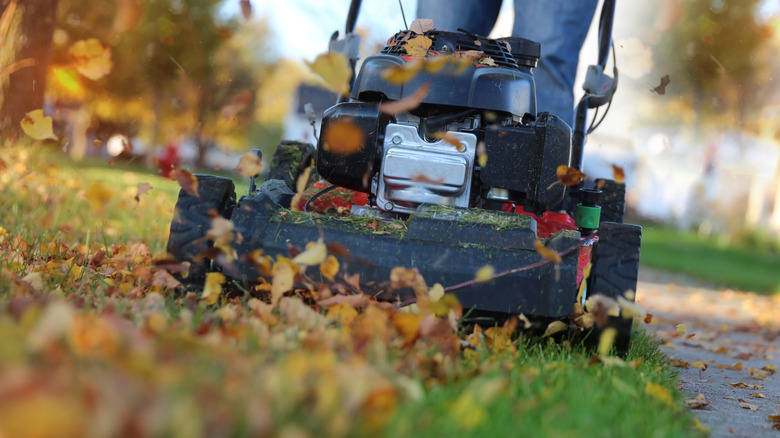
If you appreciate ease and efficiency, the mowing method is a great choice for you to get the benefits of autumnal leaves with the least amount of effort. Fallen leaves naturally decompose over time, fertilizing the soil as they do. However, you can speed up the process by simply mowing the lawn, leaves and all. Your lawnmower will grind the leaves into mulch so they will settle into the soil and break down more quickly. There really isn't an easier way to remove fallen leaves — no rake or leaf blower required.
Save some leaf mulch for your landscape beds
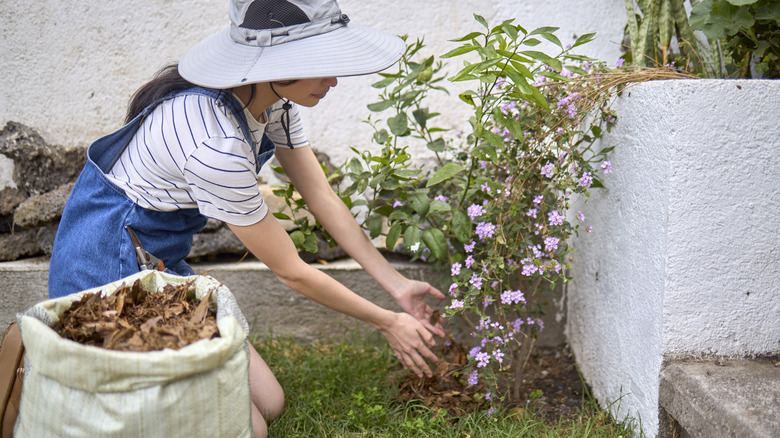
To utilize mulched leaves in other areas of your yard, simply collect mulched leaves in the lawn mower bag to disperse elsewhere. Use the mower to collect mowed leaves all autumn long by putting the blades on the highest setting to grind the leaves on top of your lawn without cutting the grass too short. Adding a few inches of leaf mulch to your flower and shrub beds will not only nourish the soil, but it will also serve as a protective layer, retaining moisture and regulating soil temperatures throughout the winter.
Add a mulched leaf layer to your vegetable garden
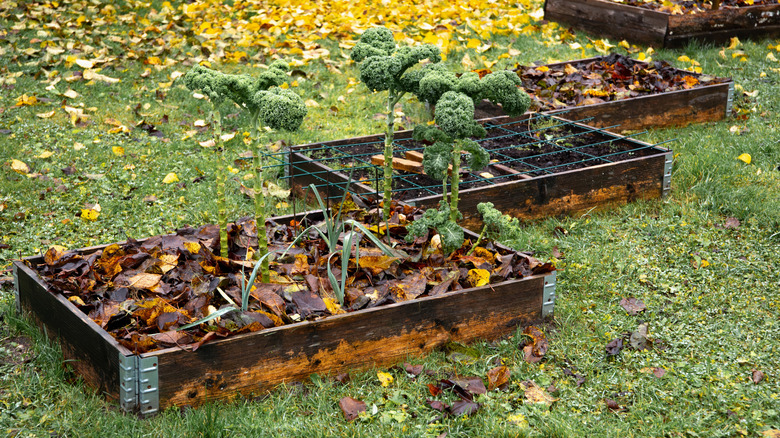
When you're enjoying next season's vegetable harvest, you'll be glad you had all those fallen leaves to give your garden soil an extra boost. Vegetable gardens enjoy numerous benefits from leaf mulch, including weed suppression and improved soil structure. Add a 3 to 6 inch layer of mulched leaves to your garden patch or raised beds to help prevent topsoil erosion while providing a nutrient-rich fertilizer that will feed the soil through the winter months. Once it's time for spring planting, turn the mulch into the soil.
Ditch expensive synthetic fertilizers for nutrient-dense (and free!) leaf mold compost
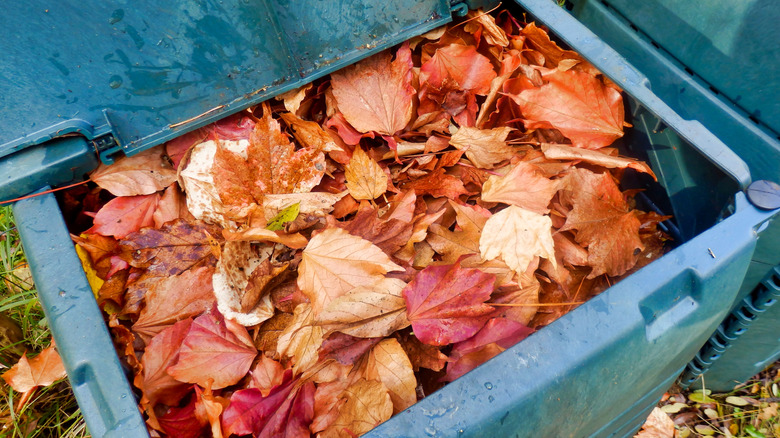
Fun fact: Fallen leaves contain upwards of 80% of the nutrients trees take in from the soil. Why not transform those pesky leaves into a compost powerhouse? Collect leaves with the mowing method above or rake them up and stuff them into a compact space. They'll just need moisture and air to turn into mold compost, so spray them with the hose and turn the leaves over every so often. Mulched leaves will decompose quicker than whole leaves, but both will give your garden a nourishing boost.
Make your own potting soil mix using leaf mold
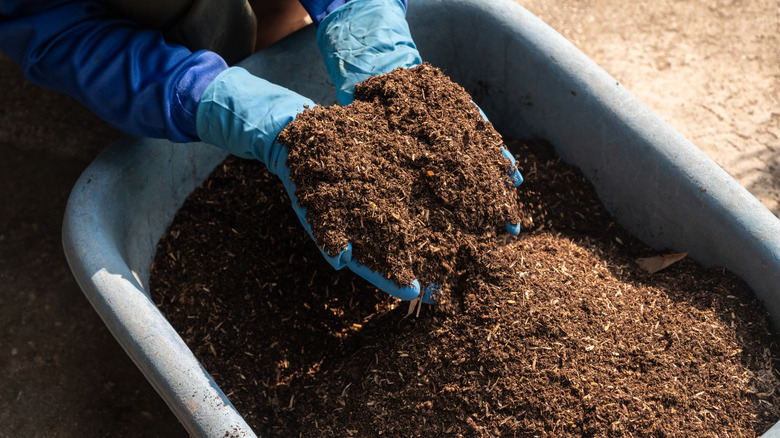
Those annoying yet valuable leaves can also be used in potted gardens and indoor houseplants. Leaf compost will do wonders for your seed starting mix and potting soil by infusing it with nourishing microbes to promote healthy root growth. To make your own seed sowing mix, combine two parts regular compost with two parts fully decomposed leaf mold and add one part perlite or sand. For potting soil, adjust this recipe to two parts compost, one part leaf mold, and two or three handfuls of perlite per 10 gallons of mix.
Fertilize (and winterize) your fruit trees and shrubs
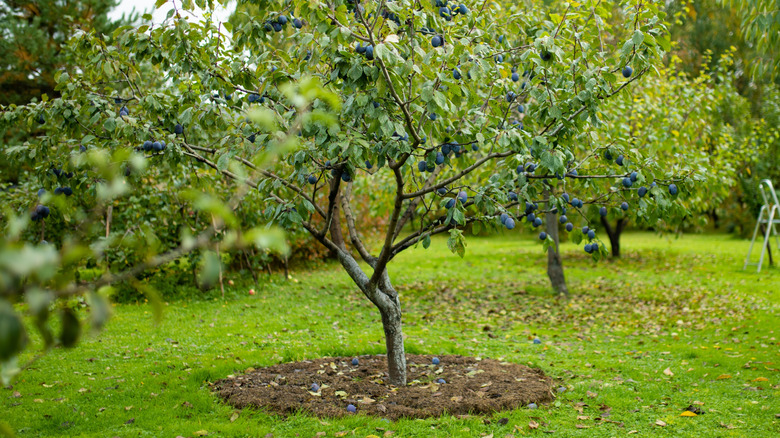
Mulched leaves or leaf mold compost make great companions to fruit bearing plants. Then the temperatures start to drop, cover fruit tree beds with a generous layer of leaf mulch or mold. This will help regulate soil temperature, aid in moisture retention, and offer a steady dose of nutrients all winter long. Leaf mulch and mold will improve soil quality over time, and your fruiting trees and shrubs will thank you with bigger harvests.
Use a leaf blanket in sheet mulch for new garden beds
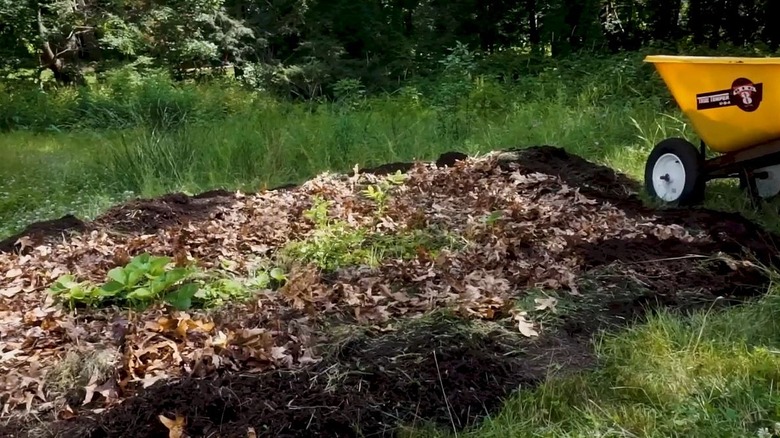
Sheet mulching is a technique used to prepare soil for new growth. It utilizes several different materials layered on top of each other to smother weeds and condition the soil to welcome new plants. Leaves are a popular layer material for sheet mulch, along with cardboard, compost, and woodchips, all of which will decompose over time to reveal nourished and fertile soil.