

How To Keep Your Pothos Plant Happy & Healthy All Winter Long
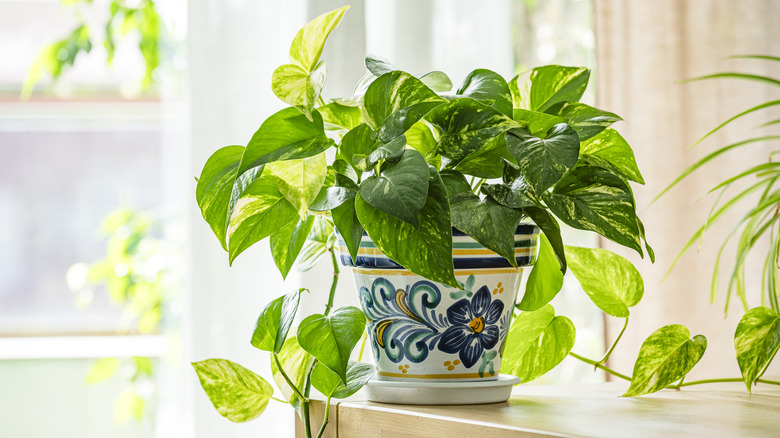
Even a famously beginner-friendly plant like pothos (Epipremnum aureum) needs a little extra attention during the colder months. Pothos is the pride of hanging baskets across North America with long, trailing vines and green or variegated heart-shaped leaves. This easygoing evergreen is many people's first houseplant because it tolerates low light conditions and doesn't require much maintenance, but it will still need some care adjustments to cope with the changes that come with winter. If you're entering your first winter caring for a pothos — or you just need a refresher — you can give the plants what they need by making simple adjustments to its basic care routine. For starters, make sure your pothos has plenty of bright but indirect light and stays in a warm room to help the plant stay healthy and happy all winter.
The downward-shifting temperatures and reduction of daylight hours winter brings can cause pothos leaves to lose their luster and even their variegation. As tropical plants, they will be out of their element if your home's temperature is too low or they're living near drafty doors or windows. Keep your space at a minimum of 60 degrees Fahrenheit to make sure your pothos is comfortable. Its ideal temperature range is between 60 and 85 degrees Fahrenheit. Pothos plants are happy when they're getting as much indirect light as possible, so if you have a spot where sun filters in through a nearby window, this is ideal, as long as they're not close enough to catch a chilly wind or get scorched by sunbeams. Something else to consider in your placement is keeping pothos out of the reach of children and pets, since the calcium oxalates it contains can be harmful if eaten.
Adjust your pothos' water and fertilizer routine in winter
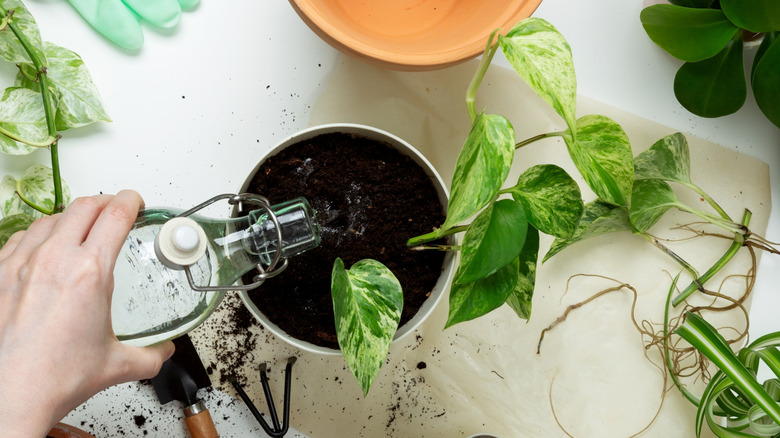
When it's cold and dark outside, you may have to monitor or change parts of your pothos care routine that feel like they're on autopilot in the summer. Finding the right balance for watering is important as you tweak your houseplant care routine for winter, for example. In winter, the air inside your home is usually drier. The general advice is to let pothos' soil dry out before you water them, and while this is still true in the winter, the soil could get parched more frequently when your heat is turned up over the colder months.
The solution here is to check the plant more frequently by feeling the top of its soil; you may find it needs less water because it's growing less, but it could also require more frequent drinks or misting. With careful attention, you can avoid overwatering or underwatering, both of which are common mistakes with pothos plants. The plant itself may tell you if you've made a mistake; yellowing leaves can mean your pothos is being overwatered. If the leaves are turning brown and you've ruled out other problems such as root rot, adding humidity in the form of a humidifier in the room or a pebble tray under the pot may help.
If you had been fertilizing your pothos in other seasons, winter is the time to take a break while the plant isn't in an active growth phase. Every situation will be different, though, and there are exceptions. If you have your plant under a grow light in the winter, you can consider fertilizing it all year round because the plant will continue to behave as if it's summer. But if your plant is sitting by a natural window, it's best to let it rest and wait until spring to prune and repot your healthy pothos.