

Kitchen Linens You Probably Aren't Cleaning Often Enough (& The Best Way To Do It)
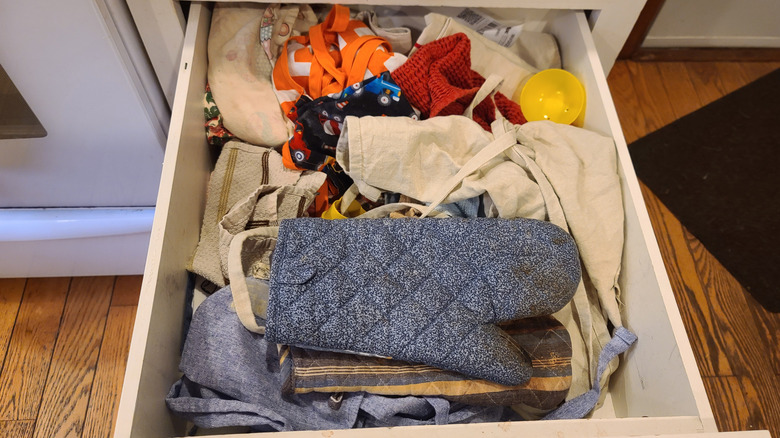
Keeping your kitchen clean and tidy can feel like a daily struggle — there are just so many tasks competing for your attention. While you might remember to sanitize your counters and sink regularly, there are likely things in your kitchen you're probably not cleaning enough that are easy to overlook, such as your kitchen linens like tea towels, oven mitts, pot holders, and aprons. You may use them constantly, whether as an eco-friendly alternative to paper towels, to protect your clothing from spills, or to shield your hands from hot pots and pans.
As you prepare meals, these fabrics may come into frequent contact with germ-ridden surfaces like cutting boards, stovetops, or cabinet handles. Every time you use them to dry dishes or wipe counters, you could unwittingly be spreading germs instead of removing them — gross! For example, uncooked animal products can carry pathogens that can seriously sicken you. Therefore, it's a good idea to wash them after every use.
But there's good news. Ensuring that the fabrics in your kitchen are as clean as they might look is a relatively easy fix. All you need to do is establish a consistent cleaning routine for these linens and use the most effective sanitation methods; some you should be cleaning every day. Doing so can significantly reduce the spread of bacteria in your entire home, creating a much healthier and safer kitchen.
How to wash your kitchen linens
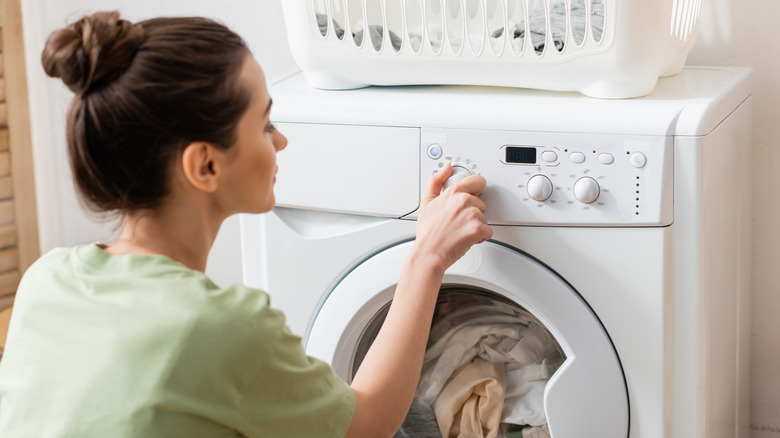
Tea towels, oven mitts, pot holders, and aprons are all kitchen items you should clean more often, and how you clean them makes a difference. When adding these linens to your laundry, avoid mixing them with your bath towels, sheets, or clothing to avoid transferring contaminants. For the deepest clean, wash your kitchen linens in your machine's sanitizing cycle or with bleach. The sanitizing wash cycle is designed to kill almost all bacteria and uses your machine's hottest temperature setting. If you prefer not use bleach, you can also kill bacteria by washing your kitchen laundry with hot water, at least 140 degrees, and laundry detergent.
To dry your kitchen linens, use your dryer's sanitizing cycle, a longer cycle that can reach temperatures over 140 degrees and can destroy harmful microorganisms that you don't want in your home. Be sure to always check the items' care labels before washing and drying them since not all fabrics can withstand such high temperatures. Some manufacturers even recommend washing their oven mitts and pot holders in the dishwasher, not in your washing machine. For an eco-friendly boost, air-drying your kitchen linens outdoors in the sunlight can further sanitize them, as UV light kills germs.