

The Best Way To Propagate Begonia Plants Isn't As Hard As You Think
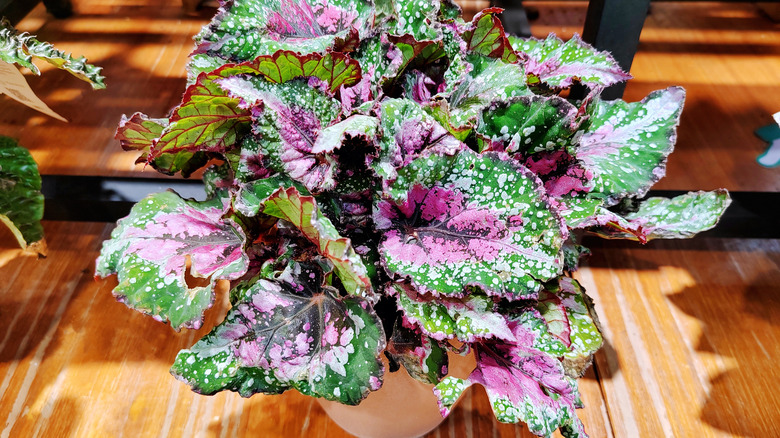
Of all the easiest plants to propagate from cuttings and grow for free, begonias shine because of their amazing variety of 2,000 species and multiple forms of propagation through cuttings. Best of all, propagating begonia plants isn't difficult at all. While you can propagate begonias from stems and whole leaves, propagating from leaf fragments — commonly known as "wedges" — is especially well suited to the rex begonia species, as well as other rhizomatous begonias and tuberous begonias. All begonias will grow roots from leaf cuttings, but varieties other than the rhizomatous and tuberous types won't produce a whole plant.
The leaf wedge method is also said to be the easiest and is the best choice if your goal is a quantity of new begonia plants. This method works because it splits the veins in the leaves, providing the means for the leaf to grow a new plant from the cuts in the veins. Ready to try this method? Read on for how to do it.
Propagate begonias the easy way with leaf fragments
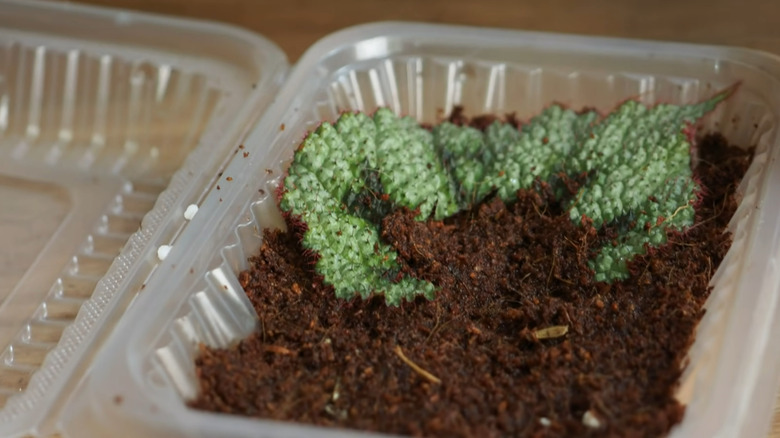
First make sure all supplies are well sanitized. Choose mature leaves, as these typically propagate well. Use a sharp razor blade or other cutting instrument to cut the leaves into vein-bearing wedges. While wedge size is not an important criterion, a good guideline is to cut them into 1- to 1.5-inch vertical fragments, making sure there is a strong vein in each. Using root hormone is optional but may speed up propagation; if using it, dip the leaf edges into it (learn about the types of rooting hormones you can use to multiply the plants in your garden).
You'll need to have a container with propagation medium ready to place your wedges in. A container with a cover, such as a clear or translucent, sterilized takeout container with a hinged cover, works well to provide the wedges with needed humidity. Recommended mediums include perlite, vermiculite, perlite and peat mixture, or coconut coir. Moisten the medium in preparation for placing the wedges in it. You can also ensure the wedges get some nutrition to help them grow by including a weak fertilizer solution, after roots have formed.
Your new begonias will emerge in 6-8 weeks
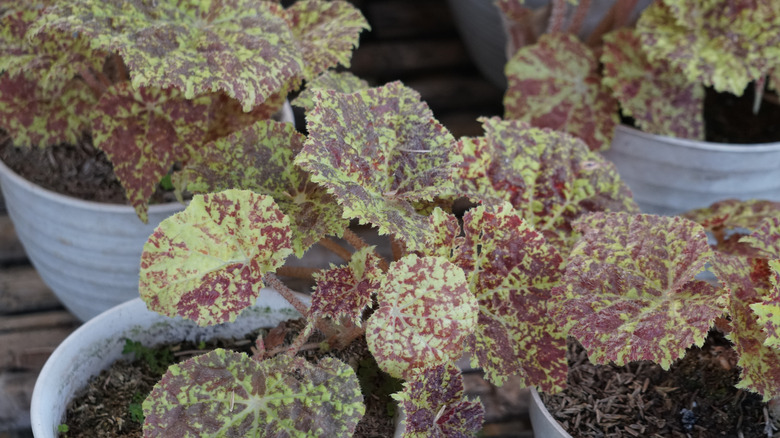
Next, place your wedges vein-side down into the growth medium in the container, tucking the leaf edges into the medium and attempting to keep them upright. You can space wedges an inch or so apart, but it's okay if they touch or overlap. If you already moistened the medium, you can give a light watering or misting, but avoid getting water on the leaf surfaces. Cover the container to keep in the humidity.
You'll want to keep your wedges warm as they grow in an environment at about 70 degrees Farenheit; one option is a heat mat under the container. If the container stays covered, you may not need to water again, but do open the container periodically to give the wedges fresh air and provide a bit of water if the medium gets dry. Give them artificial light 8 to 12 hours a day, avoiding sunlight that would doom the wedges in their covered containers. You can expect your new plantlets to emerge in six to eight weeks. Move them to individual small pots once they have 2 to 3 leaves and individual roots. Keep the pots covered, acclimating them slowly over 1 to 2 weeks until they are ready to be transplanted. It's not a bad idea to brush up on how to grow and take care of begonias before you embark on the propagation process.