

Are Solar Panels Impacted By The Cold? Here's What To Know
We may receive a commission on purchases made from links.
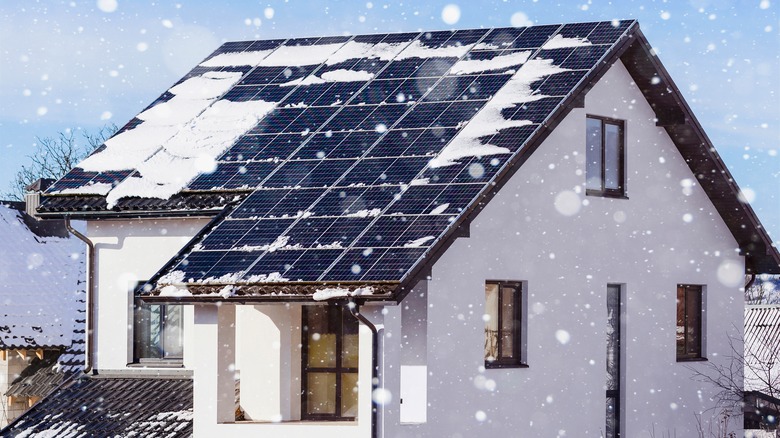
If you live in an area that experiences heavy snowfall or freezing temperatures, you may find yourself on the fence about adding solar panels to your home. Although they can significantly lower electric bills and reduce your environmental footprint, winter conditions can raise understandable concerns. Will they shatter in sub-zero temperatures? Are they likely to blow right off the roof during strong winds? And can sunlight even reach them when they're covered in snow? The average solar panel installation costs over $25,000, making it perfectly reasonable to worry that your investment could require extra maintenance or simply break during harsh winter months. But the reality may surprise you. It turns out solar panels typically operate more efficiently in cooler weather, and with thoughtful installation that allows snowfall to slide right off, they can provide reliable energy all year long.
Solar panels generate electricity by converting sunlight into usable power, and cold weather actually helps with this process. Heat reduces the voltage in solar panels which lowers their energy output, while cooler temperatures help the panels operate closer to peak capacity. On cold but sunny days, solar panels can produce even more electricity than they do on the hottest summer afternoon. The science behind this phenomenon is simple yet fascinating. Inside each solar panel, layers of silicon create electric currents when sunlight hits them. Cooler temperatures help these currents move more easily, kind of like how it's a little easier to exercise on a cool day than in sweltering heat. In other words, cold weather helps solar panels "work out" more efficiently, meaning a higher percentage of sunlight is converted into usable electricity for your home.
Certain cold weather conditions aren't ideal
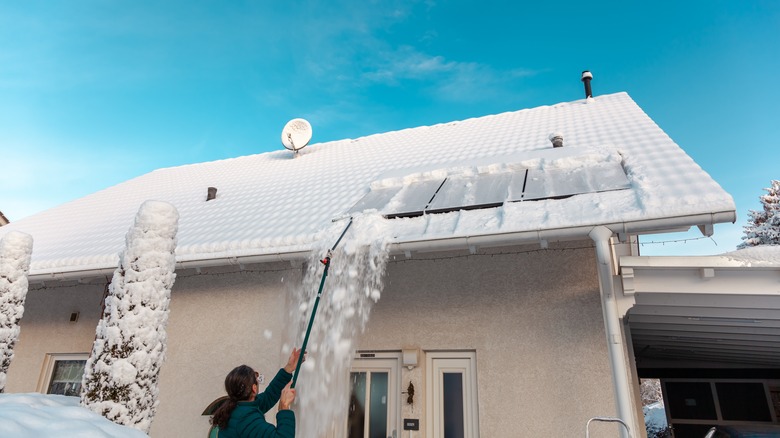
Cold weather may increase solar panel efficiency, but certain wintery conditions may reduce how well they perform. When solar panels are covered by a thick and opaque layer of snow, sunlight simply can't reach them. Along with waiting for sunlight or warmer temperatures, pairing your solar panels with a battery storage system can help to ensure you have steady power even when snowy conditions temporarily reduce their energy output.
If you live in a cold climate, there are also things to know about solar panels before installing a new roof. When your roof doesn't have much of a pitch, snow can accumulate and stick instead of sliding off. Installing panels at a steeper angle may help. Homeowners willing to brave the elements may also be able to gently clear off any reachable panels with a tool like the Eversprout Never-Scratch SnowBuster and Ice Scraper from Amazon. However, if your roof has an extremely high pitch, large sections of heavy snow suddenly sliding off can be a serious safety hazard. Installing snow guards that break up large chunks of snow into smaller pieces may be necessary in those instances.
Finally, there are some areas where winter days simply don't provide many hours of sunlight. Although solar panels won't be impacted negatively by cold temperatures, northern regions with shorter days and lower sun angles can reduce energy production. The same goes for any areas where no matter what you do to prepare for a polar vortex, ice storms or freezing rain conditions coat the surface of your solar panels with chunks of opaque ice that block out the sunlight.