

The Worst Way To Use Old Potting Soil (Don't Make This Mistake)
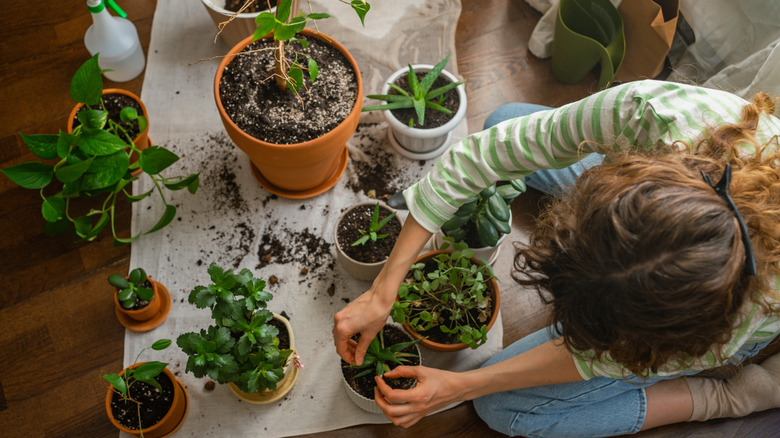
It's really tempting to look at last season's leftover soil and see a chance to save a little time and money by reusing it for your seed trays. But trust us, if you find yourself holding a shovel over an old planter, stop right away. The habit of reusing old potting soil to start new seeds is one of the quickest ways to accidentally cause the seedlings to fail. Don't get us wrong, there are brilliant ways to reuse old potting soil: You can definitely reuse the dirt in a raised bed or as filler in the bottom of a large pot, but putting it in seed trays will lower your chance of success since it often causes poor germination or the sudden death of tiny sprouts.
This happens because the young seedlings are fragile during their first few weeks of life. They need a soil mixture that's sterile and light, and last year's soil doesn't fit that description. Even if the old bag or pot of soil looks clean, it might harbor some unseen issues, like insect eggs. When you consider the time and effort you're putting into indoor seed-starting, choosing a new seed mix is a small investment that will increase your chances of growing healthy sprouts.
Hidden enemies could be lurking in used potting soil
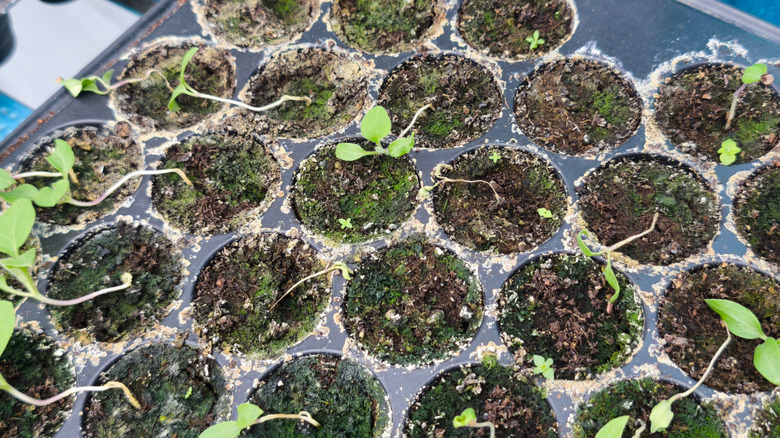
One of the biggest problems with recycling old soil to sprout seeds is the potential for contamination. The potting soil in a used container — or even in a partially used bag — isn't sterile enough for young plants. The old soil may contain fungal spores, tiny insect eggs, or unpleasant germs that have managed to survive the winter cold. A fully grown houseplant or annual flower might have enough resistance to fend off a low-level threat, but a seedling that's just pushing its way out of the ground has no defense.
The most notorious threat found in unsterilized soil is a group of fungi and water molds known as damping off. These cause healthy young sprouts to suddenly collapse and die right where the stem meets the soil. The fast-moving fungi love the moist conditions required for seed-starting, and they can wipe out an entire tray in a matter of hours.
If you're looking for pro tips for reusing potting soil, you might consider sterilizing it, but this method is messy, often smelly, and doesn't guarantee that the soil will actually get sterilized. When starting seedlings, it's much easier and safer to buy a mix that has already been processed.
How does old potting mix change the soil's nutrient balance?
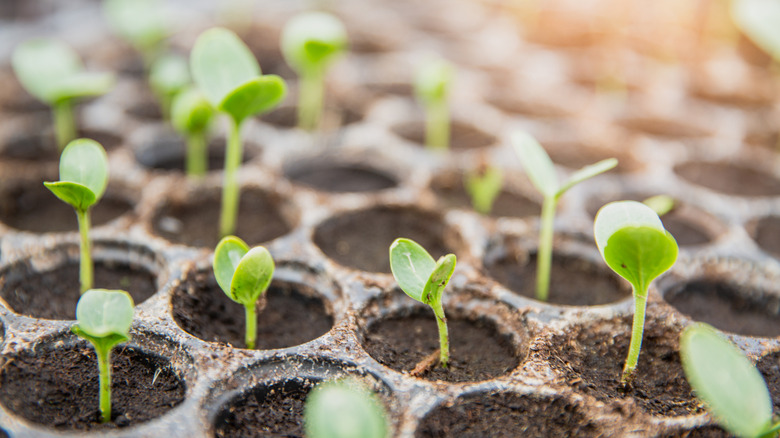
It's also important to note that even the chemical makeup of used potting soil is wrong for seed-starting. Specialized seed-starting mixes are designed to have a light, fine, and loose texture, and they often contain fine perlite or peat moss to hold moisture without becoming too dense. This texture is necessary because it allows the tiny roots of a new seed to push through and establish themselves without too much resistance.
Old potting mix breaks down and becomes compacted after months of watering and previous plant growth. When the soil compacts, it becomes heavy, and the seedling struggles to sprout. The old mix probably doesn't have many nutrients left in it, especially if the last plant was a heavy feeder. On the other hand, if the previous plant was fertilized, the soil might contain excessive salts that could burn the seedling's roots. Because seeds already have the food they need to sprout, planting them into anything but a new growing medium sets them up for a struggle, so don't reuse soil in your garden without considering the decision first.