

Keep Your Hoyas Healthy All Winter Long With These Easy Tips

When it's cold and blustery outside, many plant lovers take comfort in tending to their indoor jungles. Surrounded by tropical plants with trailing leaves, lush colors, and bright flowers, we can pretend we're in a rainforest instead of muddling through another snowstorm. But houseplants need adjustments to their care routines to keep them thriving in the winter. Hoyas (Hoya spp.) lend a unique look and feel to your houseplant collection, with their cascading vines, wax-like leaves, and clusters of flowers that resemble stars, which release all-natural scents in your home from their blooms. There's a huge variety of hoyas; some, like wax plant (Hoya carnosa), do well in hanging baskets, and others, including the sweetheart hoya (Hoya kerri), are often grown on a trellis. All types of hoyas have a few extra care needs in the winter, when conditions depart from the warmth and humidity of their native island climates. Even with a bit more to monitor, though, hoyas are still very adaptable houseplants. With a few easy adjustments to their water, light, and humidity, you can keep your hoyas healthy all winter long.
Hoyas need indirect streaming light to live their best indoor lives in the winter, and they'll appreciate higher humidity levels. This is good to keep in mind if running the heater dries out your indoor air. The most drastic change to make when caring for hoya plants over the winter is giving them less water. A gentle touch with the watering can is key to preventing root rot and keeping their gorgeous flowers healthy.
How to give your hoyas the right amount of light, water, and humidity
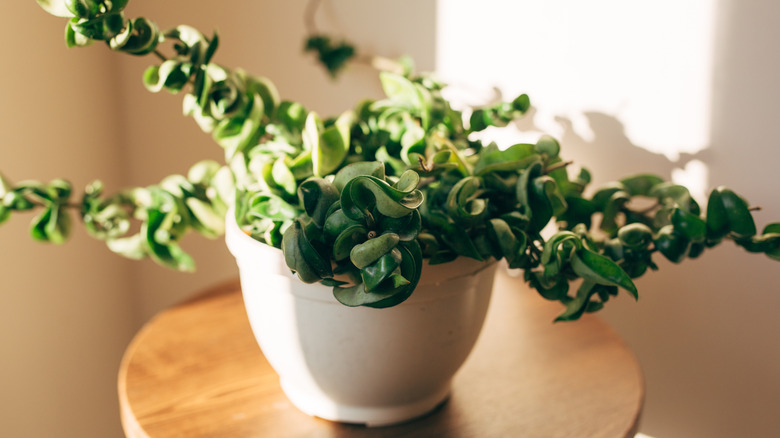
Placing your hoya plant somewhere where it gets enough light is essential year-round, especially in winter. A sunny window, but not so sunny that its leaves get scorched by direct sunlight, is an ideal spot. Windows facing the east are best, but if you set it back from the window or add a curtain, a south- or west-facing window will also do. North-facing windows may not provide enough light to keep the leaves vibrant and flowers blooming.
When it comes to watering, winter is the time to go minimal, since they will be in a dormant stage. Let your hoyas' soil get dry in between waterings. An easy way to test whether to water the plant is by picking its pot up; if it feels heavy, you can wait more time before it gets a drink.
The colder months are also a time to ensure the humidity around your hoyas is at the level they prefer. There's a simple fix if you're concerned about humidity around your houseplants: move a small humidifier nearby. If you don't have a spare humidifier, grouping houseplants with similar needs is another way to increase humidity for your plants. With enough air-based moisture, this plant may even be able to go a month between waterings. Soft or wrinkly leaves can mean they're being underwatered, so, as with all things plants, use your senses to check how your individual hoya is doing.
How to keep hoya plants blooming in the winter

Hoyas are admired for their pink, red, or white clusters of star-like flowers, which can liven spirits during the winter. They sometimes take years to appear, though. If you're looking forward to flowers sooner than later, try growing a cultivar that tends to bloom quickly, like common wax flower (Hoya australis).
Besides their age, a major reason hoyas sometimes don't flower is a lack of proper light, so it may be a good idea to double-check the window placement or consider adding a grow light to help your houseplant flourish. Encouraging flowers is another reason to water your hoyas sparingly, since they may put their energy into producing flowers in the dry periods between the times you water the plant. And when hoyas do bloom, overwatering them can cause their flowers to drop. Another important thing to know about hoya plants is that once they flower, their next set of blooms will come from the same stump the flowers emerged from. If you want the plant to keep up its blooms, don't trim this area, known as a peduncle, during any routine pruning.