

The Chemical-Free Way To Unclog Your Bathroom Sink Using An Item You Have Already
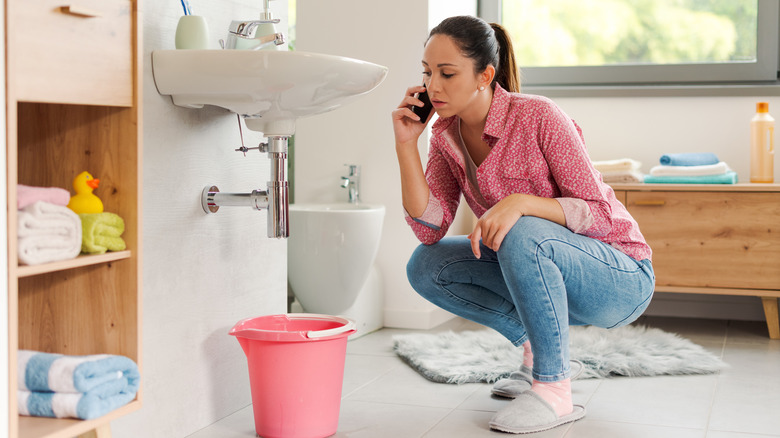
From toothpaste to hair, makeup, and bath products, your bathroom sink takes a lot. Clogs are annoying but inevitable, and when your sink backs up, it's tempting to reach for harsh chemical drain cleaners for an easy fix. However, avoiding them can protect both your pipes, your home, and the environment. Chemical drain cleaners can corrode older pipes or those made of PVC, causing costly cracks and leaks. They release strong fumes and can even pose a risk to pets or children. Plus, they're not always effective on tougher clogs, leaving you with even more problems than just a clogged drain. These chemicals don't just disappear when you wash them down your drains, either. They often end up in local waterways, polluting the environment.
Using harsh chemicals unnecessarily is a common DIY plumbing mistake you don't want to make. That's why a plunger is a safe and easy way to unclog your bathroom sink. The same type of plunger you use for your toilet can be used to quickly and easily dislodge bathroom sink clogs. With a few firm plunges, the suction a plunger creates can often dislodge drain buildup quickly and restore the flow of water without introducing anything toxic into your home or the environment.
How to unclog your bathroom sink using just a plunger
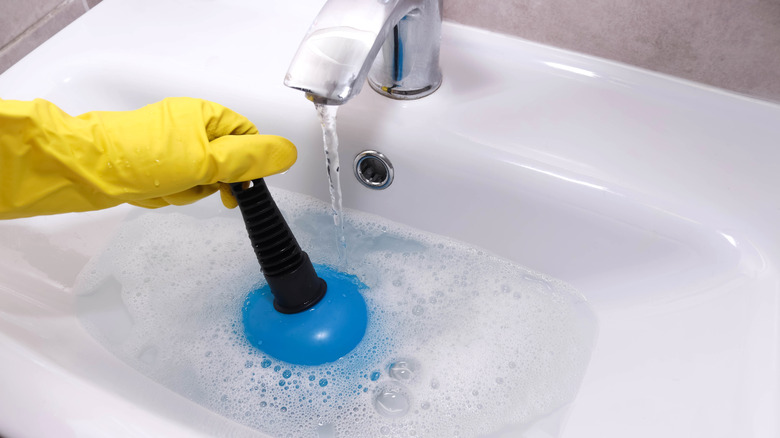
Any home project starts with a clean workspace, so start by removing any visible pieces of debris from the sink. Then, fill the sink with water about 3 to 4 inches above the drain, with the plunger covering the drain outlet. This will help the head of the plunger seal firmly around the drain. You can use either hot or cold water, but for oily clogs, hot water may be more effective. If you wash a lot of oily makeup or lotion down your bathroom sink, go ahead and try hot water.
Now you're ready to get to work and start unclogging the sink. This next step is important because a tight seal is what allows the plunger to pull up clogs. Placing the plunger directly on the drain will trap air beneath it, creating a weak seal. To avoid this, push one side of the plunger down and roll it around the water outlet until you can feel some resistance, meaning the entire plunger is sealed. Now, pull it up and down rapidly for 20 seconds. Then, pull the plunger off to check whether the water starts to empty. If the clog doesn't clear on the first try, just repeat this process until it does.