

How To Harvest Prickly Pear Fruit From A Cactus

We may receive a commission on purchases made from links.
Ever walked past a cactus with broad, flat, ovoid pads with colorful spiky balls growing from them? You just walked past a source of food. While you can eat prickly pear pads (Opuntia spp.), it's the fruit these cacti — those spiky balls — that are most highly coveted. They feature in all kinds of recipes, from chutney to margaritas and sorbet. However, this isn't the easiest fruit to harvest, whether the plant is on your property or growing wild. The pads of prickly pear cacti have long, visible spines that pack a nasty punch if touched; the fruit also sports clusters of tiny but nasty spikes. They can get lodged in your skin and cause a painful irritation until they're removed. Thankfully, there are two highly effective though distinct ways to harvest the fruit that don't involve using your bare hands: with tongs and a bucket or with a propane torch.
You'd be forgiven for thinking harvesting prickly pears doesn't sound particularly attractive. Don't worry, though — despite their spines, these low-maintenance plants that thrive in Zones 9 to 11 are considered a cactus for beginner gardeners to tackle. Whether you're going with the tong and bucket or propane torch method, safety comes first. Wear pants, a shirt with long sleeves, and heavy-duty gloves to protect your skin from the spines. In August and September, prickly pears turn dark purple-red and are ready to harvest. If you gave your outdoor space a western touch with a prickly plant privacy fence, you have a ready-made orchard. Harvesting on private property is fine, too, if you have the owner's permission. Don't take all the fruit from a cactus or area — leave some for hungry wildlife or other foragers.
Two methods for harvesting prickly pears to try
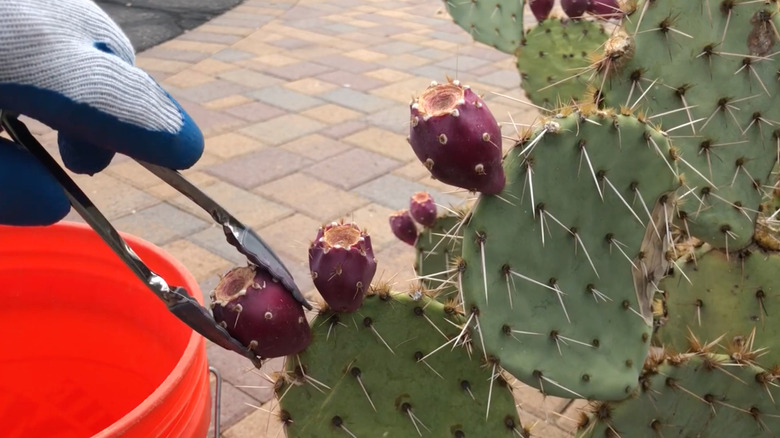
If you prefer low-tech harvesting methods, go the tongs and bucket route. Using the tongs with gloved hands, gently pull on each fruit. If they detach from the cactus pad fairly easily, they are likely ripe. However, if they are difficult to remove, it could mean that they are not ready to eat and may taste sour. Drop the ripe fruit into your bucket as you move around the plant, making sure to keep any exposed skin away from the spine-covered fruit and cactus. Then fill the bucket with water and stir the fruit with a stick or wooden spoon to detach the spines. Strain out the water through a colander in an out-of-the way location — it's full of dangerous spines you don't want anyone standing on — and wipe down any nearby surfaces to remove strays.
The second harvesting method is a little more imposing, but it's sure to remove all of the spines. You use a flame to roast the fruit and force it to drop its spines. First, make sure the area you're harvesting in doesn't have active fire restrictions and research municipal regulations on open fires. If you don't have one already, purchase a Gasbruh Turbo Trigger Propane Torch or similar tool. Engulf the prickly pear in flame for at least 3 seconds (though typically it takes over 10 seconds), then turn off the torch and allow the fruit to cool. You should then be able to pluck the spine-free fruit off the cactus with gloved hands. Do these methods seem doable, but you don't have access to harvestable plants? Learn how to grow a prickly pear cactus for gorgeous colorful flowers — and fruit — in your garden.