

The Fast-Growing Houseplant That Will Fill Large Empty Spaces In Your Home
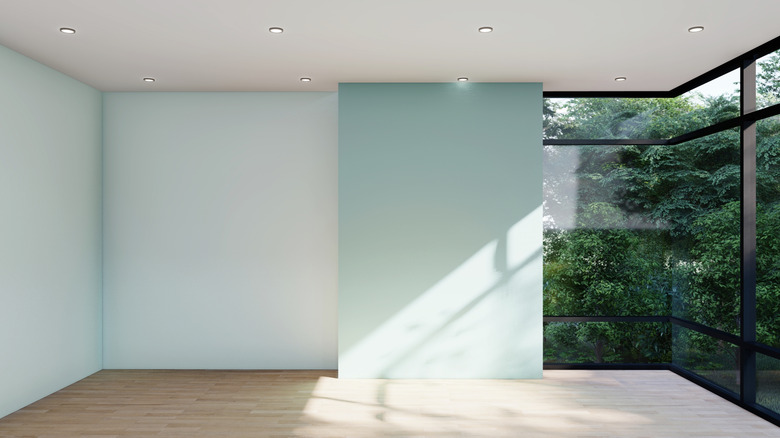
They say "home is where the heart is," so it stands to reason that the things we fill our home with are the things we hold close to our hearts: a rocking chair passed down through generations, paintings that you won't find in any gallery, throw blankets and comfort items, and houseplants. Not only do houseplants improve the aesthetic of a space to make people more relaxed or "at home," but they also provide benefits that can improve your everyday quality of life, unlike the dark, empty corners of unused space haunting the halls of your home. Luckily, you can find unique and beautiful fast-growing houseplants that turn dull corners into vibrant spaces, like the African mask plant (Alocasia amazonica). It grows new leaves quite quickly, on a weekly basis, during the summer and boasts large foliage that can easily fill an empty space.
The African mask plant is a tropical plant that normally grows as a perennial in hardiness zones 10 to 12, but it grows well as a houseplant in any region as long as you provide it with a comfortable growing environment. It can grow to be between 2 and 6 feet tall, but when grown indoors, it stays around 2 feet. With dark, vibrant colors of green or purple, the African mask plant is a colorful houseplant that will perk up your indoor space.
How to style an African mask plant to fill large spaces in your home
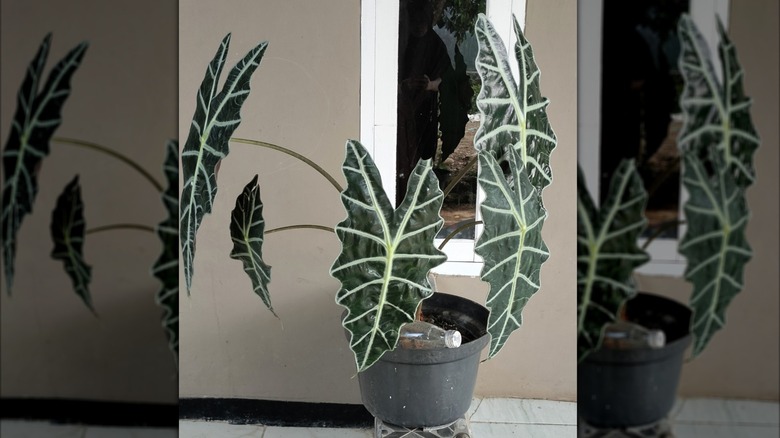
The African mask plant is also sometimes referred to as an elephant ear plant, which is a term that includes several species and varieties of tropical plants with large foliage. You're a lucky plant owner if your elephant ear shows off its gorgeous blooms, and that's true for African mask plants, too. You can expect to see only large leaves, with no blooms, when growing the African mask plant indoors. In the rare cases that it does bloom, it is usually not noticeable beneath the foliage. That means the main thing you are styling is the foliage itself. How you style it will depend on how you want to fill the space.
You can go with a shorter pot that stands low to the ground for foliage that hangs over the floor. Or, you could choose a taller pot or place it on a small table for visual height. In either case, you will want to make sure the pot is heavy and well-draining. If you choose to go with the pebble tray method, you can combine a decorative pot with a decorative tray to boost the aesthetic and improve humidity. If the space you are trying to fill has direct sunlight, you can pair light-filtering curtains that complement the pot to improve light conditions.
African mask plant growth habits and care recommendations
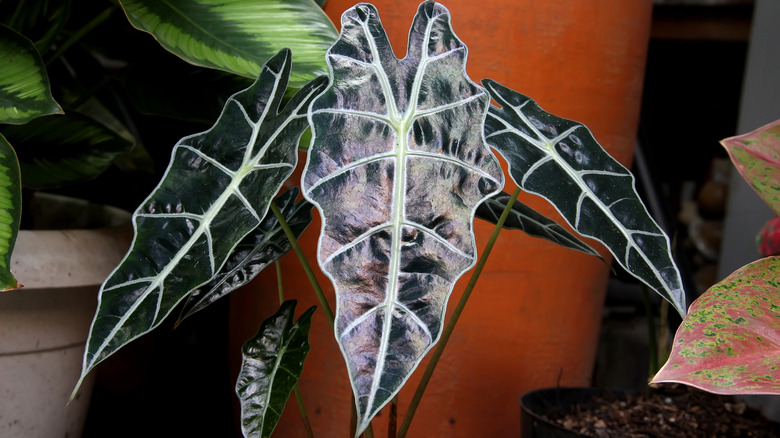
While the African mask plant requires some specific care, you still have options. You can even propagate or grow it in water if you want to. As long as you provide it with a comfortable growing environment, you can see regular growth, especially in the spring and summer. You will most likely see new leaves sprouting every week or so during the summer. The arrow-shaped leaves can grow up to 16 inches long, making it the perfect plant to fill large, empty spaces with vibrant foliage. Light, temperature, and humidity are some of the things that should remain consistent for proper care.
You should start by selecting the right pot. You will want to make sure it is large enough to account for root growth and has good drainage. Then, consider lighting. African mask plants don't tolerate direct sunlight, but they still like a lot of sun. You will want to make sure the area has bright, indirect light. They generally do well in comfortable indoor temperatures. The ideal growing temperature for fast growth is between 60 and 85 degrees Fahrenheit. You will also want to keep them in high-humidity conditions. You can achieve this with a humidifier or a pebble tray.