

Does Home Insurance Cover Snow Damage On Your Roof? Here's What We Know
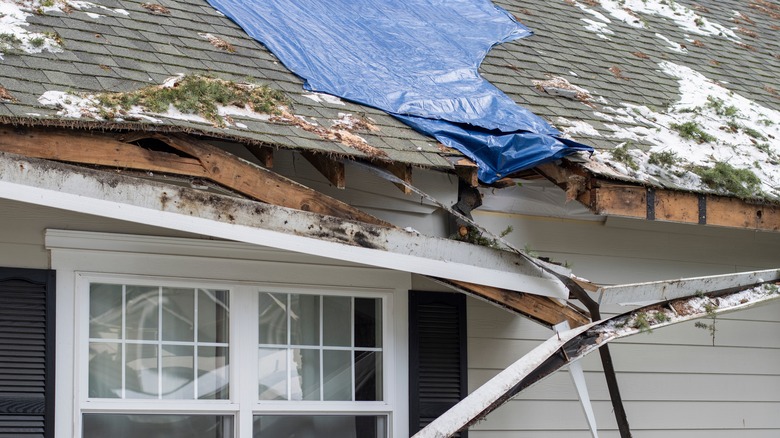
Waking up to a blanket of snow on your lawn is like a magical dream. However, that dream can quickly become a nightmare if your roof collapses under the weight of that snow. While it may look gentle and delicate, a heavy snowfall can overload your roof. And we aren't talking about a massive blizzard. Even four feet of snow can be heavy enough to cause significant damage; less if it's compacted and dense.
A collapse is not the only kind of damage your roof can suffer. As the snow melts, it can leak into the structure, causing severe damage to your home. In some cases, this results in the growth of mold. Naturally, you may wonder whether insurance covers roof damage caused by snow. In many cases, the answer is yes. However, it will depend on your roof's overall condition and age, where you live, and the type of damage you have.
Insurance regulations vary from state to state, so there isn't one blanket answer for all types of snow damage. For example, whether leaks caused by snow are considered "floods" might depend on where you live. And mold caused by leaks are not always covered. Insurance also does not pay to get rid of ice dams or excessive snow after a storm. Therefore, you might consider investing in a roof rake, which is a handy tool that helps clear snow from your roof.
When snow damage on a roof is not covered by insurance
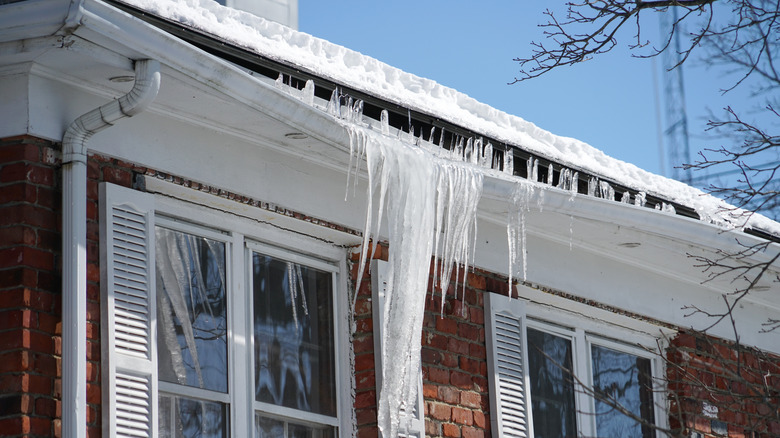
Home insurance will typically help if your roof is damaged or has collapsed due to snow, but only if the roof was well maintained to begin with. Your insurance company should cover broken roofs or leaks that were caused by an unpreventable weather event, like a snowstorm. However, if your roof was already in poor condition, the insurance company may consider that negligence, which would affect your ability to claim coverage. This is true even for regular wear and tear, which is why it's important to keep up with routine maintenance and roof inspections. The insurance company will likely require a home inspection to evaluate the materials, age, and overall condition of the roof when you file a claim.
For example, if your roof is 20 years old, your insurance company could claim it is too old to be insured. They could also offer to reimburse you for the actual cash value of the roof instead of the cost of replacing it. If that is the case, you could find yourself having to cover a significant proportion of a new roof installation out of pocket. It's always best to ask about these policies when buying home insurance. It may also be a good idea to contact your provider to get a clear idea of what's covered before winter weather hits.