

Turn Leggy Hydrangeas Back Into The Garden Stunner They Are With These Tips
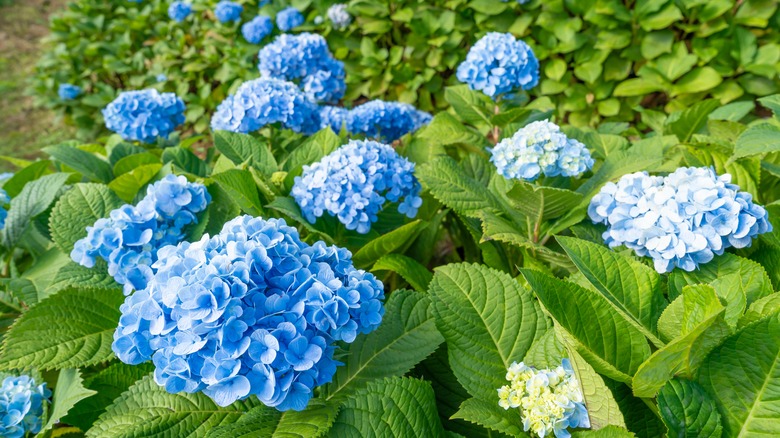
There's nothing like a big, beautiful bush of hydrangeas. The woody shrub comes in many different varieties and cultivars, producing endless color combinations and plant sizes, from small bushes to large trees. But some hydrangea plants face a common problem; they can become sparse and spindly — all stems, no substance. So, what is the best way to head off leggy hydrangeas and ensure full, lush blooms? Pruning, of course! But how and when to prune is often dictated by which species of hydrangea are growing in your garden. Different species bloom on different types and areas of the shrub's wood, which makes deciding how to prune even more difficult. And growers, be aware: Because of rising global temperatures, hydrangeas are facing a growing disease risk.
Generally, you're going to want to prune your spring-blooming hydrangeas after they've flowered, and prune summer-blooming plants at the end of winter. The most popular species is Hydrangea macrophylla, or the big-leaf hydrangea. These bloom in late summer and should be pruned right after they flower, lest you risk cutting off the buds that will supply next season's growth. To prune any hydrangea, use clean, sharp shears and make a "heading cut," which is a diagonal cut below the flower and about a quarter of an inch above a bud.
Pruning other popular hydrangea species
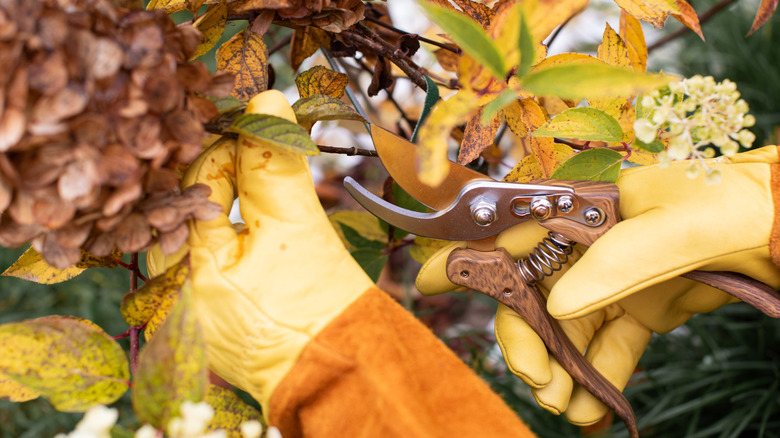
Hydrangea paniculata, or the panicle hydrangea, blooms on new wood from mid-summer through fall and can be pruned any time after the first fall frost through spring. It can be cut all the way to the ground. Hydrangea petolaris, or the climbing hydrangea, needs very little pruning whatsoever. You may need to trim back dead wood, but otherwise, only maintenance pruning is needed but take care to prune after blooming. Hydrangea quericifolia, or the Oakleaf hydrangea, buds on old wood. This species begins blooming in June and can be pruned after flowering.
You should let Hydrangea arborescens, or the smooth hydrangea, grow for a season or more before you start to prune. This species buds on current or new wood and should be pruned late winter or early spring. Still having issues with your hydrangeas? Here are some more gardening tips and tricks for successful blooms every year. It should also be noted that sparse stems isn't just a pruning issue. Hydrangeas also suffer when they lack light. Therefore, they "reach" for sunlight, hence the bare stems and few blooms of a leggy plant. Lack of sunlight due to overcrowding can also cause problems, so plant your flowers as far apart as is recommended by the variety's grower.