

The Winter-Blooming Flower That Will Add Vibrant Color To Your Home
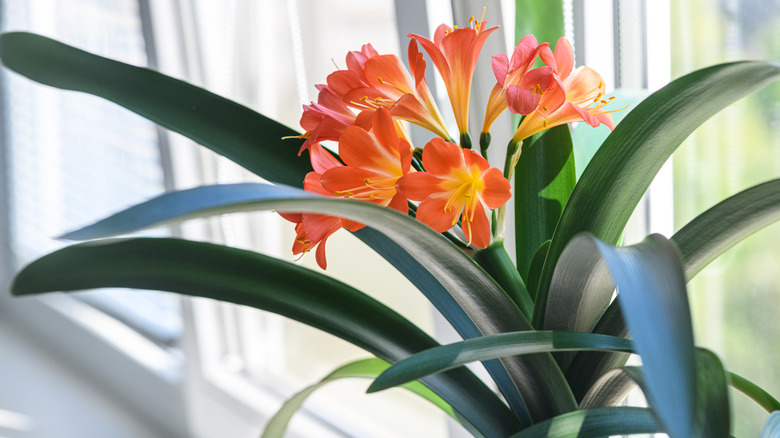
Finding a flower that will bloom in the heart of winter and won't demand fussy or high-maintenance care can feel like discovering a secret in the gardening world. Many plants slow down or slip into dormancy as the temperatures drop, which can leave your plant shelves and windowsills looking a bit plain. But, there is a standout that lights up the winter, delivering bold, cheerful color when you need it most. That plant is the bush lily (Clivia miniata), one of several flowers that grow beautifully indoors during winter. Native to South Africa, bush lilies are known for their reliability and brilliant orange to red blooms that add tons of color to your home. With moderate light, well-draining soil, a careful watering routine, and an appropriate rest period, bush lilies can thrive indoors all winter long.
If you live in the warmer USDA Hardiness Zones of 9 through 11, bush lilies can be planted and thrive outdoors, but most gardeners enjoy them as indoor houseplants, like any of these 25 colorful houseplants that will perk up your indoor space. Their late-winter to early-spring blooms in shades of orange, red, or yellow make them an unforgettable addition to your plant collection. As slow growers that actually prefer to be a little rootbound, bush lilies don't need frequent repotting and can stay in the same pot for as long as 3 to 5 years before they need a change. Their thick, arching leaves stay attractive year-round, giving you pretty greenery to enjoy even when they're not in bloom. With a little consistency and a comfortable spot, a bush lily becomes a long-lasting companion that brings dependable beauty to your home season after season
How to care for your bush lilies for best growing success
Bush lilies thrive in bright, indirect light, enough to keep them growing well, but not so intense that their leaves get scorched. Placing the pot in an east or north-facing window or about 5 feet from a south or west-facing window is ideal. The best soil is a loose, well-draining mix that allows air to reach the roots; a blend formulated for orchids works well. When watering, let the top couple of inches of soil dry out in between sessions. Be sure the pot has plenty of drainage holes so no water sits around the roots. Too much moisture is the quickest way to run into trouble with a bush lily plant. If you need help knowing when to water, use this eco-friendly hack to never over-water your plants again.
One of the most important steps in encouraging reliable blooms is giving your bush lily the rest period it naturally relies on. In late fall, usually around October or November, stop fertilizing and gradually reduce watering until you're giving the plant just enough to stop the soil from drying out completely. Move the plant to a cool area where temperatures stay close to 50 degrees. An unheated spare room, enclosed porch, or cool basement window often works well. This quiet, dormant stretch typically lasts six to eight weeks, with some gardeners extending the dormant period to 12 weeks. Once the rest period ends, bring the plant back into warmer temperatures between 65 and 75 degrees Fahrenheit and start watering again, lightly at first, and build back to a normal routine within two weeks. This encourages flower bud formation and helps your bush lily deliver its signature winter display year after year.