

The Invasive Insect That Can Be A Real Nuisance In Winter (& How To Keep It Out)
We may receive a commission on purchases made from links.
Every fall, homeowners are faced with the sometimes arduous task of prepping their homes for the cold weather. This includes activities like stocking their cold season pantries, setting up air purifiers or humidifiers, maintaining furnaces, and buying new snow clearing supplies or tools. With all the beauty, cozy holiday cheer, and family get-togethers that winter brings, the season can also bring unwanted visitors into your home. Taking measures to safeguard the house from pests is another vital fall or early winter chore. As temperatures drop and snow falls, it's not just people who move inside for warmth. The kudzu bug has been invading U.S. homes in winter since 2009.
Kudzu bugs (Megacopta cribraria) are an invasive species of beetle that look similar to ladybugs and other Asian beetles. In fact, they're a relative of common stink bugs. They have similar habits to their odorous cousins, which have earned them a bad reputation with farmers and homeowners alike. Kudzu bugs are primarily found in the Southern states, where summers are more humid, a climate to their liking. As of 2023, the insects have been recorded in 18 states. A whole host of challenges are waiting around the corner if you find them in your home, since controlling them requires identifying entry points and plugging them.
Why homeowners may have a problem with kudzu bugs in winter
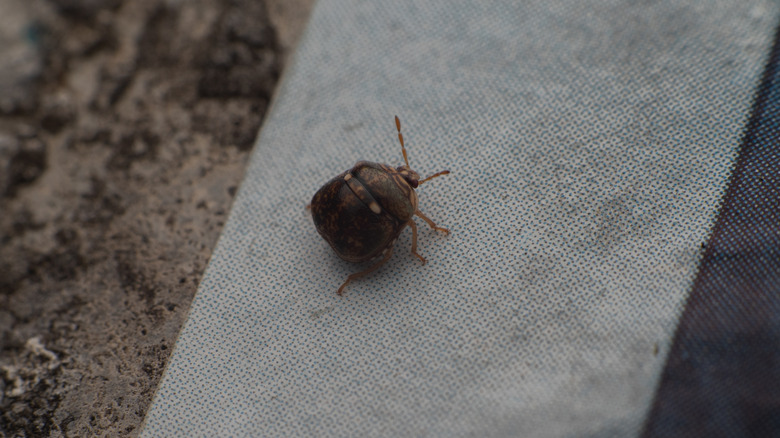
Kudzu bugs could be considered beneficial — in an odd way. They eat invasive kudzu (Pueraria montana var. lobata), a vine native to Japan that is fast taking over areas in the South. Unfortunately, kudzu bugs don't eat a single species of plant. They will readily devour soybeans, beans, wisteria, and some vetches. As they move through areas with tasty crops, kudzu bugs lay their eggs on house siding, trees, and other surfaces around homes. In the fall, their instinct to find shelter from harsh winter weather takes over. They gather in large numbers near their eggs and look for entry points into homes. Buildings with light-colored siding or painted walls near soybean fields are particularly attractive to kudzu bugs.
Once they find their way indoors, these invasive pests could cause problems in your home — from harming your health and reducing your comfort to damaging your property. They don't bite, but they secrete a chemical that can stain, irritate, or even burn your skin. The same secretion may stain porous surfaces and fabric. Plus, it smells awful — similar to stink bugs. Their tendency to arrive in droves, attracted by an aggregation pheromone they release, means you could be sharing your space with an overwhelming number of kudzu bugs. That makes them challenging to get rid of. Prevention is the key to controlling these insects in winter.
Winter kudzu bug prevention strategies for homes

Like other small pests, when winter is around the corner, kudzu bugs are determined to get indoors any way they can. If you have gaps or cracks in your siding, window frames, door frames, brickwork, or foundation, you can expect these sneaky insects to take advantage of them. They might also use HVAC vents, holes for wiring, electrical outlets, and torn screens. This is not an exhaustive list — the types of entry points are dependent on how your home is constructed.
It's much easier and more pleasant to stop kudzu bugs entering your home than dealing with an infestation. Identify all possible points of entry and seal them using caulk or expanding foam, fine wire mesh and metal flashing, or weatherstripping and door sweeps. Then there's that one winter task you're forgetting that's letting bugs into your home: insulating your pipes. If you have insect screens on your windows and doors, examine them for faults in the fall and replace any that have tears or holes. If you already have kudzu bugs inside your home, remove the insects as you find them. Avoid smashing them. The insects may release their unpleasant odor and their secretions could stain your furniture or fixtures. Instead, vacuum up the insects and dump them into a bucket of soapy water.
If you've tried all these strategies and can't seem to get rid of these pests, it might be time to get serious. Apply pesticides containing bifenthrin, permethrin, cyfluthrin, and lambda-cyhalothrin — like Ortho Bug B Gon Insect Killer or Bonide Eight Insect Control Concentrate — around doors and windows (outdoors) in October. You can also contact your local cooperative extension office for advice.