

How To Drill A Hole In Glass Without Causing Cracks
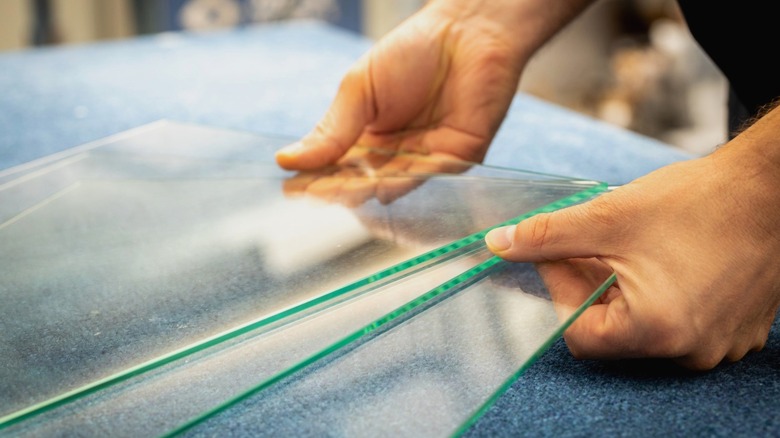
If you take on enough DIY projects, you eventually meet the kind that remind you some materials don't respond well to confidence alone. And nothing tests that truth like working with something that cracks more easily than it bends. Maybe you're trying to thread fairy lights through a glass panel or install a little fixture without replacing an entire door or frame. That's when the big question hits you: How on earth do you drill through something that will shatter if you so much as look at it wrong? Glass is temperamental. Still, drilling perfectly straight holes doesn't involve some form of mystical art. You can drill one by using a glass-compatible drill bit, creating a small pilot mark for control, keeping the surface lubricated and supported, and then drilling your final hole with a gentle technique. If desired, you could also stabilize your bit with a drill guide to get the perfect hole.
Glass, for all its beauty, is a stubborn perfectionist. It hates sudden pressure and despises heat that is bound to build up while drilling. Excessive or uneven force is also something it refuses to handle. One wrong move, and it'll crack along tiny stress lines that were waiting for their moment to shine. That's why you have to treat glass the way you'd handle a fragile mood. Go slow, stay steady, and keep things cool (literally). Treat it right, and it'll behave. But if you rush it or skip the boring prep steps, it'll remind you who's in charge.
The safest approach to drilling glass without shattering it
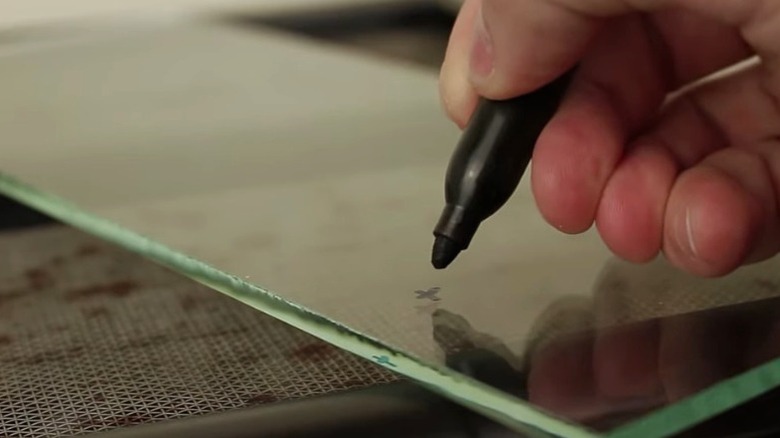
Before you even think about picking up a drill, get your safety glasses and gloves ready. Not to sound dramatic, but a tiny shard can ricochet faster than your reflexes. Once you're protected, you have to choose the right drill bit. Thick or tempered glass loves diamond-tipped bits because they grind rather than stab and keep stress low. For thinner glass, standard glass bits (like spear-shaped carbide bits) work well and are more affordable. Next up, consider lubrication. Water is your best friend here. It'll prevent friction-induced cracks by keeping the glass cool while also holding onto any small glass dust that would otherwise float into the air (and potentially your lungs). And do yourself a favor by securing your glass to a cushioned surface. A folded towel, a thick mousepad, or anything soft will absorb vibrations so the glass doesn't rattle under pressure.
Once your foundation is set, mark the spot for the hole. Apply tape to the area first to provide better grip for the bit. Drizzle a bit of water on the surface, or keep a steady trickle ready. If you're feeling jittery, practice on a scrap piece of glass. When you're ready for the real deal, drop your drill to a low speed (around 400 RPM) and go slow. Start by drilling a pilot hole for more control when drilling an accurate, bigger hole. Pause as needed to add water. Then, continue drilling the main hole. If you're working on a flat sheet of glass, flip it once the bit has barely broken through. Finish drilling from the back to keep the exit side neat. When you're done, smooth any sharp edges with a bit of sandpaper.