

The Mistake To Avoid In Winter That Makes Compost Less Effective
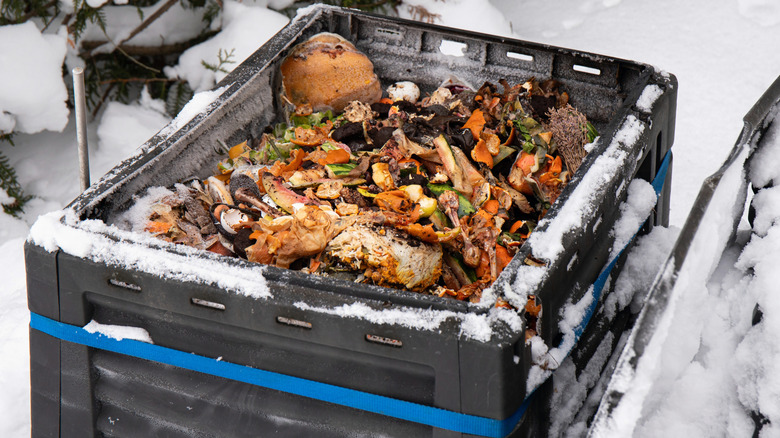
You may not have even known that you can keep composting in the winter. You can, but doing so requires modifications if you are hot composting, meaning using a balanced mix of carbon-rich and nitrogen-rich materials to create the heat that speeds decomposition. Hot composting requires oxygen, which is why turning your compost pile is a must under normal circumstances. Turning provides this aeration. In winter, though, you have to weigh the value of aeration compared to the risk of exposing your compost to icy air that will allow it to lose heat in its interior.
The conclusion then is that turning your pile is the mistake to avoid in winter that makes compost less effective. That's why most experts say to stop turning your compost in winter. (If you're engaged in the far more passive cold composting, you're probably not turning your pile anyway, so carry on, and read about hot versus cold composting). At what point should you stop turning your compost? Halt your turning operations once freezing temperatures prevail on a sustained basis.
Wait until spring to turn your compost
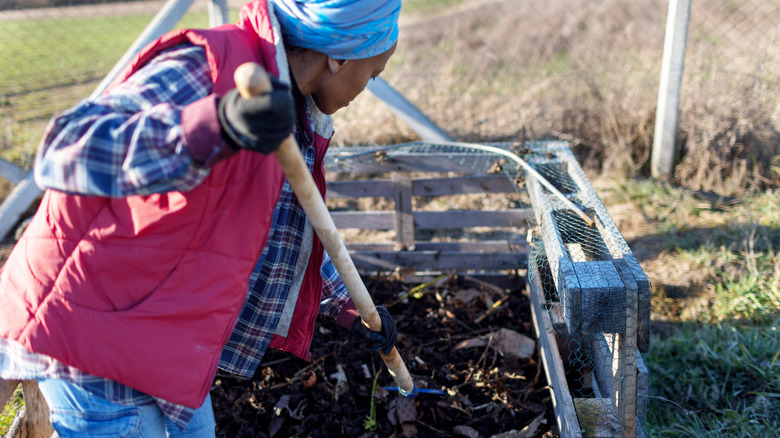
The problem with turning compost in the winter is that it exposes the compost to cold air at a time when decomposition has slowed down. Microbes, fungi, and bacteria are dormant or otherwise inactive. But turning the pile and allowing its center to lose precious heat will decelerate decomposition even more. Heat in the pile is important not only for decomposition, but also for killing weed seeds and pathogens, so you'll want to avoid the turning activity that would expose the compost to cold and cool the pile down.
If you should happen to have an unusually warm spell in winter, you could consider a quick turn. You could also aerate passively by sticking a PVC pipe with holes drilled in it into your compost pile. But under most circumstances, you'll want to add "avoid turning" to your list of tips for composting throughout the winter months.