

Use Fallen Twigs & Sticks In Your Yard To DIY A Standing Perch For Birds In Winter

The winter season is tough on birds, especially tiny ones like hummingbirds, because they're dependent on quickly dwindling resources. This time of year requires more diligence on the part of our feathered friends to keep themselves fed. Fortunately, you can help by creating safe spaces for them to stop and rest on their hunt for food. According to the Audubon Society, leaving branches and sticks as small perches for hummingbirds creates a healthy environment for them to thrive. This is good news, because crafting a standing snag costs nothing except your time, and if you've been looking for birdscaping tips to turn your yard and garden into a bird haven, this is a great place to start.
All this project requires is a bit of scouting for fallen tree branches. The dead limbs make a great perching zone for tired flyers seeking a bit of refuge from weather and wingwork. The long stick is pushed vertically into the ground, extending up into a flourish of branches, or at least two forked limbs for tiny feet to cling to. There are plenty of smart ways to draw more hummingbirds into your yard or garden, and providing them with natural perching options is one of the simplest.
Setting up your mini hummingbird snag
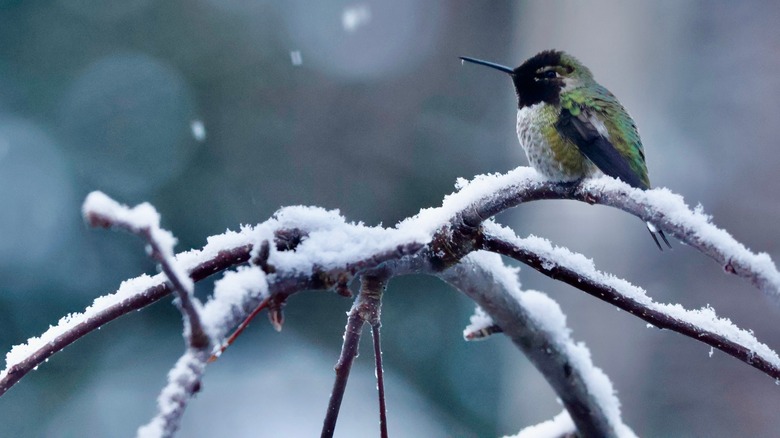
Birdscaping involves the creation of a thriving natural habitat for our avian visitors, including planting native flowers and shrubs. Using natural materials to create the perfect perch to encourage more backyard birds to visit rather than using store-bought options is a nice starting place. As you look for mini snags for your hummingbird friends, consider branches with a bit of extra cover, or add your own. The main element here is the perch itself, but you can include extra protection by weaving in loose twigs and evergreen fronds between extending limbs for a wind break. This might also work to guard them against predatory eyes of other animals looking for dinner.
The snags you plant in your garden may provide a second purpose. Some hummingbird breeds look for spiderwebs to build nests. Forked branches are a great spot for spiders to get to work, providing a new resource for birds seeking nesting materials. Space these out around your property at different heights and varying degrees of coverage to draw in different species. You can hang feeders nearby to make them more attractive. Whoever visits your garden this winter, you'll know they have a safe place to rest.