

Keep Bird Of Paradise Happy & Healthy For Spring With These Overwintering Tips
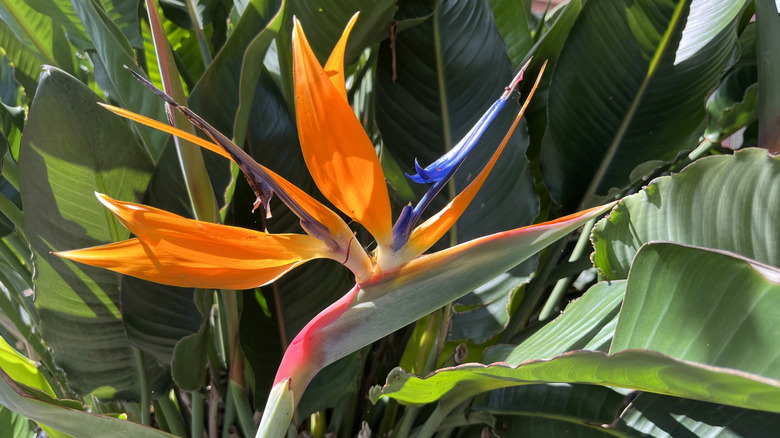
Bird of paradise (Strelitzia reginae) are a favorite for their distinctive orange and deep blue flowers resembling exotic birds. Bird of paradise plants are loved as houseplants, ornamentals in gardens, on patios, and cut flowers are used by florists. Native to South Africa, these plants like warmth, which is why they are often found in gardens in California, Florida, and Hawaii. You can keep your bird of paradise healthy for spring by following a few overwintering tips.
Bird of paradise plants are a perennial with paddle-shaped leaves and stunning flowers that bloom in asymmetrical patterns to create the appearance of a tropical bird. These plants require warm to moderate temperatures with nighttime temperatures of 55 to 65 degrees Fahrenheit. For optimal blooming, the plant should get around six hours of full sun each day, and in the summer months, they thrive best with partial shade and direct sunlight for only part of the day.
The bird of paradise is a good indoor plant, but it may not bloom inside due to insufficient sunlight. For this reason, people often keep the plant outdoors in the warmer months and move it inside before first frost. If you live in a colder climate, bringing your plant inside will help ensure its health in the spring.
Caring for your bird of paradise in winter
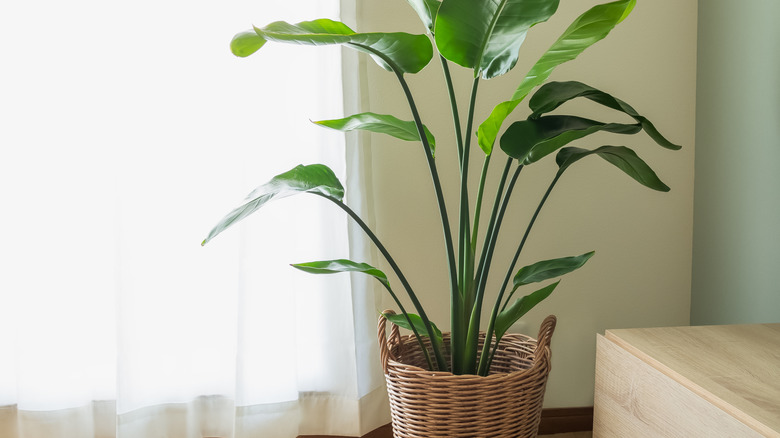
If you live in USDA hardiness zones 10 or 11, your bird of paradise can remain outside all year long. In all other zones, the bird of paradise can adapt to indoor conditions, so bring them inside before the nighttime temperatures reach 55 degrees Fahrenheit. The ideal room temperature for these plants is between 65 and 75 degrees Fahrenheit.
While indoor plants may not bloom often, bird of paradise is among the flowers that grow beautifully indoors during winter. Sufficient light is key to producing gorgeous blooms. You can encourage winter blooms by providing the plant with at least two hours of direct sunlight each day. Ideally, place them in the brightest spot you can find, preferably near a west or south facing window.
Your bird of paradise will need to be watered throughout the winter, but you may notice it needs less water than in the hotter months of the year. Overwatering can lead to root rot, so you don't need to keep the soil moist all the time. Allow the top inch or two of the soil to dry out on the surface before watering and make sure the water can drain. A pebble tray can be used under the plant to increase humidity in homes with very dry air.