

Elevate Your Kitchen Space With A Simple And Affordable Counter Update
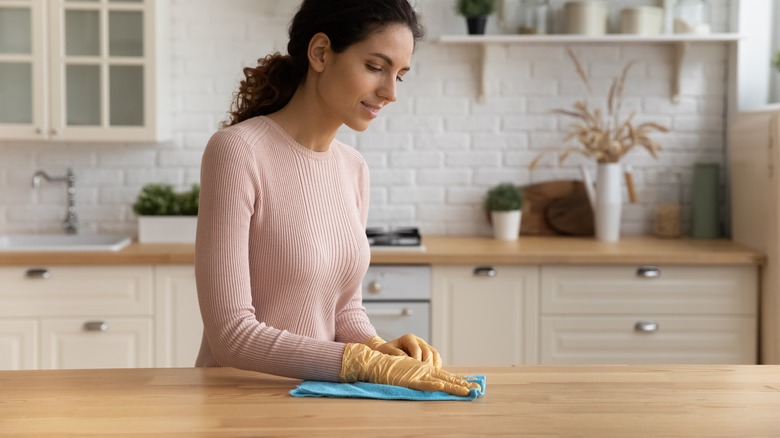
It's easy to grow tired of your kitchen's design. After all, you probably go in there at least three times a day. If changing out the dish towels and refrigerator magnets isn't enough to make you fall in love with your space again, it may be time for a bigger change. Unfortunately, most significant kitchen upgrades are pretty pricey. New countertops, for example, start at around $19 per square foot and will likely cost more, up to $170, depending on the material you choose. While you could try out some countertop cover ideas for an inexpensive update, it is also possible to revamp the look without hiding your existing countertop texture. The trick is to restain the surface to give it a fresh, different look.
Just as you can restain wooden kitchen cabinets, wall trim, and flooring, you may be able to do the same for wooden and concrete countertops. The result can help you hide any previous imperfections and change the color to a new one without altering the texture or material of the countertop. The cost of restaining countertops is also lower than many other upgrades, costing between $5 and $15 per square foot for butcher block resurfacing. Plus, you can DIY this project, helping you save even more money by avoiding labor costs. Of course, you will need to know whether this will work on your countertops, what effect to expect, and what to buy before learning how to elevate your countertops by restaining them.
Is restaining countertops a good option for you?

Before you start shopping for new stains, make sure your countertops can be restained. Solid wood, butcher block, and concrete are all able to be restained, but most other materials — such as laminate, granite, quartz, and more — are not. For solid wood and butcher block, any wood stain will do; whereas concrete requires a stain specifically made for concrete. Neither wooden countertops nor concrete countertops can be stained when they are sealed, so you need to be able to remove any sealers chemically or by sanding. If your countertops are a good candidate for staining, you can move on to choosing colors, prepping the surface, applying the stain, and sealing it.
When choosing a stain color, there are a few things to consider. Generally, lighter colors can make a small space feel larger, so if you have limited counter space, then a light stain is ideal. Darker and in-between stains, on the other hand, may help you hide scratches, stains, and other imperfections over time better. Also, be sure to consider undertones. In a warmer kitchen, orange and brown undertones will blend in, while in a cool-toned kitchen, a gray undertone may be better.
When it comes to concrete, there is a difference between choosing water-based and acid-based stains. Water-based ones offer an opaque finish, while acid-based ones work best for an earth-toned appearance. You could also learn how to paint concrete countertops for a fresh look or use dyes as an alternative.
How to restain your kitchen countertops
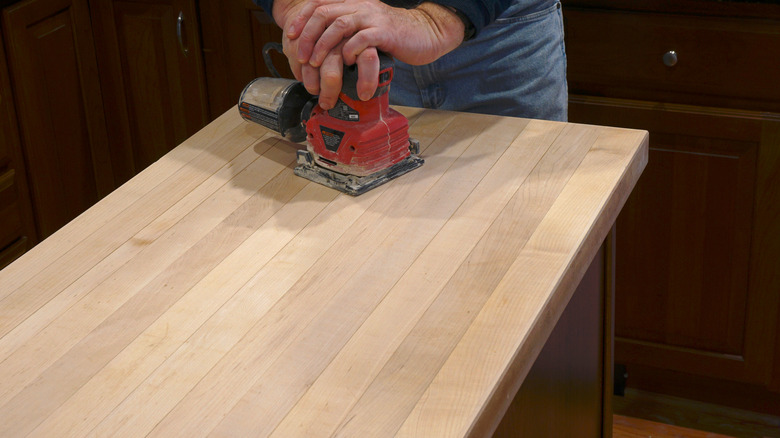
With a stain chosen, test it on a piece of concrete or wood that matches your countertops, or prepare a patch test in an inconspicuous location on the counters. Next, remove any existing sealer. On concrete, it is best to use a chemical stripper according to its directions, while sanding is typically best for wood. Be sure to start with lower-grit sandpaper when removing the sealer, and then finish with a finer grit to ensure you have a smooth surface for staining. When the sealer is removed, carefully apply your stain. Sanding between coats can help you achieve an even smoother final result.
After allowing the stain to dry, you will need to reseal your countertops. For concrete, apply a wet-look lacquer, multi-purpose sealer, or stone sealant impregnator according to the manufacturer's instructions. Make sure that the counters are clean and dry before applying anything, and consider adding multiple thin coats for improved protection. As for wood, you can learn how to seal butcher block countertops with natural ingredients, or use a topical sealer or penetrating oil sealer. Remember to consider your kitchen's needs, such as whether or not the countertops will be near a sink and the type of finish you want, as many sealers range from matte to glossy. Overall, while the process will take some time, it is still simple, fast, and affordable compared to other countertop transformations. There's no need to wait for new parts to arrive, you can do it yourself, and the result can really elevate the space.