

Where To Avoid Placing Your Live Christmas Tree At All Costs (& Where To Put It Instead)
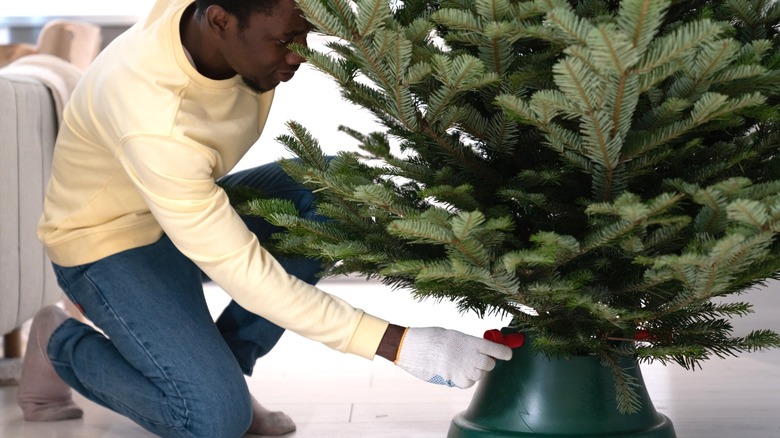
Few things put you in the holiday spirit like live Christmas trees — artificial evergreens just can't match the smell and ambiance they generate. But these beautiful symbols of the season may also be a significant fire hazard. As a matter of fact, live Christmas trees are responsible for an average of 160 home fires per year, according to the NFPA. While trees can last up to five weeks with proper watering and care, poor placement could put yours in harm's way or cause it to dry out prematurely, making it lose its good looks and become prone to ignition. Don't let your holidays go up in flames — place your tree far away from heat sources that might cause it to catch fire or dry up before the festivities end.
Although buying a live Christmas tree makes for a pretty picture when you position it near a roaring fire, that's one of the main places you should avoid putting it. If a stray spark lands on a dry branch, your tree can ignite in seconds. Fireplaces, both wood and gas, are probably the most intense heat sources in your home, making them the most dangerous place for a tree. You should also keep your tree away from heat-producing appliances and fixtures such as portable heaters, radiators, or heating vents, because these will make it lose moisture quickly and become more likely to catch fire. Another dangerous place for a live tree is near electrical equipment or electronics that also heat up and pose a unique fire risk. By placing your tree in safer locations, like entryways, bare corners of the living room, and hallways, you can keep it alive all holiday season.
Safe places to put a live tree and tips to help it thrive
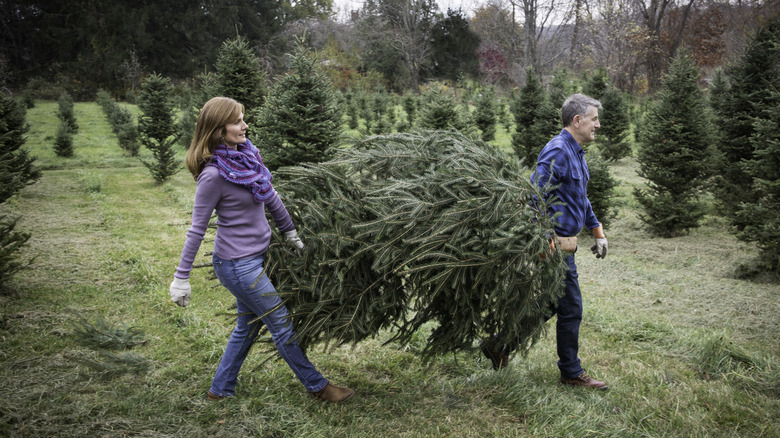
Heat sources are a direct danger due to the potential for sparks, but they also pose a danger by drying out the tree. Hot, dry rooms suck the moisture out of a live tree and make it more susceptible to catching fire. You'll notice the needles becoming stiff, brittle, and prone to falling off. Ideally, the temperature around your tree shouldn't get higher than about 72 degrees Fahrenheit if you want it to stay hydrated and avoid becoming a fire risk. Regardless of where you put your tree, though, you can make it safer by taking extra steps to prevent it from drying out. Start by making sure the trunk is always submerged, and pay close attention to how much water your Christmas tree needs to thrive. Trees typically absorb up to a gallon a day for the first few days but will eventually need less to stay lush through the season — that is, as long as you don't put them near any heat sources.
Putting your Christmas tree in a cool area out of direct sunlight and running a humidifier is a great way to prevent it from drying out too early and reducing its watering needs. Other good places to put a tree include the foyer, by your staircase, in the living room, or in the dining room. Make sure it is at least 3 feet from any heat source and not blocking any exits or fixtures, like light switches. You should still keep it close to an available outlet, so you won't have to run an extension cord.