

Toilet Wax Ring Alternatives You Should Consider Trying As A DIY Plumber
We may receive a commission on purchases made from links.
There's nothing quite like finding a puddle around the base of your toilet to ruin your day. Like fixing a running toilet, it's not necessarily a major plumbing disaster. More often, it's a faulty wax ring. A humble little donut-shaped piece, it sits between your toilet base and the drain to form a seal that keeps water and nasty odors from escaping. Every flush puts pressure on the seal, so it's common for a wax ring to lose some of its integrity over the years. Over time, it can dry out, crack, or become compressed, especially if your toilet wasn't installed properly or tends to wobble. Although it's a go-to solution, removing and replacing a wax ring can be an intimidating job for DIY plumbers. Fortunately, alternatives made from rubber and foam can provide a watertight seal so nothing escapes when you flush, without the sticky mess of wax.
Rubber gaskets like the Korky universal toilet wax-free seal are designed to compress tightly between your toilet and the flange (a rigid circular part that connects your toilet to the main waste drain). Unlike wax rings, rubber alternatives are much easier to handle and install than traditional wax. Although you'll still have to get your toilet perfectly aligned, since rubber won't be ruined on the first attempt like wax will, you won't need to purchase a new one if you don't get the toilet perfectly situated on your first try. Foam rings offer similar benefits. Lightweight and compressible, they conform to the toilet base and flange, reducing the risk of gaps. Although foam isn't as durable as rubber, it's even more forgiving.
Choosing the right wax ring alternative for your plumbing project
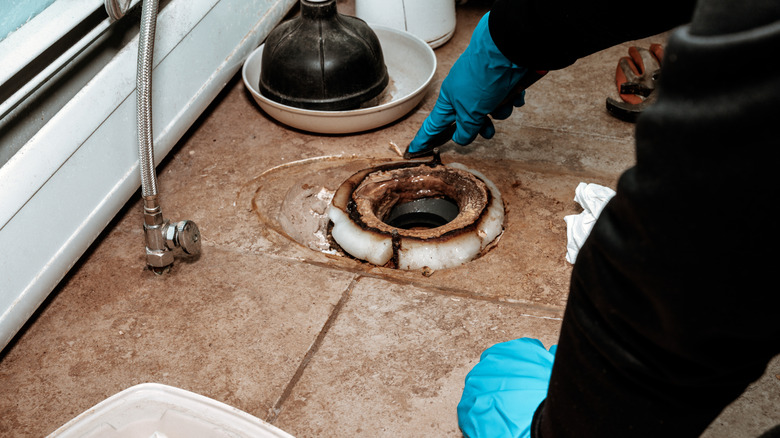
When you notice signs that it's time to replace your toilet wax ring, both rubber and foam alternatives can offer more user-friendly options. But the biggest question for DIY plumbers is which one will give the most reliable seal without unnecessary hassle, mess, or expense. While traditional wax rings are effective, rubber and foam both simplify installation, but each has its ideal scenario.
Rubber gaskets stand out when it comes to durability. Their resistance to cracking makes them the best choice for high-traffic bathrooms with toilets that see constant use. Rubber compresses tightly, forming a tight seal between your toilet base and waste pipe, even if you're battling a slightly uneven floor. They often cost more than wax rings, but some have integrated flanges that make positioning much easier. However, careful placement is absolutely essential, since a misaligned rubber ring can still leak.
Foam rings are lightweight and more forgiving. They conform to the toilet base and flange extremely easily, which can be helpful for DIYers who don't want to spend an hour lifting and shimmying a porcelain throne repeatedly. The tradeoff is durability. Foam isn't as resilient under heavy use, making it better suited for powder rooms or guest bathroom toilets that aren't flushed constantly. Still, the totally mess-free installation may outweigh this concern if you're tackling a one-off repair. Ultimately, the right choice comes down to whether long-term durability or ease of installation is more important. Both alternatives make toilet repairs far less intimidating, giving DIY plumbers a practical solution for replacing a wax ring on a toilet without the sticky mess.