

Keep Backyard Birds Safe During A Polar Vortex With These Tips
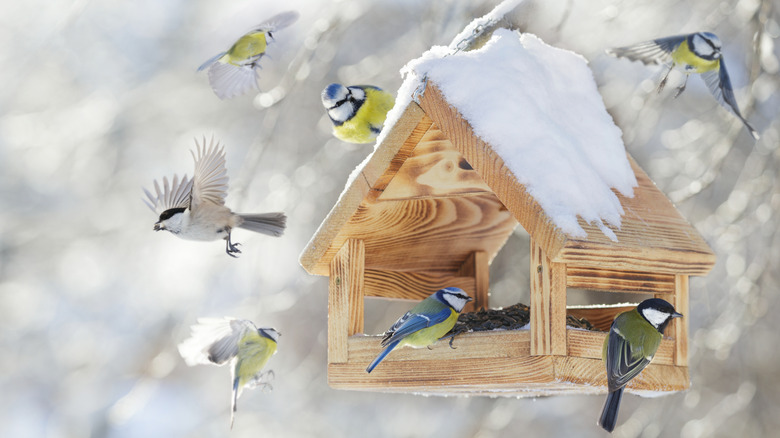
Despite its apocalyptic-sounding name, a polar vortex is a fairly common occurrence. In fact, it exists year-round at both poles. It's the area of low pressure and cold temperatures that moves in a counterclockwise direction at the north and south poles. It becomes an issue when it expands and sends arctic air into the U.S. For most people, it's just a signal to prepare for temperatures to be colder than usual. Crank up the heat, protect your pipes, and put on an extra sweater. For birds, however, it can spell disaster, particularly if they're used to much milder winter temps. Food sources for birds are naturally scarcer in winter, which is when they need the extra calories to stay warm.
In addition to extra energy from food, birds still need fresh water during the winter as well. During a polar vortex, water sources, from small streams to your bird bath, often freeze, making it impossible for birds to find a drink. Scientists have discovered that one way birds survive a polar vortex is by finding shelter and staying put. You can keep birds visiting your yard all winter and help them survive these freezing spells by making sure they have plenty of food, fresh water, and protected areas to get out of the wind and cold.
How to set up your backyard for birds during the winter
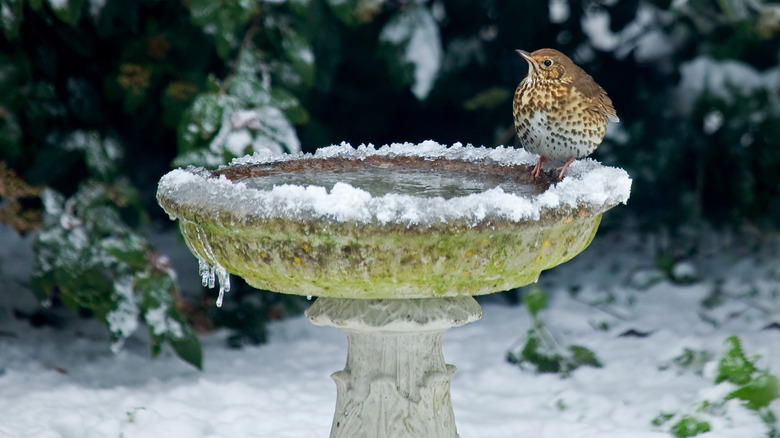
Going out to refill your bird feeders when snow and ice are swirling around turns an otherwise pleasant activity into a dreaded chore. But you can come back inside and warm up pretty quickly. The birds don't have that luxury. Make sure your feeders stay full during a polar vortex. Hang some high-energy suet cakes to give them extra fat and calories. You can easily DIY extra bird feeders with household objects you already have. Don't forget about the ground feeders. During heavy snowfall, seeds on the ground can get buried and be impossible to find. If possible, put seeds on a tray on the ground in a protected area so it's available to birds such as towhees and juncos.
Take measures to prevent your bird bath from freezing. You can buy special heaters for your bird bath that will keep the water above 32 degrees Fahrenheit, or you can just provide fresh water before it freezes over. You also need to make sure the birds have a sheltered area to hide away from strong winds. If there aren't natural areas such as trees and shrubs near your feeders, build up a small brush pile with limbs and sticks. Clean out your bird houses before the polar vortex hits, so they're ready for any small visitors seeking shelter. By taking a few extra precautions when you're preparing your home for freezing weather, you can help your backyard birds survive. You'll also be able to enjoy seeing more birds and a wider variety than usual due to the snow and ice covering up many natural food sources.