

The Part Of Your Garden Hose You're Forgetting To Winterize
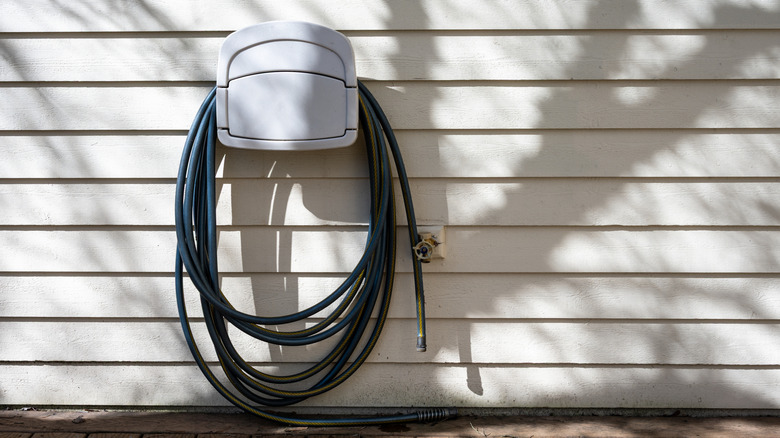
When the chill of winter starts to take hold, most of us trot around the garden with a checklist that usually includes rolling up the hoses, draining the sprinklers, and organizing garden tools for proper storage. We pat ourselves on the back for being responsible homeowners and tell ourselves that the gardening gear is winterized. Done and dusted. But sometimes, we stop too soon. There's one unassuming part of your garden setup that often gets left out, tucked away and forgotten at the business end of your hose. It's your garden hose nozzle, the part that you depend on to actually deliver water.
That little piece deserves as much winter attention as the hose itself. That's because any water left inside can freeze and expand when temperatures drop, which may lead to cracks. Over time, corrosion could also begin to form. By the time you pull your hose back out in the spring, you might be dealing with a nozzle that barely squirts a trickle instead of delivering a smooth spray. Giving your sprayer a little winter TLC now will save you from springtime headaches. Plus, you won't need to spend money on replacements that you can easily avoid in the first place.
Winter care tips for garden hose nozzles
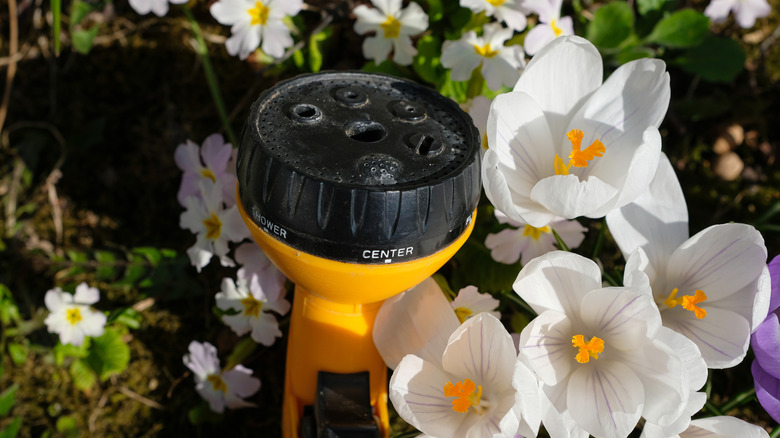
Winter care for your garden hose nozzle starts with the simplest yet most crucial step. Turn off the spigot, and press the trigger to drain any water left in the line. Disconnect the nozzle from the hose (which will be necessary anyway, as you should always drain the hose before the first frost). Ideally, you should give the nozzle a good cleaning before storing. Why? Because even tiny mineral deposits or dirt can harden over the winter and clog spray holes and mechanisms.
Fortunately, cleaning a garden hose nozzle is easier than you might think. Grab a bowl, fill it with white vinegar, and submerge the head. Let it soak for about 24 hours. During this time, the vinegar will dissolve the mineral buildup in the exit holes and leave the nozzle sparkling clean. After the soak, rinse thoroughly and dry; any lingering moisture is just asking for rust to take hold.
Next, show a little love to the moving parts by applying a silicone lubricant to the trigger and twist valves. A dab goes a long way, and don't forget to blot away any excess with a paper towel so it doesn't attract dust. Finally, store your nozzle in a dry spot. Your basement, shed, or any area free from moisture and freezing drafts is great. Treat it like a delicate instrument, and come spring, it'll reward you with effortless sprays that make every watering session a breeze.