

The Silent Killer That Is Taking Down Your Houseplants In Winter
We may receive a commission on purchases made from links.
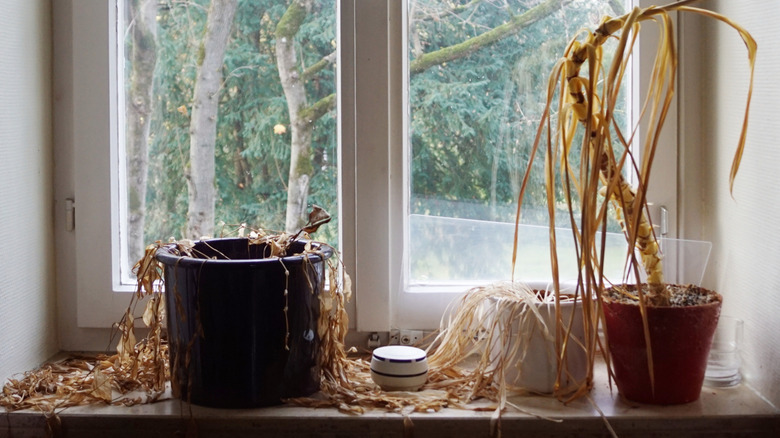
About two-thirds of U.S. households have at least one houseplant. Perhaps the popularity of houseplants is due to the fact they seem easy to grow — just consider all the Pinterest boards and planttokkers promoting the hobby. However, many beginner indoor gardeners, and even some experienced growers, struggle to keep their houseplants healthy, especially during the winter. Even when lounging in the relative comfort of your home, plants can be prone to the pressures of the season. Many houseplant species have tropical origins. That's why we grow them indoors instead of out in the garden. However, cold drafts, temperature fluctuations, and dry indoor air are all silent killers for this often finicky greenery.
Placing these hot-weather-loving plants in a chilly spot in your home or near a draughty window will slowly harm them. Pushing your houseplant under a vent blasting hot air isn't going to fix the problem, either. In fact, the warmer end of the temperature spectrum is just as bad for the plants as cold. Hot air can scorch houseplant leaves, and the dry vent air isn't ideal for humidity-loving tropical plants. The trick is to find the best spot in the house for your indoor plant. In the winter, that means someplace where your houseplants can enjoy temperatures of around 65 to 75 degrees Fahrenheit with slightly cooler nights. Exact temperatures can, of course, differ slightly across plant species.
Protecting houseplants from cold winter drafts
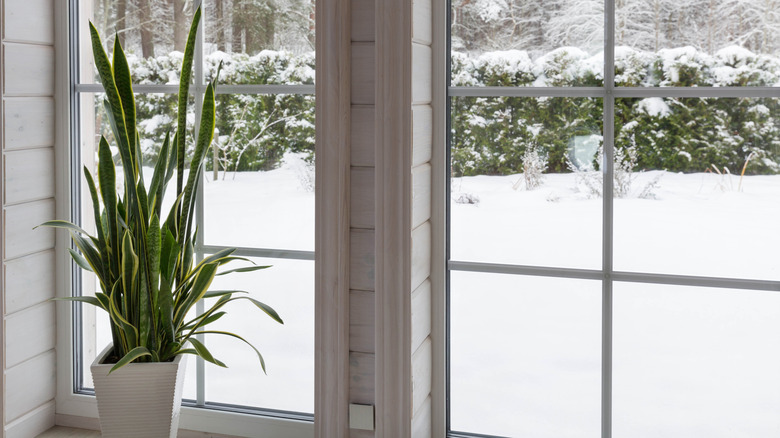
Cold winter drafts seeping inside through mail slots, ill-fitting door frames, poorly insulated windows, and other cracks and gaps can create sharp, localized drops in temperature indoors. If temperatures drop into the 20s Fahrenheit, it's bad news for outdoor evergreens, let alone your tropical houseplants. Mushy, blackened, crinkled, or brown edges on leaves, shoots, and stems are all symptoms of cold injury. These signs are especially visible on fresh, tender growth because of its higher water content.
What's the fix? It's simple. You need to tweak your houseplant care routine for winter by moving your plants deeper into the room or otherwise away from drafty areas. If you have light-loving plants that won't survive away from a window, make sure the leaves aren't touching the frigid glass during winter. Don't place them on a cold tile, concrete, or natural stone floor — elevate them using a plant stand, hanging them from the ceiling, or putting them on a console table. You can fit a lot of plants on a Geebobo Five-Tiered Tall Walnut Plant Stand. In rooms where cold drafts are unavoidable, install insulating curtains, like these Amazon Basics Jacquard Thermal Window Treatments. The next step could be replacing the window seals, but that's not a cheap fix, starting at around $338 per window.
Hot air is another silent killer of houseplants in winter
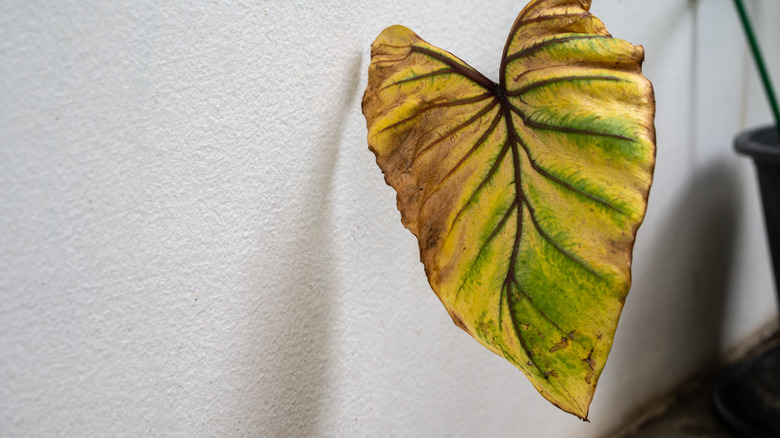
Heating is another often-overlooked winter problem for houseplants. Blasting hot air out of those HVAC vents might keep you and your family warm, but it can create dry, overheated conditions that humidity-loving tropicals really don't like. Using your central heating or a space heater can drop indoor humidity levels to below 30 percent. Most houseplants start showing signs of injury when humidity drops below 20%; they need 40% to 60% humidity — or even higher, depending on the plant species — to thrive. The heat coming from vents or household heating equipment can also cause leaf scorch and bud drop.
Just as with cold drafts, the fix is to move your plants away from direct sources of heat. That means keeping your precious houseplants well away from fireplaces, furnace vents, and radiators. Try to increase the humidity levels around your plants, too. Fill a large tray with pebbles, add water, and place your potted plants on it. Or you can protect your tropical houseplants during winter with a clever trick: setting them up with their very own humidifier. Avoid misting — you need to spritz your plants many times a day to make a noticeable difference, and few of us have time in our schedule for that.