

Beware Of This Pesky Stink Bug Breed That Loves To Decimate Fruit & Vegetable Crops
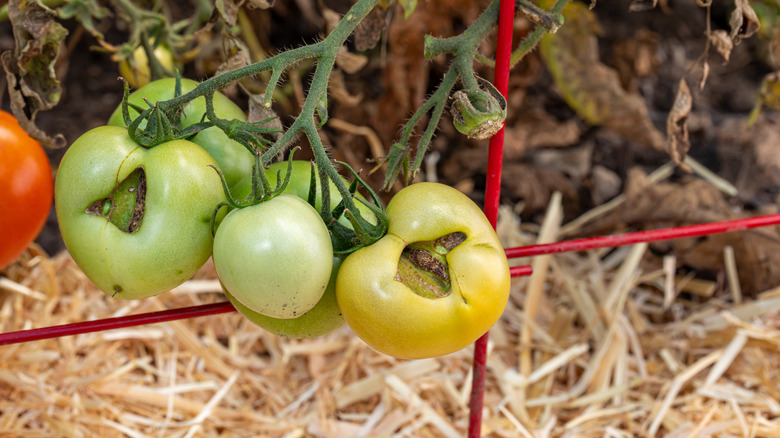
You work hard for your harvest. It takes weeks, sometimes even months, to grow your favorite fruits and vegetables. But what if in the end, all you find is hollow veggies, deformed fruit, and scarred plants? Doesn't sound good, right? Well, this is exactly what will happen if the invasive brown marmorated stink bug (Halyomorpha halys) finds a way into your fruit and vegetable garden. It was introduced accidentally in North America somewhere around the mid-1990s. Unlike the local stink bugs, which are mostly just a nuisance (as evident by their name), with some even being beneficial, the brown marmorated stink bug can wreak havoc on your garden.
It feeds on more than 200 types of plants, including several high-value crops of vegetables and fruits. And to make matters worse, it has spread to most U.S. states. But that is not even the worst part. What makes these pesky bugs even more dangerous is that they are skilled hitchhikers. So, even if you are in an area that has not been affected yet, soon it might be. And that is where learning how to identify and control the brown marmorated stink bug can help, so that you can keep growing extra-large vegetables in your backyard garden.
Identifying the brown marmorated stink bug and its damage
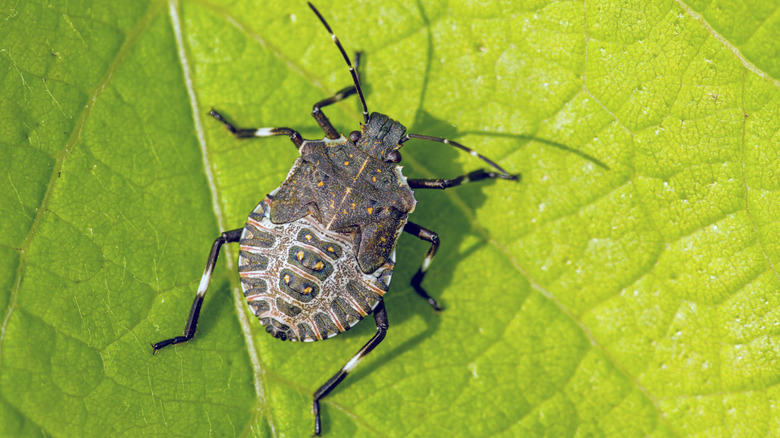
First things first. Let's talk about what a brown marmorated stink bug actually looks like. It has a shield-shaped body with smears of brown color. You can readily differentiate it from native stink bugs by the alternating light and dark bands present on its antennae. If that doesn't help, look for the exposed edges of its abdomen as well as a pale thorax with gray or black markings. Other than that, the bug measures about 5/8 inch in length.
As far as its damage is concerned, the brown marmorated stink bug uses its piercing–sucking mouthparts to draw out plant juices. Also, as it feeds, it injects its saliva into the produce. This causes the formation of sunken spots on veggies like tomatoes and peppers, which obviously no one wants to purchase or eat. Fruits damaged by the brown marmorated stink bug, like peaches, apples, and cherries, often show a "cat-facing" injury. This refers to the formation of a set of distortions and grooves on the fruit's surface. What's even worse is that the feeding wounds serve as an entry site for several other infections, which can cause many common fruit tree diseases.
Controlling and getting rid of brown marmorated stink bugs
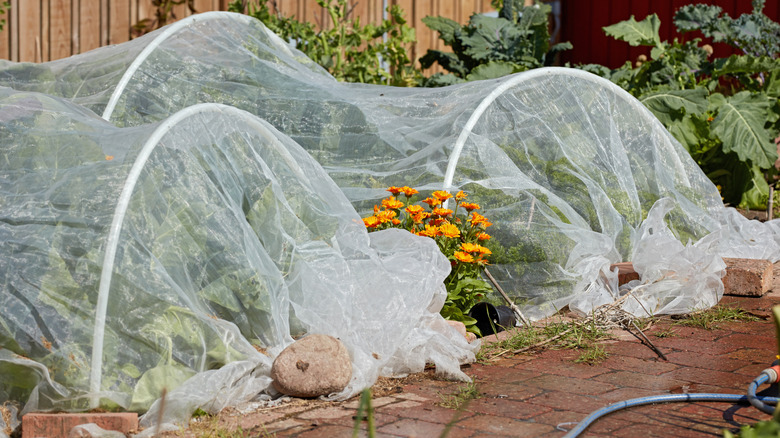
Managing this nasty plant pest is difficult, as it is highly mobile and has a high tolerance to insecticidal residues. But don't worry. Start by scouting the edges of your garden and carefully inspecting leaves, fruit, and borders, especially during the growing season. If you find any and the number is small, pick them up with your hands and throw them in a bucket of soap water. Row covers and insect-exclusion netting are options as well.
However, if the number of insects is too much to take care of by physical methods, chemical control might be needed. You can use chemicals like pyrethroids and neonicotinoids. These kill the bugs on contact. Just make sure you correctly follow all the instructions on the label. Also, try not to spray the pesticides during blooming periods to reduce the impact on pollinators and other beneficial insects in your garden. Biological control is another option. For this, the tiny samurai wasp is a promising candidate. It parasitizes the stink bug eggs and can help significantly reduce bug numbers. Finally, avoid maintenance mistakes that turn your garden into a breeding ground for pests, and make sure to remove vegetation and other debris from and around your garden.