

Is There Really A Wrong Way To Edge Your Lawn? Some Say Yes
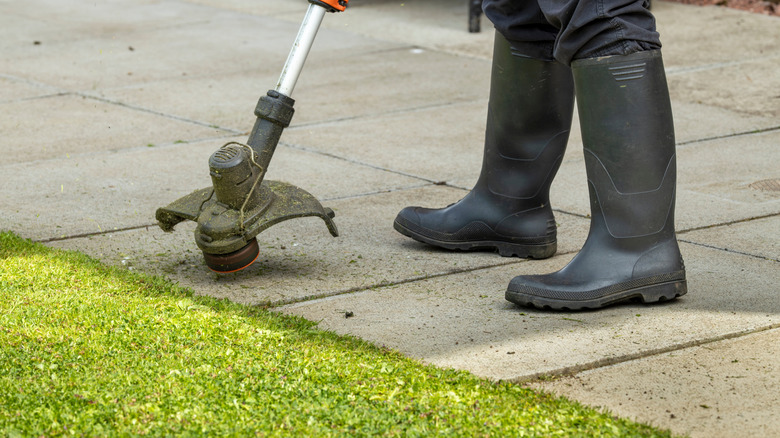
To some it may be a common chore, but to many, lawn care is a point of pride. Neat, green grass is a way to show that you care about your home and your neighborhood. Plus, many people find it relaxing and treat it as a hobby. Like many hobbies, though, some people take it more seriously than others, and they are often more than willing to point out any shortcomings with your lawn, from mowing to trimming. One major spot of contention is with lawn edging. Edging defines the boundaries of the lawn and makes a yard look crisp and polished, but neighbors with sharp eyes may notice the biggest mistakes you're making when edging your lawn. While it may seem nitpicky, there really is a wrong way to edge your lawn, and you may be guilty of it.
Edging the lawn typically consists of using a lawn edger or string trimmer to cut a line between the grass and landscaping features or the pavement of a sidewalk, driveway, or curb. Effective lawn edging can help you better manage water, weeds, and pests in the yard, and it has aesthetic benefits that can even result in a higher property value. As a result, it is important to do it correctly to avoid cutting into the lawn in a way that can reduce the benefits in any of these areas. That means figuring out where to stand, what tools to use, and how to reach the right depth and distance. Of course, it is much easier to follow tips like these when you understand the reasons behind them.
Why your lawn edging technique may be wrong
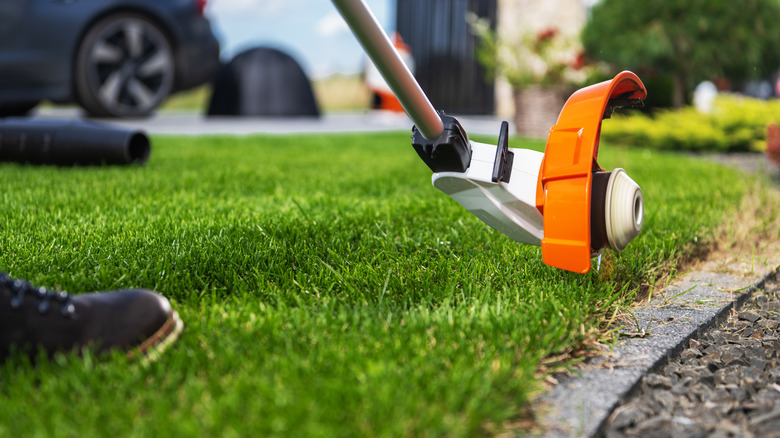
If you just grab your weed whacker and speed along the side of your driveway, then you are missing out on some essential tips for a sharp DIY lawn edging and making some easily remedied mistakes. First, check where you stand while edging. While it may seem intuitive to stand on the paved surface, some landscapers say that you can get much better edges by standing on the grass while you cut instead.
Some people say that when you stand on the concrete, your trimmer may be more likely to drift into the grass as your work, cutting jagged lines rather than clean ones. When you stand on the grass, any lack of control will likely pull the trimmer to the pavement, where it will not disturb the line and you can guide it back into place. You may not have perfect control when using a string trimmer, but standing on the grass may help prevent any visible mistakes. Plus, you may get a more consistent result if you have flower beds or other landscaping that you cannot stand in while trimming if you stay in the grass the whole time. While you may get a better view from the pavement, the potential lack of control makes the method wrong to many.
Contrary to both the grass-side and pavement-side edgers, there are some who argue that using a string trimmer at all for edging is wrong. The argument here is that it is too difficult to keep the string vertical and too easy to cut into your lawn.
How can you edge your lawn the right way?
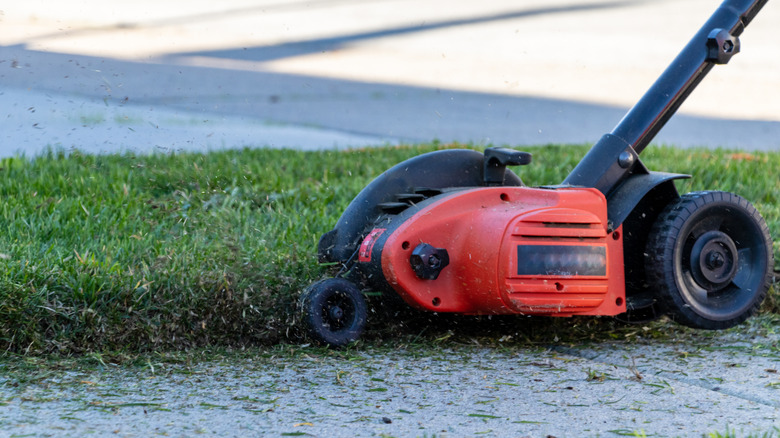
On all sides of the debate, people argue that their preferred method gives them great results. This makes sense, as they likely have significant practice in their preferred method that helps them have better control and cleaner results. If you want to decrease your margin of error, though, then there are some things you should do. First, figure out your tools. There is even more debate about if stick edgers or string trimmers are best for a pristine lawn, but you may need to work with what you have. A dedicated edger will likely give you great results without any slips that take out chunks of grass. If all you have is a weed trimmer, though, standing on the grass side to see if you get more control is worth a try. Although mistakes could lead to weed problems, you will also get better with practice.
Ultimately, to really edge your lawn the "right" way, focus on good practices rather than tricks. Make sure you have the proper safety gear, including long pants and protective eyewear. Also, mow the lawn first. When using a trimmer, if you must, keep the deflector shield on your side, and move slowly in the direction that shoots trimmings away from the pavement and away from you. If you achieve a relatively clean perpendicular or angled edge with a depth of about 2 to 3 inches, then you are edging your lawn the right way, or at least a good enough way.