

This Easy-To-Grow Aromatic Plant Can Keep Rooms Smelling Fresh Naturally For Hours
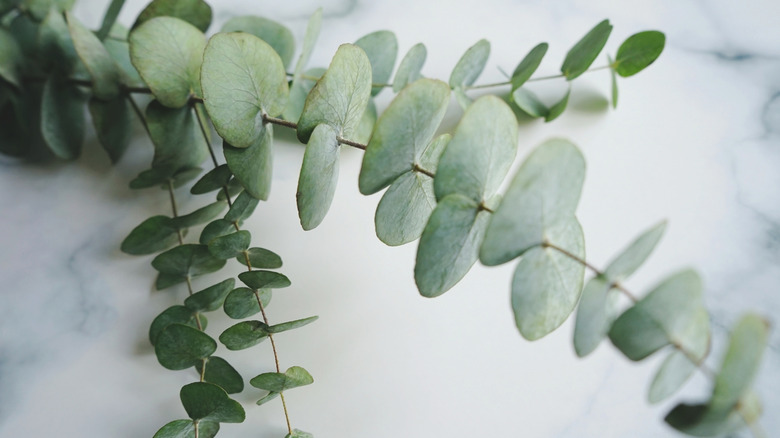
Have you ever enlisted any of your houseplants into performing double duty? Houseplants are great for decor and bringing the outdoors inside, but maybe you'd like them to do something more than just sit there and look pretty. You could, for example, select houseplants that will make your home smell amazing. One such houseplant is eucalyptus, with its distinctive, fresh smell. You may have experienced this fragrance in flower arrangements, and your parents or grandparents likely remember it from the eucalyptus-based chest rub that acted as a decongestant. Because eucalyptus is easy to grow, you have the opportunity to grow aromatic eucalyptus plants in your home, bringing their natural scent to every room they're in.
About 800 species make up the trees and shrubs of the Eucalyptus genus, and they are grown both indoors and outside, though not all eucalyptus plants that start indoors stay there. For example, some eucalyptus can grow 30 feet tall. The species Eucalyptus gunnii (also known as cedar gum) is recommended for indoor growing and tops out at only 3 feet tall. Other dwarf cultivars and species may also remain small enough to stay inside for the long haul; the shrub variety mallee eucalyptus is included in this category.
Grow eucalyptus indoors for its fresh fragrance
Eucalyptus is easily maintained and grows quickly, but it has two big demands — it needs tons of sunlight and really does not want to have its roots disturbed. Give it six hours of full sunlight daily, ideally from a south-facing window. The plant's aversion to root disturbance means that transplanting and re-potting can be challenging, especially since its rapid growth seems to warrant regular re-potting. Disturb the roots as little possible when repotting and use organic potting soil, perlite, and peat moss in equal parts in the new pot. Ensure those finicky roots are covered with the potting medium. You may even want to consider going as far as potting your eucalyptus in an oversize pot to avoid re-pottings.
Be sure the pot for your eucalyptus has drainage holes, and avoid overwatering. Allow soil to almost completely dry between waterings. Your eucalyptus should do well in a home environment in which temperatures range from 65 to 75 degrees Fahrenheit. Provide organic houseplant food monthly. Give your plant a little rest in the winter — cut back on watering, place it in a cooler spot (45 to 50 degrees Fahrenheit), give it no food, and reduce its light exposure. Don't expose your eucalyptus to sudden temperature changes. If you follow these tips and learn as much as you can about how to successfully grow a eucalyptus plant, you'll be rewarded with healthy, fragrant leaves for years to come.
Get the most out of the fragrance of eucalyptus

More eucalyptus plants means more fragrance! Propagate eucalyptus using seeds or stem cuttings. Sow the small seeds and cover with no more than an inch of potting medium. You may want to use biodegradable seedling pots so you can transplant the eucalyptus without disturbing the roots. Keep the seedling moist and transplant when seedlings have reached a few inches tall. Easily root stem cuttings by placing them in water. Once the stems grow roots, you can plant them in pots.
You can optimize the eucalyptus fragrance in your home in a number of ways. Cut leaf-filled branches from the plant and place them in vases around your home, rub the leaves so the plants release their oils, or hang eucalyptus branches around your shower head, which is the easiest way to add eucalyptus into your bathroom. The drier they leaves get, the less aroma they will have; as they reach the end of their fragrance life, you can crush them to release the last bits of oil, place them in a bowl or dish, and spritz with a bit of water to revive the fragrance.