

The Popular Climbing Plant That Is Attracting More Snakes Into Your Yard
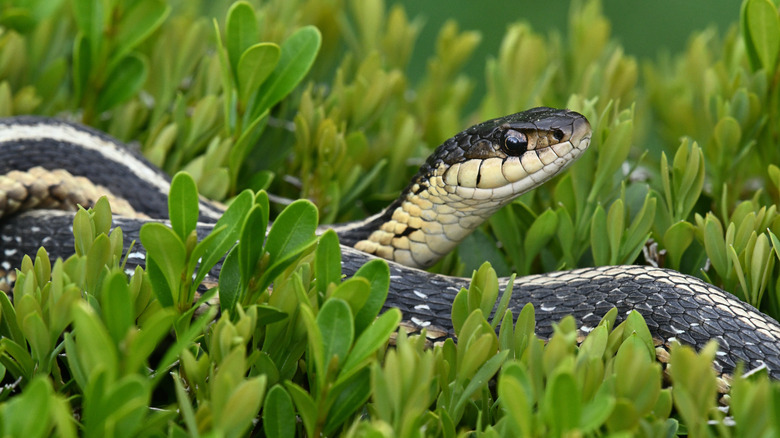
There aren't many people who love crossing paths with a snake. For some, simply imagining a snake is enough to send fear rushing in. And for good reason. They look scary, and they can be venomous. In fact, the U.S. is home to about 30 species of highly venomous snakes. The worst part? They are present in pretty much every state. And if your yard has plants that offer shelter and prey, snakes are definitely going to find a way in. English ivy (Hedera helix) is a climbing plant that offers both.
English ivy is tough, grows fast, and stays evergreen, and many people use it as an ornamental to decorate their walls or as a ground cover to fill their yards. But English ivy is also an aggressive spreader. It tends to form thick layers and tangled monocultures, which can potentially harbor snakes. Also, it is one of those climbing plants you should never grow along the side of your home, as it can damage wood, mess up painted surfaces, pull the siding loose, and harbor all sorts of unwanted pests.
How English ivy makes the perfect snake home
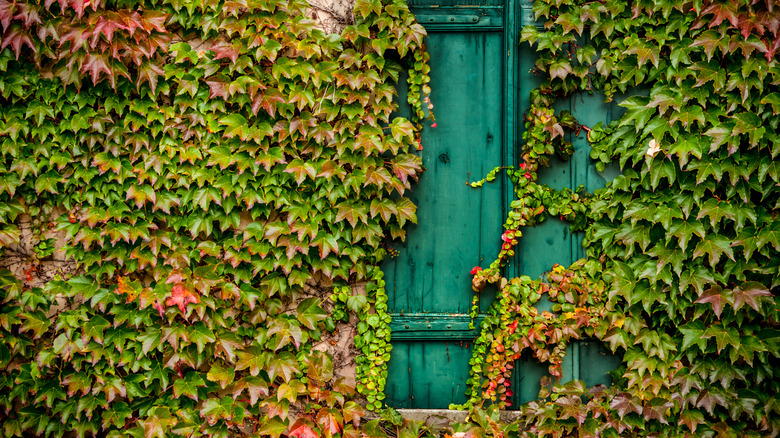
Snakes follow food and cover. However, unlike what most people might think, snakes are shy and want to avoid humans, if they can. That is exactly where the thick and spreading growth habit of English ivy comes in. English ivy often grows by forming dense, overlapping vines and leaves that are difficult to see through -– the perfect sneaky spots snakes can hide in. But snakes are not the only creatures looking for a place to hide. Rodents like rats and voles (two favorite snacks of snakes), also like a good hiding spot.
And English ivy provides more than that. For instance, voles love munching on English ivy's roots and nesting under its vines. And that is exactly what a snake is looking for. Many snakes are ambush predators, meaning they like staying out of sight while waiting for prey. Snakes are also prey to large birds, and like to stay hidden for their own protection. Dense plantings like English ivy offer moist, shaded, and cool conditions that become an irresistible habitat where snakes can easily settle in — whether seeking cover as predator or prey.
Managing English ivy to make the yard less attractive to snakes
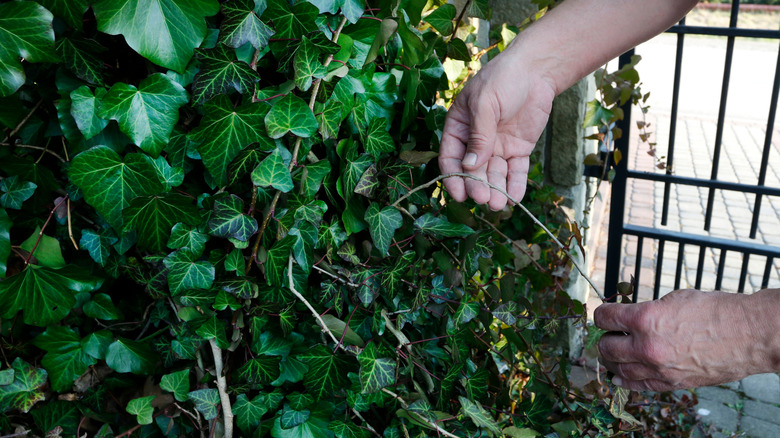
If you have English ivy growing in your yard, the best thing to do is get rid of it altogether. Not only does it create a perfect habitat and hiding spot for snakes, but it is also invasive in the U.S. and damages homes. Instead, you should look for non-invasive climbing plants and shrubs that are safe for planting next to your house. Manual removal of English ivy and chemical treatment are both options. With both manual and chemical removal, you will need to keep checking for regrowth, which may take several years. You should also wear protective gear to protect against snake, spider, or rodent bites and be sure to follow all the label instructions on any chemical herbicides.
However, if are determined to keep your English ivy, you will have to manage it in a way that reduces shelter and food for snakes. It means limiting or removing thick ivy growth, especially at the ground level, immediately from your yard. For instance, you can trim English ivy in a way that raises it about two feet off the ground. This will eliminate low-level hiding places that attract snakes and their rodent prey.