

Glued Flowers Are Showing Up On Succulents: Here's Why You Should Avoid Them
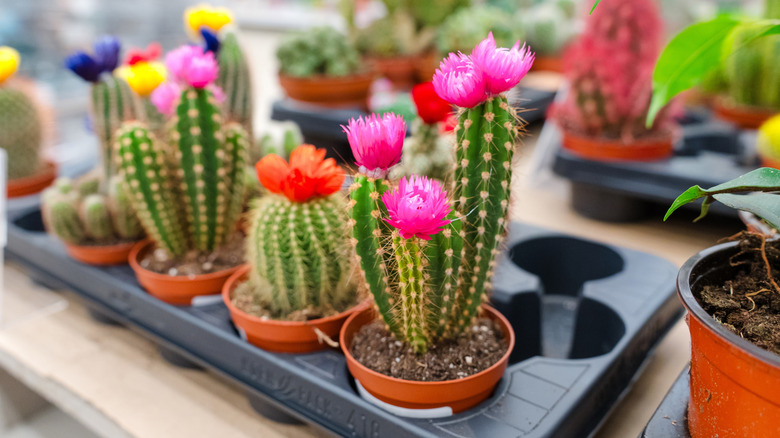
Most of what we call "normal" today wasn't born from nature. Instead, it was built by someone who wanted to package an idea and sell it back to us. Take the three-meals-a-day routine, for example. Our ancestors didn't wake up thinking about having breakfast at nine. They ate when survival demanded it. But once companies realized a schedule could sell cereal, breakfast bars, lunch combos, and family dinners, the world adjusted its appetite. Once again, the market's targeting our instincts. Succulents, by nature, take it slow. Some take years before they send out a real flower, but retailers know humans today are drawn to whatever is instantly rewarding. They're aware convenience sells. So, they glue on bright, fake flowers, banking on our impulse to choose beauty before patience. But what looks harmless and cute at first glance is a sneaky mistake sellers make that can seriously damage the plant.
The hot glue they use to attach the faux flowers can trap moisture in the tiny crevices of the plant's crown. Over time, this creates the perfect breeding ground for rot. Further, these glued flowers often sit right over the plant's growth point. It's the very area that captures sunlight and encourages photosynthesis. By blocking this vital spot, the plant is forced to struggle and redirect its energy into simply surviving. If you try to tug off the fake bloom, it can tear the delicate plant tissue. This leaves an open wound vulnerable to pests and infestation. So, in trying to rush beauty, we risk robbing a living thing of its natural wonder, which, although slow, blooms beautifully.
What if you already bought a succulent with glued flowers?
Generally, real succulent flowers have a softness to them. They're smooth to the touch and usually bloom from short stems that are integrated with the plant. Fake flowers, on the other hand, are often easy to spot. Sellers stick tiny strawflowers directly on top of the succulent. They're suspiciously symmetrical, almost as if they were airbrushed into place. The colors might be a little too vibrant, and the petals feel plasticky or paper-thin. If your spiky buddy is accessorized, don't stress about it. There's a way out.
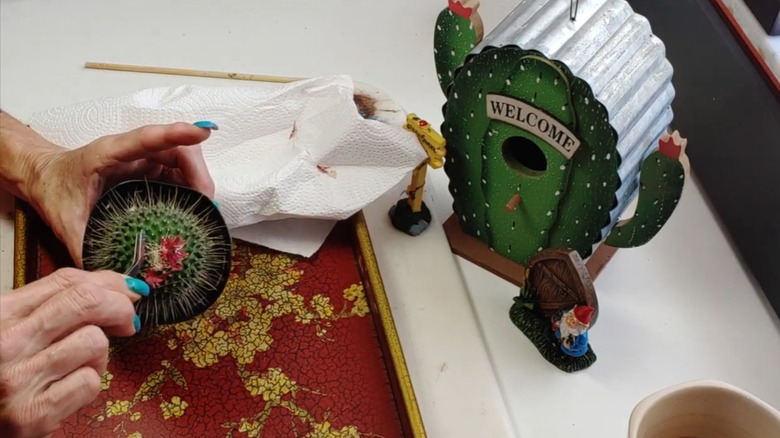
Sometimes, these strawflowers are just pinned on. You can gently pull the flower off, and your succulent will forgive you. Sure, the pin might leave a small mark, but it's rarely harmful. Hot glue, however, is a different story. You can't just yank it off without risk. Ideally, grab a pair of tweezers and lift it away from the plant carefully. If the plant tears, the next step is to provide ideal conditions for survival, such as bright, indirect light and a dry spot, where it can recover at its own pace. In other situations, the plant won't tear, but it'll likely have stubborn glue left behind. If that happens, dip a cotton bud in rubbing alcohol and gently massage the spot for a couple of minutes to remove the hot glue. The glue will eventually release. Alternatively, a hair dryer on a low setting, held at a safe distance, can do wonders. Once they come off, you can use the fake flowers to create an inexpensive wall art like vase sconces.