

Don't Toss Your Holiday Meal Leftovers, Use Them To Give Your Soil A Major Boost
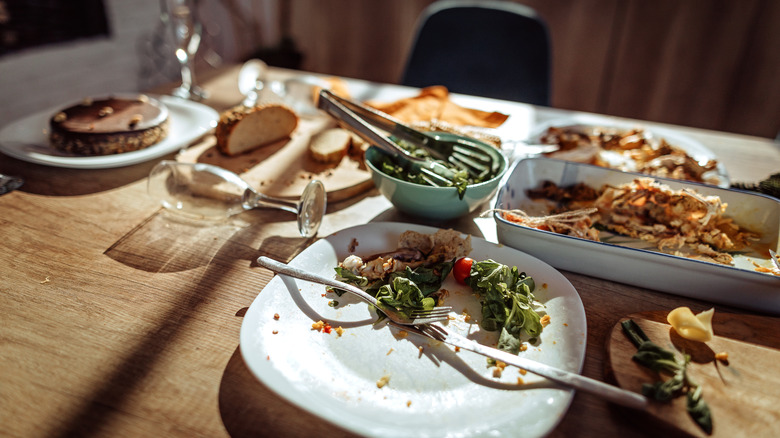
You've got a half-full container of green bean casserole slowly making its way further and further back into your refrigerator, you left chestnuts roasting on an open fire far too long for them to be edible, or you discovered that your kids refused to eat Brussels sprouts no matter how many times you pleaded. What can you do now with all those holiday leftovers? Don't let uneaten food go to waste when you can compost it. Leafy greens aren't just great human food; they enrich compost with nitrogen. Starches like potatoes and sweet potatoes are complex carbohydrates that provide essential nutrients for plant cell growth. "Composting is also important for many people wanting to keep food out of the landfill and do right by the environment, says Sam King, CFO and Director at Blue Earth Compost in Southington, Connecticut, "It's also the easiest way to improve your garden's soil."
Composting your holiday leftovers is inexpensive and simple, but one of the biggest benefits of composting at home is that it spares you the cost of chemical fertilizers to help your garden grow when spring returns. If you don't already have a compost pile, fall is a great time to start one. Those nutrient-dense holiday leftovers nicely balance yard waste like leaves and garden remnants to provide the right mixture of compostable materials. If you'd like to try composting but you don't have outdoor space, some municipalities or community gardens also accept food scraps and other organic materials for composting. You might also find commercial composting services in your area that provide weekly pickup of food scraps from homes and businesses.
Holiday feasts compost into healthy spring soil

Not everything on your holiday table should go into your home compost pile. Coffee grounds, tea leaves, dinner rolls, nut shells, green beans, corn cobs, squash rinds, and other fruits and vegetables are all acceptable materials to add to your compost. Along with grass clippings and plant clippings, these are known as "green" materials that will add moisture and nutrients to your pile. Just be sure to mix in enough "brown" materials like fallen leaves, wood chips, clipped brush, eggshells, wood ash, straw, or shredded paper to keep your pile porous. This allows airflow so that the food scraps and other "green" materials can adequately break down into soil.
If you're doing home composting, pull out the holiday scraps that shouldn't go in your backyard pile — like the turkey. Meats, bones, cheese, salad dressings, and other fats don't break down easily in the lower temperature environments of a typical backyard compost pile and can end up attracting pests to your yard. Cooked fruits and vegetables can be okay, as long as they aren't oversaturated with oils, broth, or spices. If you're still saddened by the waste, Sam King at Blue Earth Compost explains that commercial composting services allow homeowners to compost tougher organic materials like meats, bones, and fats that require higher temperatures to break down into soil. Also avoid adding moldy leftovers, plant materials that are diseased or have been treated with chemicals, weeds, or weed seeds that can regenerate in your pile. Armed with these do's and don'ts, come spring you'll have rich, organic soil ready to add to your garden beds.