

23 Gorgeous Tulip Varieties You Can Still Plant Until December, Selected By Our Pro Gardener
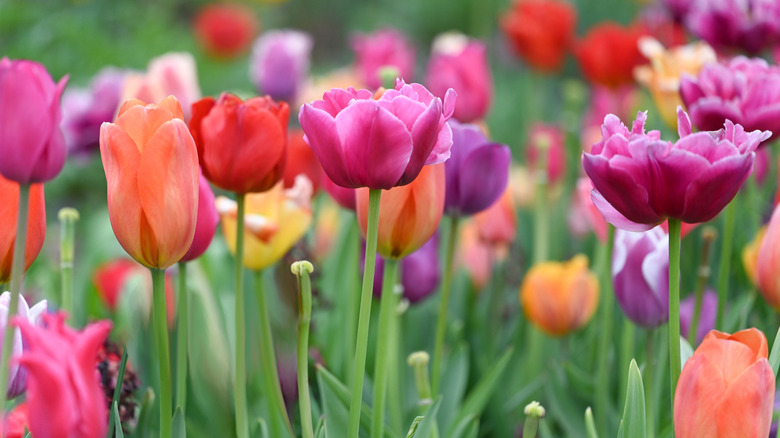
Tulips are for me like a box of jewels, hidden away until spring sun and rain coax them up, then bursting into color throughout the garden. As a professional gardener, I plant tulip bulbs every year. I have my favorites, but I also try to plant at least one "new to me" tulip every year to see how it does and try out new colors and shapes. Here are some favorites that I've planted for clients and in my own garden, chosen for their beauty and reliability. They can still be planted in December as long as the ground remains workable.
There are many kinds of tulips available. The ones most likely to be truly perennial tulips are botanical tulips, also known as species tulips, which are small and usually early-blooming. Others that have perennial tendencies include Darwin Hybrids (like 'Apricot Impression' or 'Daydream') and Fosteriana (or Emperor) tulips, like 'Oracle' or 'Purissima. But tulips are one of those bulbs that many gardeners choose for their fleeting beauty, as opposed to being a perennial investment. There's no need to plant multiple rows of tulips (which can get expensive): a few well-placed clumps of four or five tulips can add noticeable touches of spectacular spring color to your garden.
Some gardeners fertilize their tulips in spring, but I just make sure to plant them with a bit of compost in well-drained, loamy soil, in a sunny spot. You can plant tulips in containers also, but be aware that any bulbs planted in pots in colder zones (below USDA Hardiness Zone 6) are at risk of bulb rot due to freezing and thawing.
'Albert Heijn'
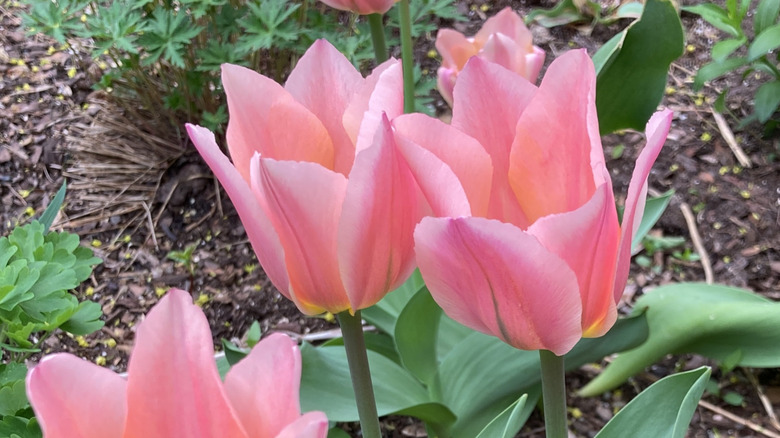
I think this is my favorite tulip. 'Albert Heijn' is a Fosteriana tulip, also called an Emperor tulip, which is a great choice for early spring blooms. I love the pale pink petals streaked with rose and peach accents, and a touch of green. They glow like little rosy lanterns. Fosteriana tulips are a good investment because these early spring bloomers tend to be perennial for at least several years, and I have had this variety return for three years in a row before the blooms started to dwindle.
'Princess Irene'
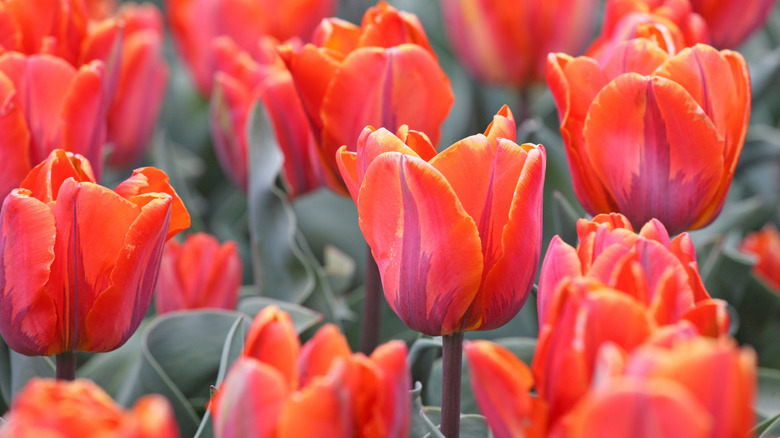
'Princess Irene' is a popular Triumph tulip, loved for its vivid coloring. The bright vermilion orange petals have deep purple flames and really stand out in the spring garden. They're 15 to 18 inches tall, perfect for the middle of the border or along a walkway. These bloom in mid-spring, and blend beautifully with ivory tulips like 'Ivory Floradale' or 'Clearwater'. There's also an 'Irene Parrot' tulip, with the same coloring on frilly petals, that blooms in late spring.
'Don Quichotte'
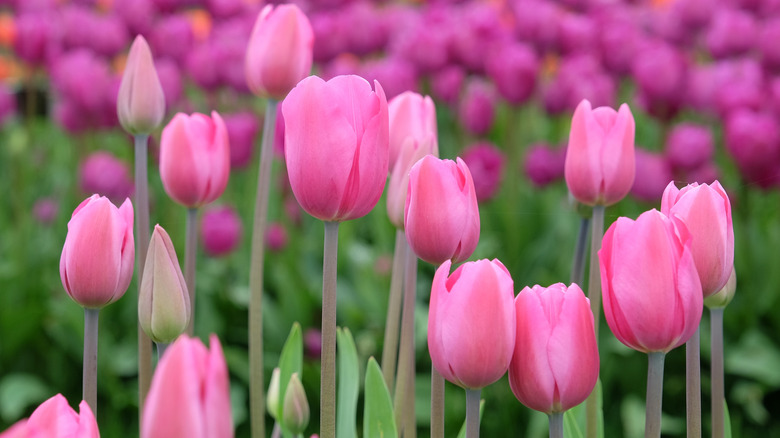
Named for the fearless and charismatic hero Don Quixote, these Triumph tulips are sturdy, reliable bloomers that deliver bold pink color to the spring garden. These are often available late in the season due to being very popular, so I sometimes pick up a bargain bag online or at a local garden shop. They're not perennial, but 'Don Quichotte' is one of the most stunning medium pink tulip varieties out there.
'Orange Emperor'
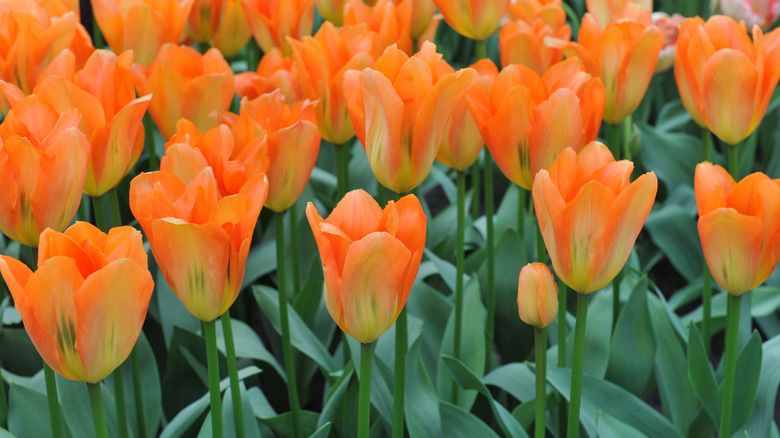
Another of my favorite Fosteriana tulips is the 'Orange Emperor', which has stunning, bright orange blooms streaked with yellow and green. These bloom for weeks starting in early April, and the flowers hold up to the spring weather, closing each night and opening again when the mid-morning sun warms them up. These look great planted with blue flowering early spring bulbs like Glory of the Snow (Chionodoxa luciliae).
'Tiramisu'
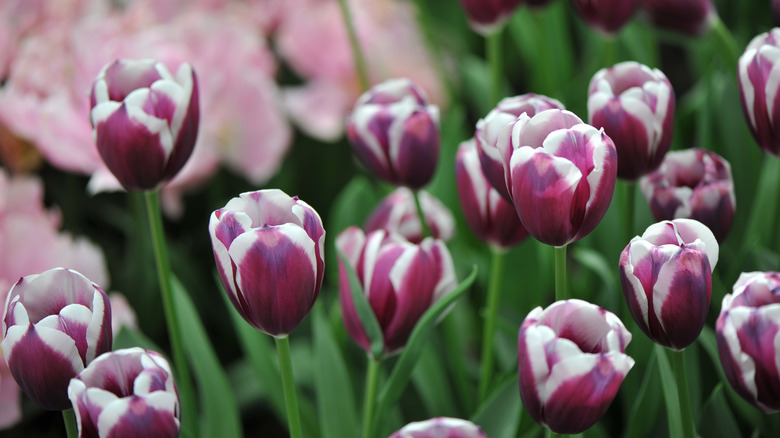
Two-tone tulips add a lively look and also make a good bridge to combine different solid colors. 'Tiramisu' is a colorful Triumph tulip (mid to late spring flowering) of bold magenta with plum-purple accents and crisp white edges. It looks gorgeous on its own, or it can be combined with additional white or magenta tulips (or both). I like it planted with plum and purple shades. Try it with any of these Triumph tulips for a stunning color show: 'Purple Prince' (lilac purple), 'Negrita' (magenta purple), or 'Atilla Graffity' (deep plum).
'Brisbane'
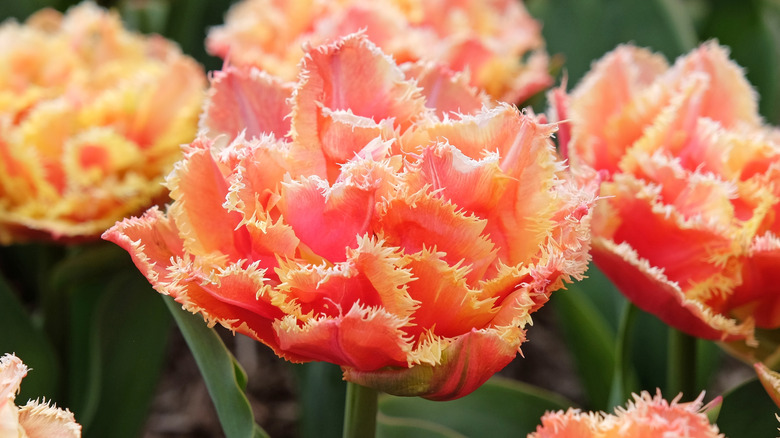
Fringed tulips are so unusual-looking and add delightful texture and interest to tulip displays. The 'Brisbane' tulip is a double-fringed flower in glowing shades of pink, salmon, and peach with yellow edges. A late spring bloomer, the flowers usually open from colorful buds in late April and often last into May. This one looks gorgeous with peach-pink single late 'Menton' tulips, or hot pink lily-flowering 'Mariette' tulips for contrasting shapes in similar colors.
'Salmon Prince'
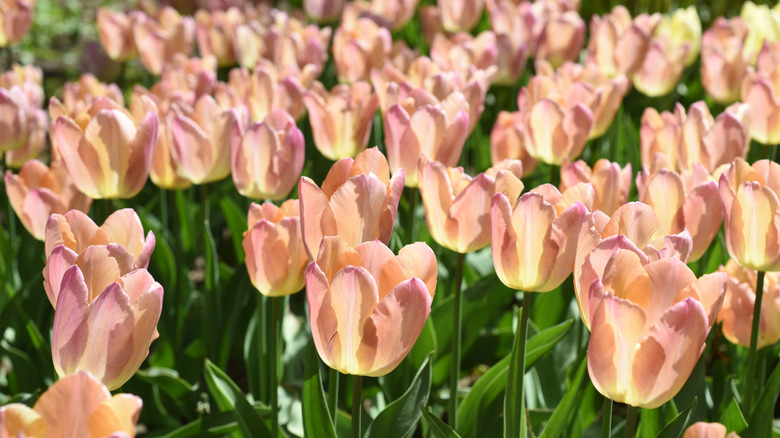
'Prince' tulips are Triumph tulips with large, chalice-shaped blooms that bloom heartily for weeks in mid to late spring. One of my favorites is 'Salmon Prince', which is a pale peachy-apricot with highlights of pale yellow and rosy pink. This is a beautiful choice for a large planting, or mixed with other tulips of your choosing. Try planting with 'Ollioules' Darwin Hybrids (white brushed with rosy pink), or the colorful mid-spring blooming double 'Copper Image' (peach, amber, copper, and salmon).
'Apeldoorn'
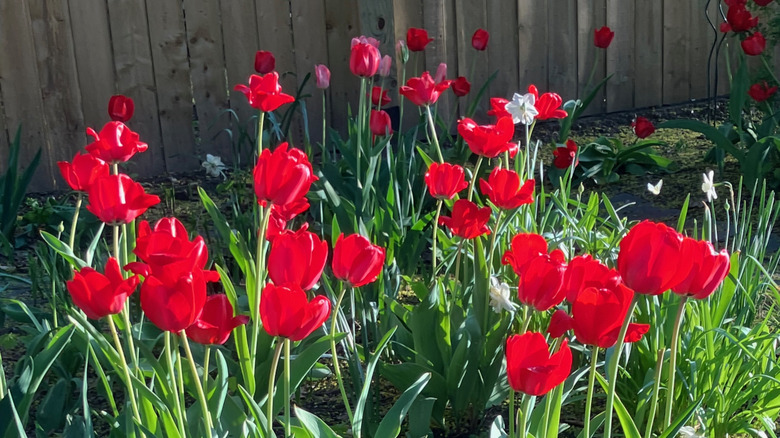
For some gardeners, red tulips are a go-to choice for the spring garden. While I tend to prefer blue-toned reds like pinks and burgundies, there is nothing quite like a vivid primary red tulip for visual impact, and 'Apeldoorn' is the quintessential classic. This Darwin Hybrid produces large flowers that perennialize well, returning for at least several years. I love these because the sturdy, weather-resistant petals hold up to rain and glisten in the sun. They're lovely planted alongside white or yellow daffodils.
'Pretty Princess'
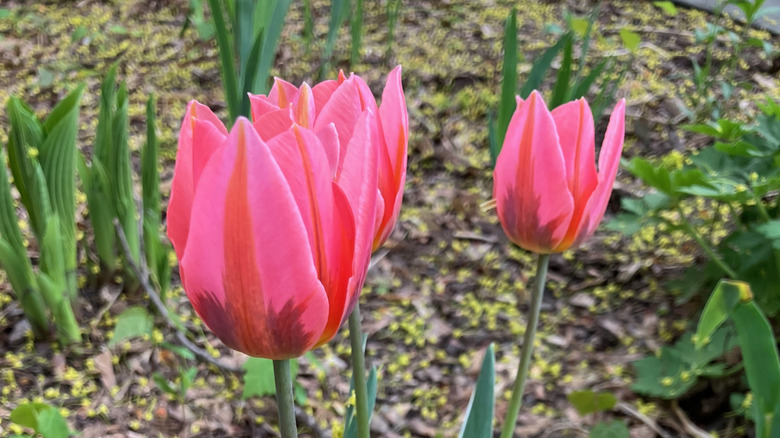
This is a striking tulip with bold coloring: vivid carnation pink, streaked with deep purple and red-orange. The petals of 'Pretty Princess' are often rounded on top but sometimes pointed, and I saw several variations in one bag of bulbs. These single early tulips bloomed well for me in partial shade, and the blooms stayed colorful for weeks. They are also very sturdy tulips for cutting and look great in a vase.
'Queen of Night'
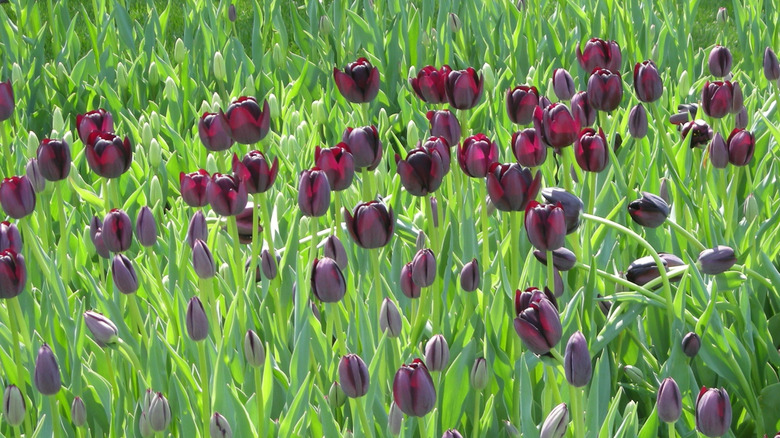
For those who love deep, dark colors in the garden, the 'Queen of Night' tulip is the spring standard bearer. It's often called a "black" tulip but is actually a deep burgundy-purple. This single late tulip only blooms for one season, but adds vibrant color as many other tulips are fading, and at 30 inches tall, it stands out for its height as well as its color. I love combining these with hot pink and orange tulips for a bold palette, but they also look wonderful with white and/or pale pink tulips.
'Ballerina'
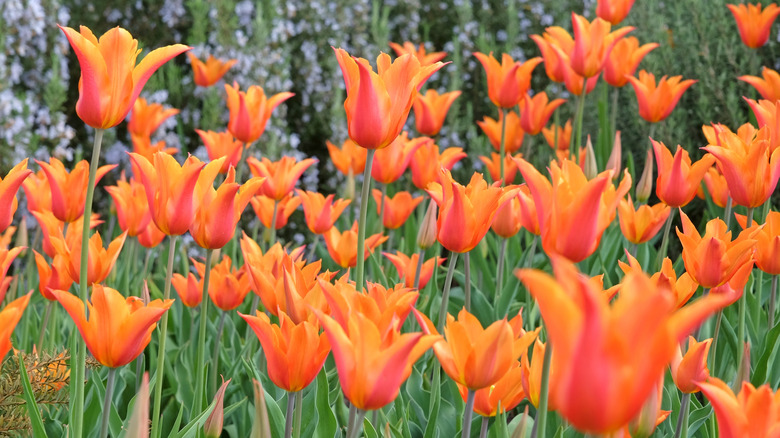
Lily-flowering tulips add a charming shape to the tulip bed, with shapely-pointed petals that look like delicate goblets. The only drawback is that lily tulips are somewhat susceptible to wind damage, so it's best to plant them where they have a windbreak or other shelter to help the blooms stay intact. The 'Ballerina' tulip is one of my favorite orange tulips, with tangerine petals streaked with vermilion and a touch of red. They're also fragrant! These look great planted with red tulips for a vibrant color show.
'Sweetheart'
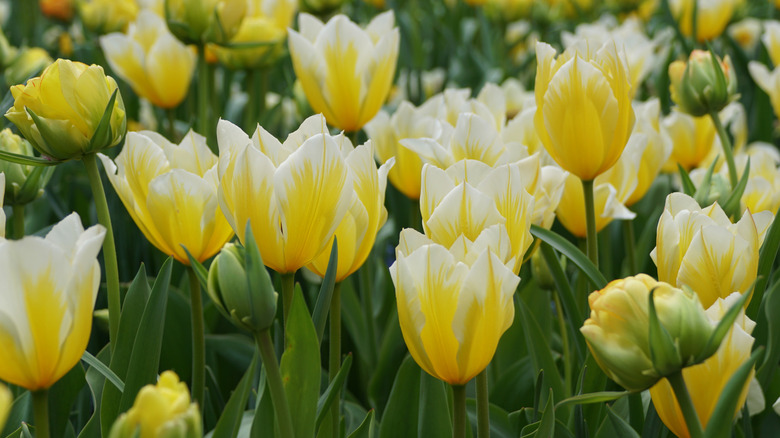
These Fosteriana 'Sweetheart' tulips are a sprightly lemon yellow, edged with white, making them a wonderful accompaniment to assorted yellow or white daffodils. One of the earliest-blooming tulips, Fosteriana tulips are also one of the best perennial tulips (mine usually come back for at least three or four years). 'Sweetheart' tulips have large, long-lasting blooms. I also love these planted near blue spring-flowering bulbs like Glory of the Snow, Dutch hyacinth (Hyacinthus orientalis), or grape hyacinth (Muscari armeniacum).
'Temple of Beauty'
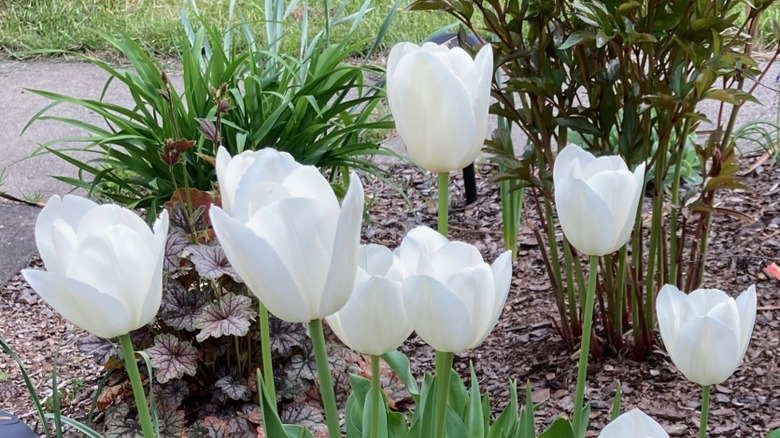
I find that tulips with "salmon" in the name are often any color but salmon, but these are the closest to a true salmon color that I have found. 'Temple of Beauty' in fact often has several hues combined in one flower — salmon, rose pink, orange, and small touches of yellow and red — and has a gorgeous shape with both rounded and pointed petals. This single late tulip is tall at 30 inches and long-lasting with strong stems, making it great for the garden but also a desirable flower for arrangements.
'Pink Impression'
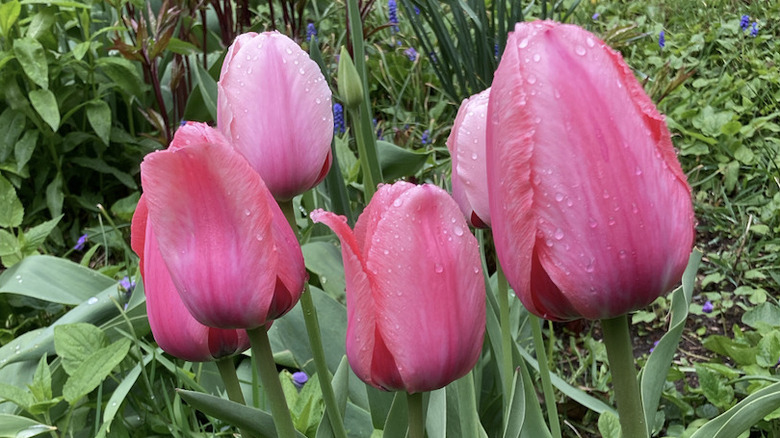
'Pink Impression' is probably the most popular Darwin Hybrid tulip. It perennializes well, produces huge, goblet-shaped blooms in mid-spring, and the sturdy, lustrous petals are gorgeously shaded with rosy pink hues. These have performed very well in my partial shade garden, and I usually get at least three years of blooms from them. They're stately and dramatic, so just a handful of bulbs planted in clumps here and there throughout the bed provides bold patches of spring color for several weeks. If you only plant one kind of tulip, make it this one.
'Orca'
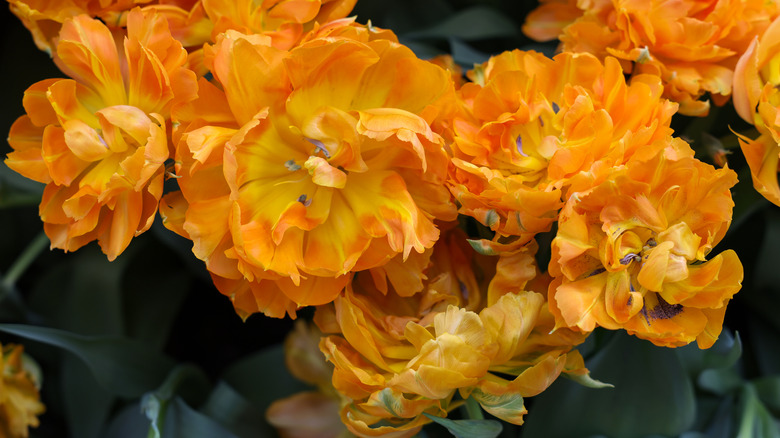
Double tulips are also known as peony-flowering tulips for their resemblance to peonies. There are double early and double late tulips, and their full, fluffy shapes are a striking addition to the tulip bed. This early spring bloomer, 'Orca', starts as a pale golden orange color and then gradually matures to tangerine. 'Orca' is also sweetly-scented, which is somewhat unusual in tulips. Try it planted with double early 'Foxtrot' (silvery pink) or early-blooming Emperor tulips like 'Yellow Purissima'.
'Hakuun'
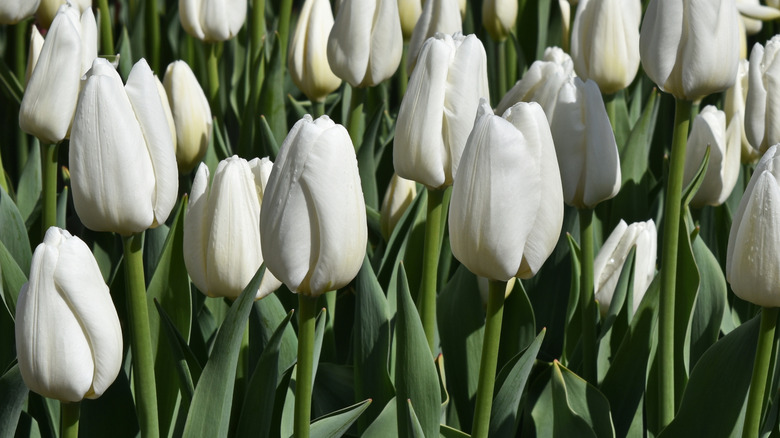
There are many white tulips out there: early, late, single, double, and more. The cream-colored 'Ivory Floradale' is a popular Darwin Hybrid, but 'Hakuun' is every bit as gorgeous, and the white is more of a bright, cool tone than its ivory cousin. White tulips are an undersung choice in the spring garden, when they can add such allure. Planted amidst the foliage of various perennials emerging, the combination of different greens and crisp white is fresh and beautiful. I also love these planted with pastel blue muscari like 'Valerie Finnis' and 'Baby Breath'.
'Janis Joplin'
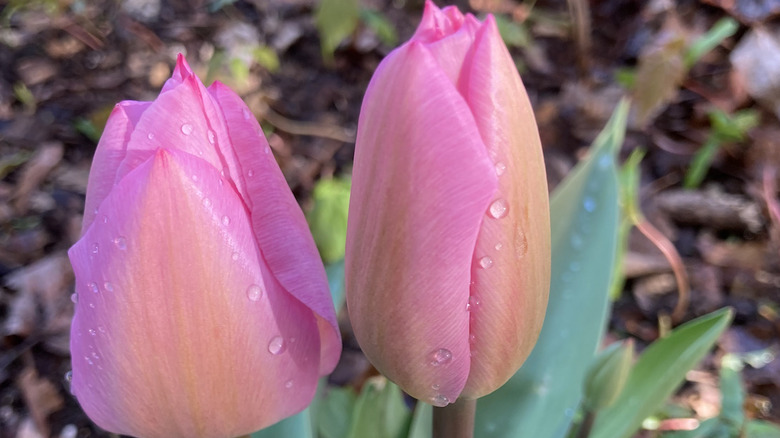
I discovered this stunning Fosteriana tulip several years ago. 'Janis Joplin' is a delicate lavender pink with apricot shading on the center of the petals, with a blue base and occasional faint tints of blue in the petals. Their unique beauty conjures the iconic talent of their namesake, one of my favorite singers. Give these a special space to shine in the spring flower bed. I planted them in small clumps of five to six bulbs, near some small clumps of 'Orange Emperor' tulips, which bloom at the same time, complementing their warm pastel tones perfectly.
'Black Parrot'
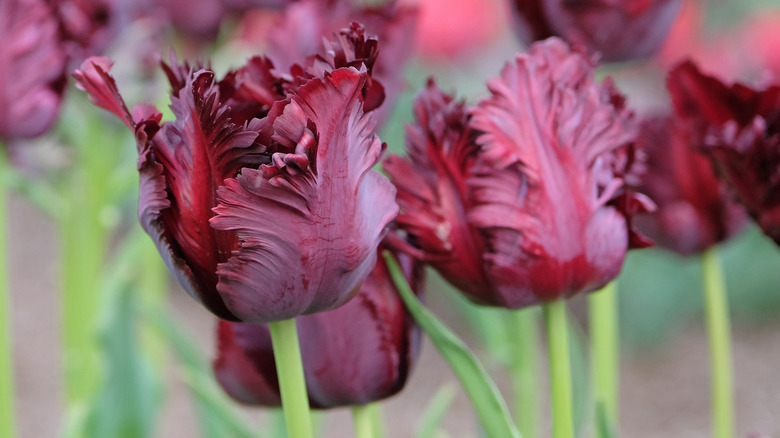
The 'Black Parrot' tulip is a wine-red flower of exquisite beauty. Unlike many parrot tulips with varying colors in one bloom, 'Black Parrot' is fairly uniform in color: dark red with a black-red base, burgundy petal edges, and a lustrous, silvery sheen. It's positively stunning, adding bold color and texture. It pairs beautifully with pale green 'Viridiflora' tulips, warm pastels like 'Charming Beauty' or 'Apricot Giant', or deep blue muscari like 'Paradoxum' or 'Latifolium'.
'La Belle Epoque'
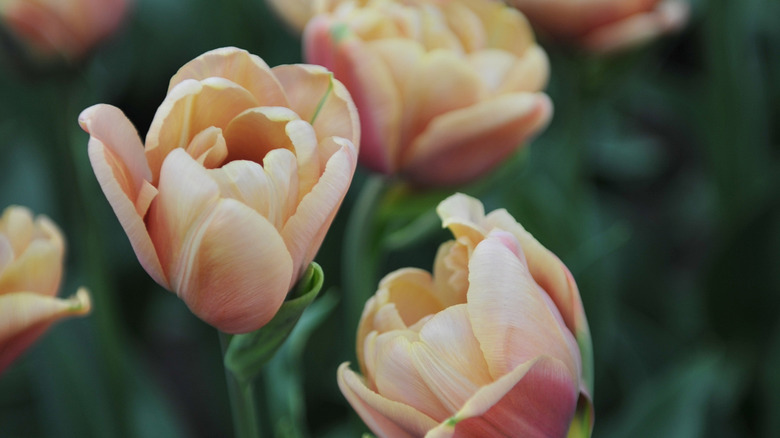
Amber! Peach! Yellow! Apricot! Dusky rose! Bronze! Plum! This tulip has attracted plenty of attention for its unusual coloring that combines many delicate hues. From a distance, the flowers look like the pale mocha that was Pantone's 2025 Color of the Year, making them a unique color for tulips. 'La Belle Epoque' is a late double (peony-flowering) tulip that blooms in late April and May. At 16 to 18 inches tall, these luscious beauties deserve a prominent spot at the front of the flower bed.
'Merlot'
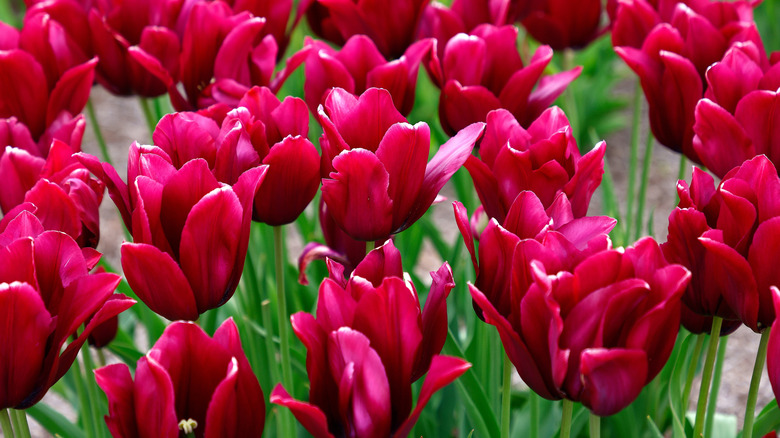
'Merlot' is a gorgeous lily-flowering tulip that is a rich magenta-crimson color with deep wine accents, appropriate to its name. These tulips are gorgeous, either planted en masse or mixed in with other colors. I like to plant them in small clumps for bursts of deep color throughout the border, and they look great alongside peach, purple, or pale yellow tulips. They bloom in mid to late spring, so they're also a great companion for late spring-blooming perennials like bearded irises and peonies.
'Blushing Apeldoorn'
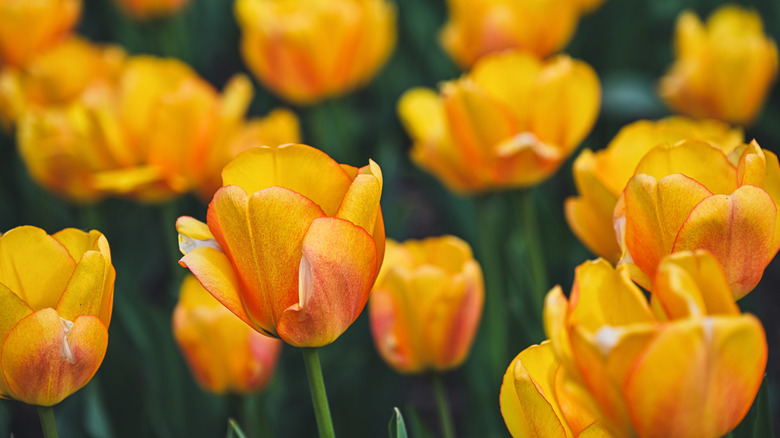
If you enjoy tulips with subtle coloration, it's hard to beat 'Blushing Appeldoorn', a well-loved Darwin Hybrid. From afar, these flowers look like a vibrant tangerine color, but up close, they're golden yellow with rich red petal edges and a hint of red shading. They're outstanding on their own, and also look amazing alongside pale yellow or red tulips. I find that planting them next to orange tulips somehow eclipses their subtle coloration, but your mileage may vary.
'Silver Parrot'
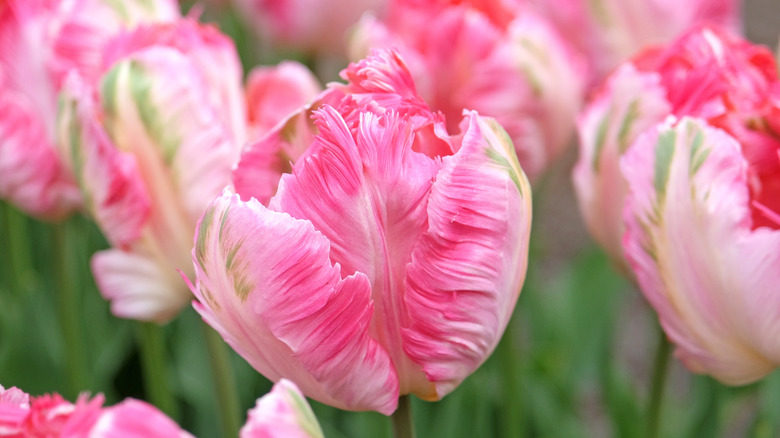
Parrot tulips come in a wide range of colors, and it seems there are new ones being introduced every year. One recent introduction is 'Silver Parrot', which has lovely shades of rose pink and attractive green accents. I think the "silver" in the name might refer to the lovely sheen of pale pink that overlays the lacy petals. But whatever its origin, the name is ideal for this shimmering beauty, which also stands out for its variegated foliage. The blooms are large and really light up the late spring border with unique color, form, and texture.
'Candy Prince'
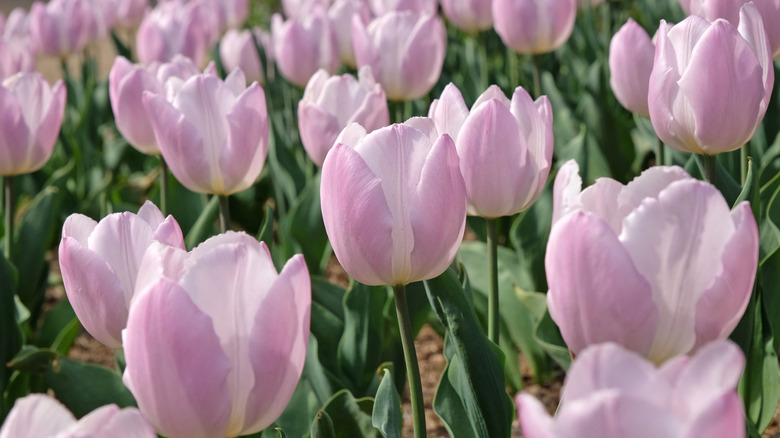
These pale lavender tulips have an eye-catching two-tone look and seem to glow in morning sunlight. 'Candy Prince' is a single early tulip and starts blooming in April. They're nice planted in a mix of pastel tulips, but also lovely on their own to showcase their delicate coloring. They grow up to 24 inches tall, making them perfect for the back of the border to accent shorter spring blooms: Try pairing them with pastel Dutch hyacinths like lilac 'Splendid Cornelia' or blue 'Sky Jacket', or with 'Blue Moon' woodland phlox (Phlox divaricata).