

Think Twice Before Using Christmas Lights To Warm Potted Plants This Winter

Dropping temperatures are a serious concern for gardeners in the winter, so people are always on the lookout for new ways to protect outdoor plants from frost, including potted plants. In gardening circles, tips and tricks are traded freely, especially stylish hacks that look great for guests and social media. The problem is, they aren't always the safest or most effective ideas. One such popular idea is to use Christmas string lights to protect your potted plants from frost in the winter. The truth is, this method presents real danger to your home.
Using string lights as a heat source for your greenery is one garden hack that won't protect your plants from frost. But the issue with the hack doesn't end there. Trying to warm potted plants with Christmas lights also presents a fire hazard, especially if you aren't careful about how you do it. The idea of the hack is that the incandescent lightbulbs warm the area a few degrees, and then you cover the plants with cloth or other frost protection. While it is true that the lights can raise the temperature enough to help the plants, fabric and Christmas lights aren't the best mix. It's essential to exercise caution to protect your home and prevent your garden from going up in flames.
Safety first: Christmas lights on potted plants can be a fire hazard
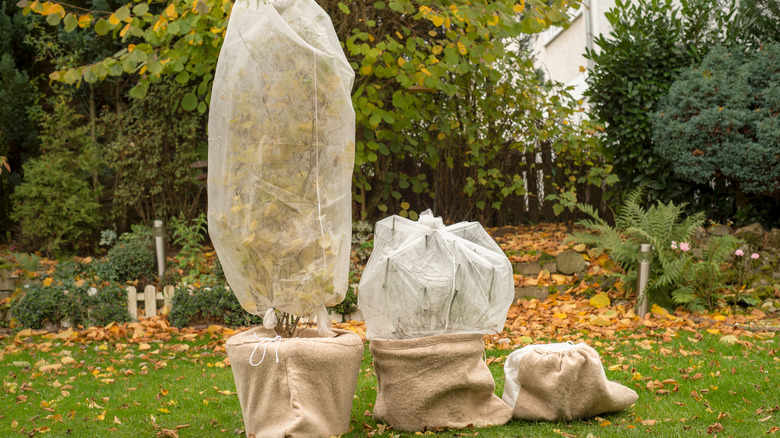
If you are still considering the hack, take some time to ensure the safety of your home and the health of your plants. Some essential things to consider include the type of bulb, the type of fabric, and the spacing of the setup. Plus, if you have mulch, you may want to avoid the project altogether. Mulch can be an unexpected fire risk in your garden, and Christmas lights are the spark.
LED lightbulbs do not emit any heat, so they would not be useful in warming potted plants through the winter. A big draw of the hack is to repurpose lights that you already have, so double-check the lights you have to see if they are incandescent or LED. Many people have already said goodbye to traditional Christmas lights in favor of the more sustainable trend.
Next, make sure that you do not cover the lights with a highly flammable material, especially plastic. Instead, use burlap or cloth frost covers to trap the heat from the lights around the plants. Finally, the most important step to consider is spacing. If this step is executed poorly, you could easily end up with burned leaves, singed fabric, or a full-fledged fire. The lights should never come in direct contact with the plants or the fabric. The plants want heat in the air, but they will not take kindly to a heat source touching them directly. Similarly, if the lights are too close to the fabric, it can catch fire. Christmas light retailers suggest keeping a distance of 3 feet between Christmas lights and fabric of any kind.