

Can I Leave Leaves In A Succulent, Or Is It Harming The Plant?
Succulents have become a go-to favorite for anyone looking for a unique houseplant that is fairly easy to care for. Native to hot, arid regions all over the world, these plants store water in their leaves, allowing them to endure long stretches of drought and intense sunlight. Their resilience makes them a great addition to a list of the easiest plants to grow for beginner gardeners, but even the toughest plants need a bit of routine care. One of the most common questions growers may have about their succulents is whether leaving dead leaves, whether shriveled, mushy, or simply worn out, resting on or around the plant, can harm it. The answer is yes, leaving dead leaves on and around a succulent can eventually harm the plant, mainly because they trap moisture, invite pests, and create an environment that is ripe for fungus and diseases.
Indoors, fallen foliage doesn't break down the way it would in a dry desert climate, so it lingers and creates pockets of humidity right where succulents prefer airflow. These damp spots can encourage rot at the base of the plant, and give pests like mealybugs or gnats a sheltered place to settle in. Even when the leaves are bone-dry, they can still crowd the lower portion of the plant and limit circulation. Removing dead leaves not only gives your succulent a cleaner look, but also helps prevent avoidable problems before they start, keeping the plant's base dry, open, and well-ventilated. The simple task of removing dead leaves from your succulents is one of many things you should know about succulents before you plant them, and it will ensure stronger growth, reduce stress on the plant, and keep it looking beautiful.
What happens when dead leaves stay on your succulent
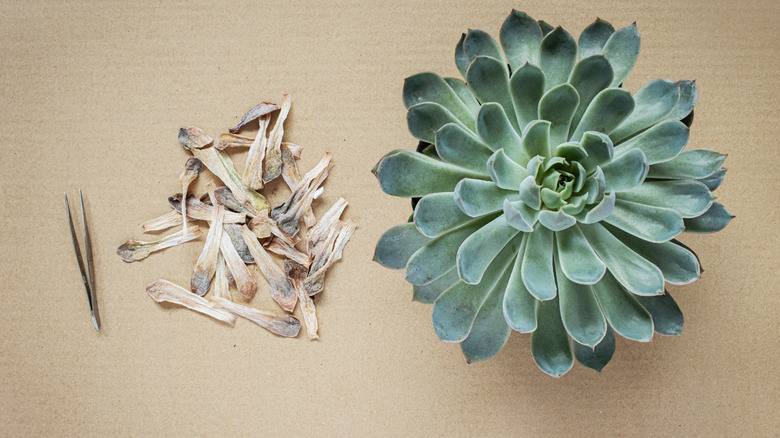
Dead leaves may look harmless, but they can quickly create an environment that succulents don't like. One of the biggest risks is excess moisture trapped around the base of the plant. In the dry climates where succulents are native, fallen leaves decompose rapidly or blow away, keeping air circulating freely around the stem. Indoors, however, dead leaves hold onto moisture from watering, humid air, or even condensation. This trapped dampness softens the stem tissue and can eventually lead to rot, especially in varieties with tight rosettes that naturally gather debris. Another issue is pest attraction. Mealybugs, fungus gnats, and other pests are drawn to hidden, darker spaces, and old leaves provide exactly that. Once pests settle in, they multiply quickly and begin feeding on the plant, often going unnoticed until the damage becomes more severe. Even dry, crispy leaves can still create these hidden pockets that allow pests to establish themselves. You can use rubbing alcohol, a household staple that keeps pests from taking over your indoor succulents, but doing what you can to prevent them from showing up in the beginning is ideal.
Dead leaves can also interfere with the plant's ability to breathe and grow properly. Succulents rely on good airflow to prevent fungal issues, and when old foliage piles up, air can no longer circulate around the lower stem. This restricted air flow increases humidity in the immediate area, raising the risk of mildew or other fungal growth. Additionally, when dead leaves press tightly against healthy tissue, they can cause irritation or restrict emerging growth points, slowing down the plant's natural development. By understanding what each of these problems stems from, it becomes clear why regular cleanup is one of the simplest ways to keep a succulent thriving.