

Bedroom Layouts That May Actually Improve Your Sleep Quality

It's no secret that a good night's sleep is essential to living a healthy, happy, and productive life. We've been told about the importance of getting a solid eight hours every night and have been inundated with ads for the perfect mattress that promises the best sleep of your life. There's constant talk about getting screens out of the bedroom and what winding down each night should look like. But what we don't often hear about is how the actual layout of your bedroom can improve your sleep — not just the amount of sleep you get but the quality, as well. Of course, we're not suggesting that the perfect mattress paired with some luxurious bedding can't help. Still, there are so many other factors to consider when creating your ideal nightly sanctuary.
Most people want their bedroom to feel welcoming, comfortable, and most importantly, stress-free. So you need to make the environment easy to navigate and ensure every action taken there is as frictionless as possible. Many individuals already try to do this through organizing and decluttering projects that help ensure a smooth morning routine. But there are other things — big and little — you can do to help achieve a stronger sense of calm and relaxation in your bedroom. Everything from choosing the appropriate size and quantity of furniture for the space to clearing an easy path from your bed to the bathroom can result in a deeper, more meaningful sleep. With all the potential layout mistakes you can make in the bedroom, let's break down how to get it right.
Choosing the right furniture and placement
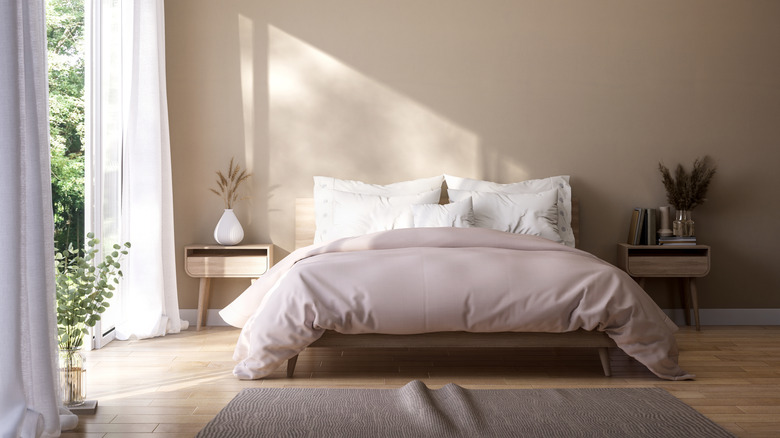
The first thing anyone thinks of when putting together their bedroom is the bed, and of course, it's tempting to go big. However, it is essential to consider how much square footage your room has and what size mattress will fit in it without feeling too cramped. Once you've established what size bed you should buy, it's equally important to know where to put it. Your bed should be the star of the show, so placing it in the center of your longest, uninterrupted wall will allow it to be the main focal point. You should avoid placing it directly under a window to prevent chilly air or bright morning sun from disrupting your sleep — unless that's something you genuinely enjoy.
Also, take into consideration any other furniture that will need to fit around the mattress. Adding dressers, armoires, and nightstands around a large bed can easily make a room feel cramped. Even though traditional bedroom layouts include two nightstands (one on either side of your bed), it's more important to get creative with the space than adhere to a general rule. You want to make sure you can move around easily without bumping into the edges of dressers or stubbing your toe on the corners of your bed frame. Ideally, you should have 30-36 inches between your bed and any furniture to keep the space open and easy to navigate. Consider swapping bulky furniture for sleeker designs and foregoing multiple nightstands if you don't have the space for them.
When your bedroom doubles as other spaces
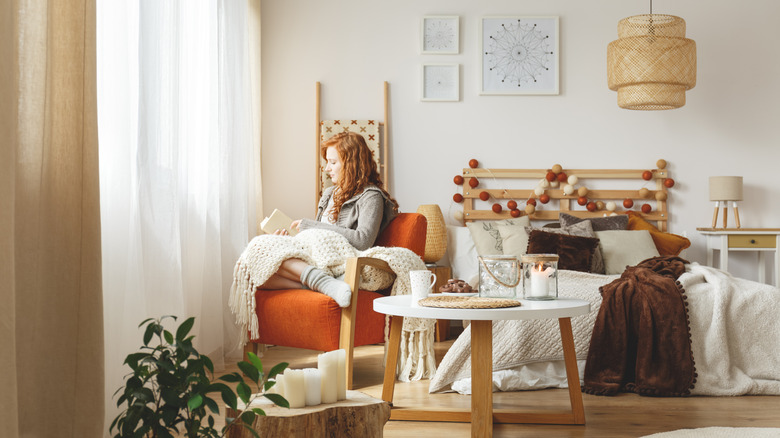
If your bedroom evokes stress, it can significantly affect your sleep quality. If you must store a lot of your belongings in your room, minimizing clutter and keeping it from becoming overwhelming can go a long way in creating the perfect bedroom layout. Learn how to get creative with under-the-bed storage and other organizational methods to keep your belongings tidy. You can also consider using vertical storage solutions like floating shelves and decorative boxes to keep your possessions out of sight and reduce stress. Of course, there are situations where individuals have to do more in their room than just sleep — like read, exercise, or work.
If this is something you have to deal with, it's recommended that you visually section off areas of your room to form clear zones. One easy way to do this is to place a rug under your bed to create a more defined sleeping area. If your room needs to double as a workspace, you should look into desks that fold up and disappear so that once you have clocked out for the day, your room can return to its former sanctuary — and you won't be staring at your office. You can also consider placing a chair in the corner to act as a reading nook, and store any smaller fitness equipment out of sight so that, once it's time for bed, your room becomes a place optimized for sleep. Taking steps to create a peaceful bedroom layout that truly enhances your quality of sleep is well worth the effort.