

Two Simple Ways To Test Your Soil Before Planting
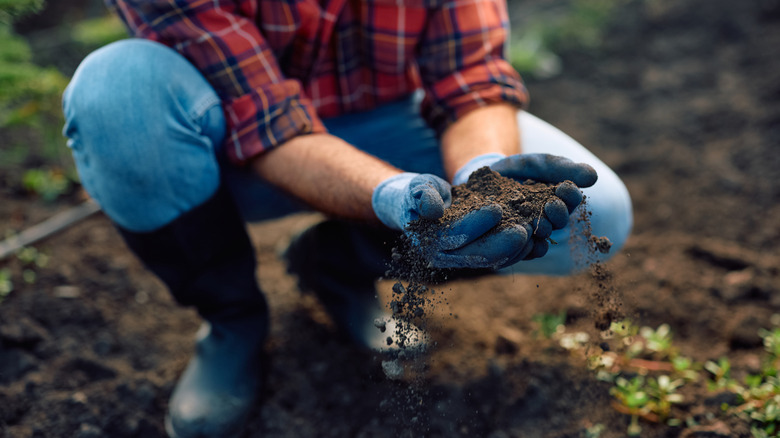
Soil testing could not be more important preceding tasks like establishing a new garden, diagnosing plant problems, determining fertilizer needs — and much more. But some situations don't require the effort and expense of a full-blown test in which samples are sent to a professional soil lab. Two simple, DIY, no-cost ways to test your soil before planting are available to you, one focusing on soil texture and the other on soil drainage.
These two tests are related because soil texture has a direct effect on drainage. Have you ever seen a plant tag or planting instructions that did not recommend well-drained soil? Most plants need it because they need their roots to dry out between waterings so they can take in oxygen.
Understanding soil texture in itself is critical because planting instructions prescribe the best soil type that your plants will thrive in — sandy, clay, silt at the most basic level, and loam, which is made of all three soil textures. Soil texture also reveals information about aeration, nutrient release, and nutrient storage. Learn more about how different kinds of particles determine your garden soil type, and how to do these two super-easy soil tests.
Learn your soil's texture using the feel test
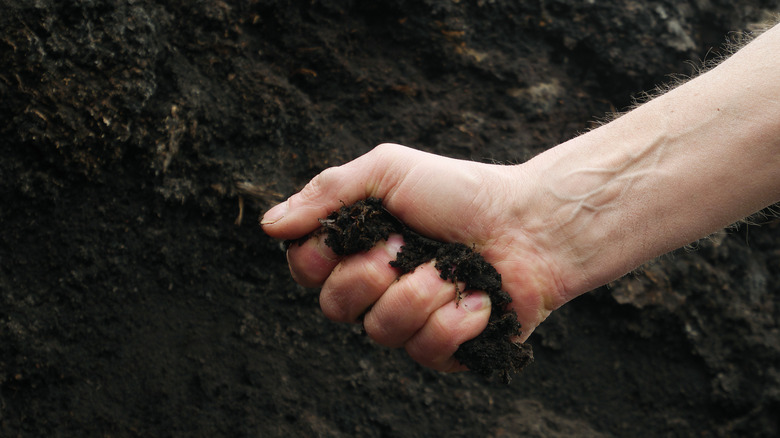
The ridiculously simple texture test enables you to figure out your garden soil's type by using just your hand. Think of it as a three-part test in which you first feel the soil, then squeeze the soil, and then try to form the soil into specific shapes. To start, prep the soil — grab a little soil in your hand, add a few drops of water to it, and knead it into a putty texture. For the first part, just feel the soil by rubbing it between two fingers. Secondly, squeeze the soil by making a fist around it. Finally, squeeze the soil and form it into a ribbon shape.
Clay-rich soil often feels sticky or slick to the touch. When it's wet, you can easily shape it into a ball and even stretch it into a thin ribbon. In contrast, sandy soil feels coarse, loose, and gritty; if you try to form a wet ball, it will crumble apart. Silt has a smooth, flour-like texture. When damp, it can be molded into a ball, but it won't hold together as a ribbon.
Use a 'perk' test to determine how well your soil drains
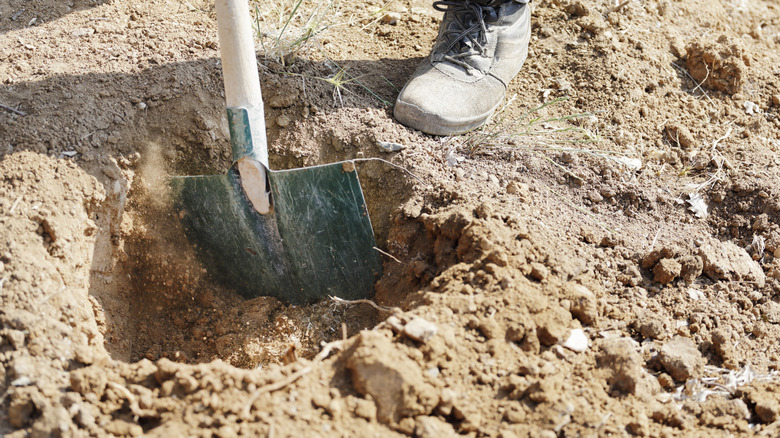
The soil drainage test, commonly referred to as a percolation or "perk test," takes a bit more effort and equipment. Dig a hole 12 inches deep and up to 12 inches wide in the soil you want to test. The hole can later double as your planting hole, so you may want to adjust the size to the plant. Next, fill the hole with water; allow it to drain. After it drains — which could take as long as a day — refill it right away.
Stick a ruler into the hole to measure the depth of water, and then after 15 minutes, measure how far the water has dropped. You'll learn how much the water will drain in an hour by multiplying the measurement of the drop by four. Your goal for optimal drainage is soil that drains 1 to 3 inches per hour. Water that drains more than 4 inches an hour has high sand content. Drainage slower than 1 inch per hour may indicate compacted soil or high clay content and is clearly poorly draining.
More soil testing may be needed after conducting these simple tests, but you are already armed with vital information about your soil texture and drainage capacity. You've taken the first steps to prep your soil for successful planting. If results are not optimal, you can start thinking about how you might amend the soil to meet the needs of your plants or identify plants suited to your kind of soil.