

The Affordable Way To Fix A Cracked Concrete Patio
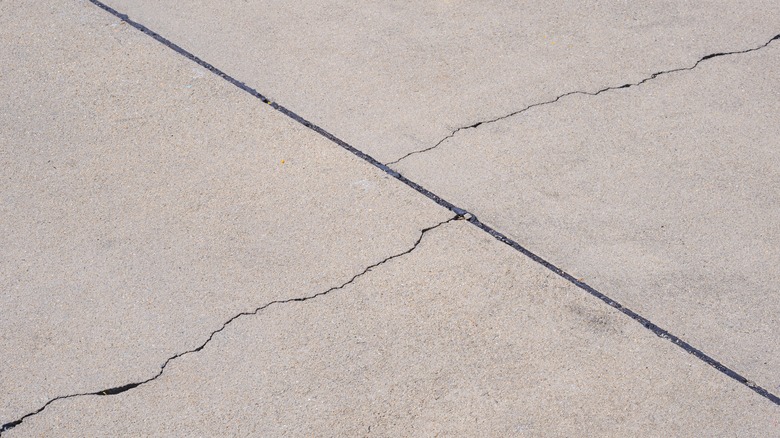
A concrete patio is the foundation for your outdoor living space. It can serve as a base for your outdoor seating or as a place to put out your seasonal decor and planters. While it's no secret that a concrete patio can boost home value, the base material has to be in good condition for this to apply. Small cracks in the surface should not affect the concrete's stability, but larger, more prominent damage can signal more severe issues beyond the surface. A good rule of thumb is not to have any cracks large enough for a credit card to fit in the opening (around ⅒ inch). So, what do you do when your concrete patio becomes cracked and damaged? It's easy to feel overwhelmed and think that replacing the entire slab is the only way to remedy cracked concrete, but there is a more affordable solution. Instead of ripping out and replacing the patio, try installing pavers over the cracks to create a new, sturdy surface.
When it comes to affordability, DIY repairs are typically cheaper than hiring a professional. This includes installing pavers over a damaged concrete patio. Instead of paying several thousand dollars for demolition and removal, you can DIY surface repairs with pavers for a fraction of the cost. In fact, the average cost to install pavers on an entire 10-foot by 20-foot patio is around just $1,800. A major factor in the cost of patio replacement is the demolition and disposal of the existing slab. You can do this yourself, though, with a sledgehammer and some hard work.
Gathering materials and building your paver patio
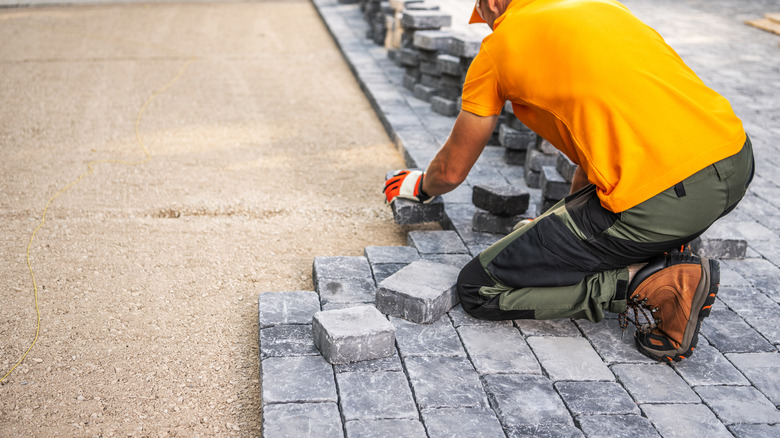
After tearing up your current patio and before diving into the paver installation process, it's helpful to familiarize yourself with and choose the right type of patio pavers needed for this project. Some of the most common paver materials include concrete and different types of natural stone. Each has its own advantages and design capabilities. With this in mind, concrete pavers tend to be the most budget-friendly option, with an average cost of just $2 to $8 per square foot. Natural stone offers a premium appearance, but has a higher price point, ranging from $8-$30 per square foot.
Additionally, you'll need to have a good amount of tools on hand, ranging from small items like a trowel and paver mallet to tools like a paver splitter if you have a large job to do. These tools can also range in price. The base layer of gravel and sand you'll need underneath the pavers will fall between $2 and $6 per square foot. This will be a range from $400 on the low end to closer to $1,200 on the high end. With any type of upgrade, whether you opt to DIY the fixes or hire a professional, shopping around for the best value and quality materials is key to keeping this type of project affordable.
To make your paver patio, you'll pour and even out your gravel base. Then, you'll wet it and apply a layer of paver sand. Over that, you'll place your pavers. It's a labor-intensive process, but it can save you a lot of money. It'll also leave you with a nice-looking custom-built patio.
Ways to customize your concrete patio pavers
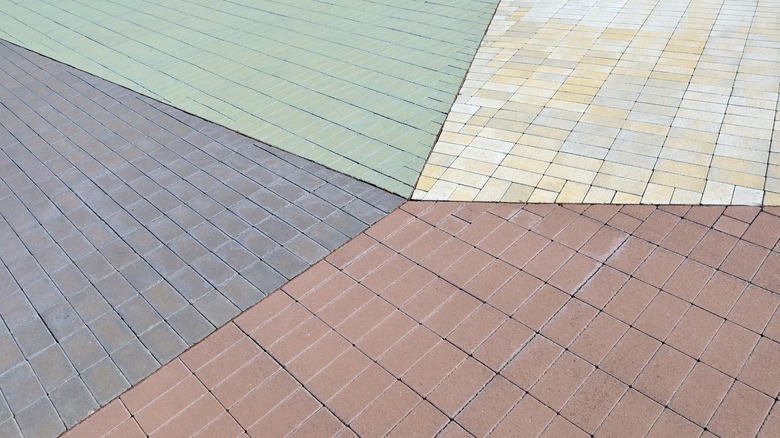
If you've decided to add pavers as a way to fix concrete patio cracks, you might feel limited in how you can customize the final look. The good news is, you don't have to stick with the standard gray color of a concrete patio. You can instead use the addition of pavers to get creative with the patio's design. It's not uncommon for the pavers themselves to come in different colors and finishes, but there's also the option to bring your own vision to life by painting the pavers. This will be an additional expense, often around $500 or less, but an upgrade that can make the space one of a kind. Be sure to use weather-resistant paint and a sealer to lock in the design.
If you're working with a strict budget, concrete paver molds can also be an inexpensive way to create your own pavers for just the cost of concrete mix and the mold. The average price for a concrete mold is around $150, but there are options available for as low as $25. This is a hands-on project, but a great way for DIY enthusiasts to work on every step of the process. You'll need to create a mold for the concrete to be poured into, allowing you to add extra embellishments like small stones or even sparkles. If you don't want to paint or make your own pavers, an easy and affordable way to customize your paver patio is to simply lay the pavers in a pattern of your choice.